
S. D. Muni on India and its Neighborhood
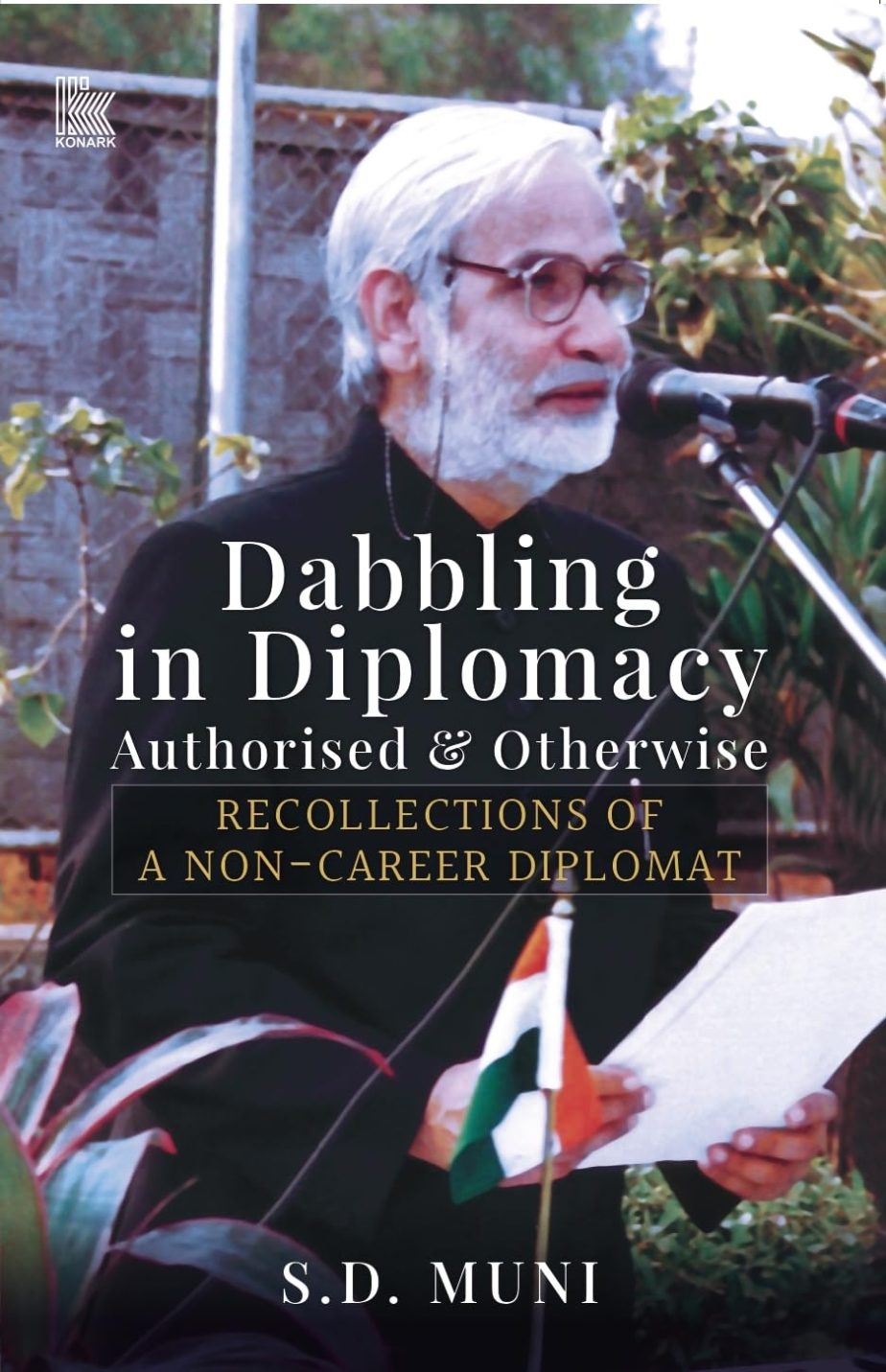 India’s implementation of agreements and project delivery abroad has been criticized for endless delays. What was your experience as India’s ambassador to Laos in 1997-99 in trying to take agricultural and defense project agreements to their logical conclusion?
I have often said and written that one of the major problems with Indian foreign policy is its “delivery deficit.” Projects are sometimes announced just to mark high-level political visits without proper planning and financial allocation. Many of the projects undertaken are not completed in time and to the satisfaction of the targeted receiving country. Even the Lines of Credit offered by India do not operate efficiently because of procedural hurdles.
I got a feel of this “delivery deficit” during my ambassadorial stint in Laos. There was dissatisfaction regarding the Kirloskar company’s failure to carry out its promise of setting up a factory for producing spare parts for the water pumps being supplied by the company. There was dissatisfaction regarding other projects as well. The Laotians were generally polite and did not make major issues out of their unhappiness.
The defense cooperation project suffered because of the economic crisis experienced during 1997-98 by Laos and the whole of Southeast Asia. Laos was experiencing a severe foreign exchange crunch and was facing difficulties in getting the defense cooperation agreement implemented. The Indian system did not have the financial resilience to accept commodities as payments. It is worthwhile considering this aspect seriously while signing projects in the future. Delving deep into the defense cooperation project of servicing the Laotian fighter aircraft, I found that Hindustan Aeronautics Ltd. (HAL) should have thoroughly studied all possible implications and consequences of the project while concluding its terms and conditions.
You have written about various Track 1.5 and Track 2 dialogues that you have participated in. What impact did these dialogues have on India-Pakistan relations?
The India-Pakistan Track 2 and 1.5 dialogues are good gatherings that give both sides an opportunity to read the other side’s mind on sensitive security and political issues concerning the two countries. These dialogues also provide an occasion for social interaction among elite sections of the two countries beyond the politics of conflicts and tensions. Most of the dialogues have been funded by Western institutions and foundations. In some cases, the funding agencies let their representatives also participate in the dialogues, which defeated the very purpose of holding them.
I have found that in these dialogues, while the members of the Indian delegation talk freely, even against the policies of their own government, the Pakistani delegation comes properly briefed by the establishment. They do not go beyond their brief. After the dialogue, the Indians brief their policymakers. I am not aware of the extent to which the Pakistani delegation members interact with their policymakers, but I guess that they should also be briefing them to underline the extent to which the pre-dialogue briefings have been carried out. These dialogues do create a congenial confidence-building atmosphere but I am not sure if they make any impact on the concrete policies. There is scope for research to find out if agreements like nuclear non-attack, flow of trade, or access to Sikh Gurudwaras like Kartarpur Sahib were influenced by the Track 2.0 or 1.5 dialogues.
The problem of India-Pakistan relations is rooted in the dynamics of internal political systems in both countries. In Pakistan, until the civil-military relations are rationalized, and the military’s undue dominance is moderated, not much progress can be expected in improving relations with India. The new post-election order in Pakistan still looks very fragile and the civil-military equation is considerably tense. In India also, for the past few years, the Pakistan question has become a part, howsoever small, of domestic politics under the current BJP-led National Democratic Alliance regime. Let us hope that after the Indian elections, there will be some effort to take new initiatives in the approach towards Pakistan.
As a scholar, teacher, and practitioner of Indian foreign policy, you have deep insights into the workings of the Indian diplomatic establishment. What are some of the reforms that you would recommend for it to become a modern diplomatic service that will enable it as a rising power to achieve its big ambitions?
The appointment of Dr. S. Jaishankar as Minister of External Affairs was seen by many as a significant move to professionalize foreign policy. He was neither a politician nor a member of the ruling BJP when he was brought from his retirement to head the Ministry of External Affairs. He has tried to streamline functional and territorial divisions in the ministry to sharpen policy-making processes. He has also tried to bridge the ‘delivery deficit’ mentioned earlier, but there is still a long way to go towards narrowing the gap between the promise and the performance of India’s foreign policy.
The problems of coordinating with other institutions, agencies and stakeholders for a specific policy action persist. The role of the business community and private companies engaged in various projects abroad also pose critical challenges. Financial constraints and implications of domestic politics also impinge on the functioning of foreign policy.
It is widely acknowledged that the Indian Foreign Service is poorly manned. Attempts to recruit more people started during the previous Congress-led United Progressive Alliance regime but they have not yet achieved desirable targets. The foreign ministry is making some lateral entries, but at a lower level not directly related to policy formation and execution. Outside expertise in science, law and other specified areas is also being called upon, but much needs to be done in this respect. It would be a good idea to make at least 10 percent of the ambassadorial appointments from outside the IFS cadre based on different expertise. There is persistent talk of “out of the box” decisions and innovative initiatives, but my experience tells me that bureaucracies are very slow to digest such moves.
India’s implementation of agreements and project delivery abroad has been criticized for endless delays. What was your experience as India’s ambassador to Laos in 1997-99 in trying to take agricultural and defense project agreements to their logical conclusion?
I have often said and written that one of the major problems with Indian foreign policy is its “delivery deficit.” Projects are sometimes announced just to mark high-level political visits without proper planning and financial allocation. Many of the projects undertaken are not completed in time and to the satisfaction of the targeted receiving country. Even the Lines of Credit offered by India do not operate efficiently because of procedural hurdles.
I got a feel of this “delivery deficit” during my ambassadorial stint in Laos. There was dissatisfaction regarding the Kirloskar company’s failure to carry out its promise of setting up a factory for producing spare parts for the water pumps being supplied by the company. There was dissatisfaction regarding other projects as well. The Laotians were generally polite and did not make major issues out of their unhappiness.
The defense cooperation project suffered because of the economic crisis experienced during 1997-98 by Laos and the whole of Southeast Asia. Laos was experiencing a severe foreign exchange crunch and was facing difficulties in getting the defense cooperation agreement implemented. The Indian system did not have the financial resilience to accept commodities as payments. It is worthwhile considering this aspect seriously while signing projects in the future. Delving deep into the defense cooperation project of servicing the Laotian fighter aircraft, I found that Hindustan Aeronautics Ltd. (HAL) should have thoroughly studied all possible implications and consequences of the project while concluding its terms and conditions.
You have written about various Track 1.5 and Track 2 dialogues that you have participated in. What impact did these dialogues have on India-Pakistan relations?
The India-Pakistan Track 2 and 1.5 dialogues are good gatherings that give both sides an opportunity to read the other side’s mind on sensitive security and political issues concerning the two countries. These dialogues also provide an occasion for social interaction among elite sections of the two countries beyond the politics of conflicts and tensions. Most of the dialogues have been funded by Western institutions and foundations. In some cases, the funding agencies let their representatives also participate in the dialogues, which defeated the very purpose of holding them.
I have found that in these dialogues, while the members of the Indian delegation talk freely, even against the policies of their own government, the Pakistani delegation comes properly briefed by the establishment. They do not go beyond their brief. After the dialogue, the Indians brief their policymakers. I am not aware of the extent to which the Pakistani delegation members interact with their policymakers, but I guess that they should also be briefing them to underline the extent to which the pre-dialogue briefings have been carried out. These dialogues do create a congenial confidence-building atmosphere but I am not sure if they make any impact on the concrete policies. There is scope for research to find out if agreements like nuclear non-attack, flow of trade, or access to Sikh Gurudwaras like Kartarpur Sahib were influenced by the Track 2.0 or 1.5 dialogues.
The problem of India-Pakistan relations is rooted in the dynamics of internal political systems in both countries. In Pakistan, until the civil-military relations are rationalized, and the military’s undue dominance is moderated, not much progress can be expected in improving relations with India. The new post-election order in Pakistan still looks very fragile and the civil-military equation is considerably tense. In India also, for the past few years, the Pakistan question has become a part, howsoever small, of domestic politics under the current BJP-led National Democratic Alliance regime. Let us hope that after the Indian elections, there will be some effort to take new initiatives in the approach towards Pakistan.
As a scholar, teacher, and practitioner of Indian foreign policy, you have deep insights into the workings of the Indian diplomatic establishment. What are some of the reforms that you would recommend for it to become a modern diplomatic service that will enable it as a rising power to achieve its big ambitions?
The appointment of Dr. S. Jaishankar as Minister of External Affairs was seen by many as a significant move to professionalize foreign policy. He was neither a politician nor a member of the ruling BJP when he was brought from his retirement to head the Ministry of External Affairs. He has tried to streamline functional and territorial divisions in the ministry to sharpen policy-making processes. He has also tried to bridge the ‘delivery deficit’ mentioned earlier, but there is still a long way to go towards narrowing the gap between the promise and the performance of India’s foreign policy.
The problems of coordinating with other institutions, agencies and stakeholders for a specific policy action persist. The role of the business community and private companies engaged in various projects abroad also pose critical challenges. Financial constraints and implications of domestic politics also impinge on the functioning of foreign policy.
It is widely acknowledged that the Indian Foreign Service is poorly manned. Attempts to recruit more people started during the previous Congress-led United Progressive Alliance regime but they have not yet achieved desirable targets. The foreign ministry is making some lateral entries, but at a lower level not directly related to policy formation and execution. Outside expertise in science, law and other specified areas is also being called upon, but much needs to be done in this respect. It would be a good idea to make at least 10 percent of the ambassadorial appointments from outside the IFS cadre based on different expertise. There is persistent talk of “out of the box” decisions and innovative initiatives, but my experience tells me that bureaucracies are very slow to digest such moves.What’s your Reaction?
