
Can India’s Rahul Gandhi defeat Narendra Modi with ‘unity marches’?
Political message
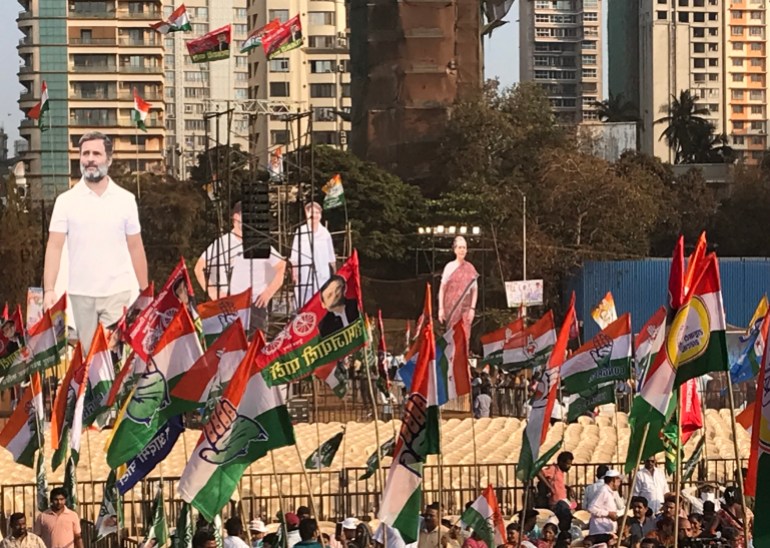
Addressing the rally, Gandhi insisted that the INDIA alliance’s fight was not against a political party [referring to the BJP] or the prime minister – but for a vision of India. “There is a word ‘Shakti’ in Hinduism. We are fighting against a Shakti. The question is, what is that Shakti. The soul of the king is in the EVM (Electronic Voting Machine) and every institution of the country, including the Enforcement Directorate (ED), Central Bureau of Investigation (CBI) and the Income Tax department,” he said, adding that these institutions are the only reason the BJP is in power. The allegation: The “king” is Modi, EVMs can be hacked, and the government is using law enforcement agencies to coerce opposition members and business leaders into submission.Several key politicians from the INDIA alliance, like Congress chief Mallikarjun Kharge, Tamil Nadu state Chief Minister MK Stalin and former Maharashtra state Chief Minister Uddhav Thackeray, the former chief minister of Maharashtra, also attended the rally. “Ab ki baar, BJP tadipaar [This time, the BJP will be exiled],” Thackeray said and added that those who tried to divide them [the INDIA alliance] would be defeated. “Wherever Rahul goes, it looks like a festival,” Stalin told the cheering crowds. Then, he alluded to the litmus test that awaits the alliance. “The real victory of Rahul Gandhi’s Bharat Jodo Nyay Yatra stands in defeating BJP and capturing Delhi,” he said.#WATCH | Mumbai, Maharashtra: At the conclusion ceremony of the Bharat Jodo Nyay Yatra, Congress leader Rahul Gandhi says, "There is a word 'Shakti' in Hinduism. We are fighting against a Shakti. The question is, what is that Shakti. The soul of the King is in the EVM. This… pic.twitter.com/lL9h9W0sRf
— ANI (@ANI) March 17, 2024
Are Gandhi’s marches working?
Gandhi’s rally at Shivaji Park came a day after he concluded his Bharat Jodo Nyay Yatra – a 6,600km (4,100-mile) march from India’s east to west, with detours in each state he passed through. His promise: “panch nyay” or “five pillars of justice” for women, youth, farmers, labourers and justice in terms of equity. During the walk, he announced a one lakh rupee ($1,200) annual payout to every woman below the poverty line, and a 50 percent reservation in in all new recruitments of central government jobs for poor families. He began walking on January 15 this year in the conflict-torn northeast Indian state of Manipur, promising to bring peace to the region where tensions between the state’s mainly Hindu Meitei majority and the predominantly Christian Kuki-Zo have led to violence killing hundreds and displacing more than 60,000 people. Traversing west from Manipur, Gandhi ended his walk in Mumbai on March 16. Previously, he also walked from South India all the way to Kashmir in the north, between September 2022 and January 2023, in a march called Bharat Jodo Yatra (Unite India walk), which focused on fighting against poverty, unemployment and growing polarisation between Hindus and Muslims in India. Those messages are what inspired Sudha Prakash to walk with Gandhi in his first Bharat Jodo Yatra.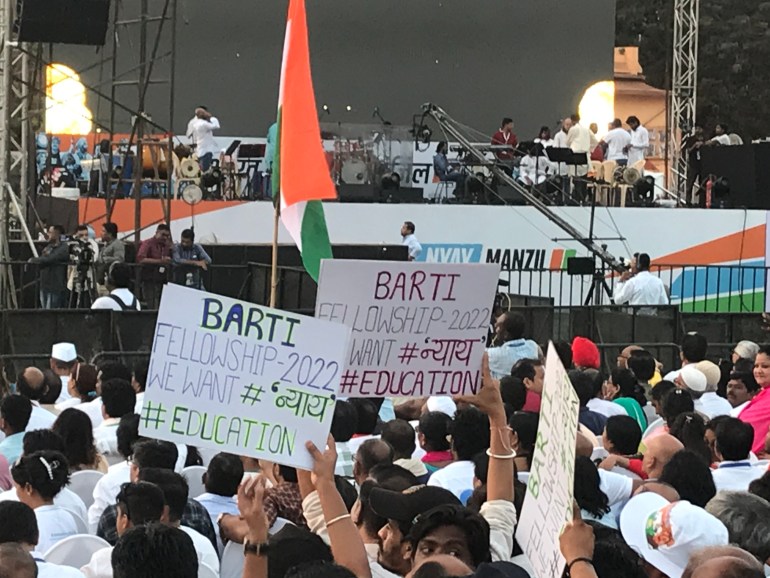
Image problem
Aiyshwarya Mahadev, a spokesperson of the Indian National Congress hailed both the yatras as the largest exercises the Congress party has undertaken in its recent past to connect to the masses. “We wanted to hear the voices on the ground and give them a voice. So during both the yatras we saw Rahul Gandhi listening to voices that hardly ever get heard, of people from communities that have been traditionally oppressed and marginalised,” she told Al Jazeera. “This yatra is not about political pomp or any chest thumping, It was honestly about reaching the people on the ground, hearing their voices and becoming their voices. In this aspect it has been a massive success.” But many Indians are not convinced. The BJP has often derisively termed snubbed Gandhi’s marches as designed to “break”, not “unite”, India. Ujal Bhatia, a former Indian civil servant, said he doesn’t believe that Gandhi’s marches will lead to electoral gains for the Congress. “The narrative of the BJP holds sway over much of the country – Hindutva, strong government plus welfarism which delivers palliatives to the poor,” he told Al Jazeera. Hindutva refers to the Hindu majoritarian political ideology of the BJP. The Modi government has also, over its decade in power, initiated a series of welfare schemes targeting women and other traditionally disadvantaged sections of society, though critics question the government’s claims on the scale of delivery of these programmes. “Rahul will get a lot of good vibes from his travels but Congress cadres are weak and the Gandhi family is reluctant to cede power to regional leaders,” Bhatia added. Raj Malhotra, a 33-year old lawyer from Bangalore, shared a similar view. “Enough people in the country are fed up with the divisive politics and crony capitalism but the opposition seems clueless in using this to its advantage. A huge part of this is because for more than a decade, the Congress party has neglected to pay attention to organisational weaknesses,” Malhotra told Al Jazeera and accused the party of nepotism and dynastic politics. “While Rahul Gandhi might still be a viable candidate, he suffers from being made out to be a “pappu” by BJP’s propaganda factory. The party really needs to look inwards and sort its internal mess out,” he added. The BJP and its social media supporters have long described Gandhi as “Pappu”, a pejorative in Hindi-speaking northern India for someone who is intellectually dull.‘Democracy’ vs ‘command and control’
Sam Pitroda, telecom engineer and adviser to two former Congress prime ministers of India, Rajiv Gandhi and Manmohan Singh, conceded that the party looks far more chaotic than the BJP. But that, he said, was in essence what democracy is about. “The BJP is based on command and control, while the Congress party is not structured and based on cooperation and co-creation. So sometimes this looks like chaos. But that’s the core design of the party,” he told Al Jazeera. “People get confused that arguments and disagreements over party policies means there is lack of organisation and unity. But if you want democracy, you have to let people argue and not be dictatorial. “Rahul Gandhi is also a smart and capable leader. It is the BJP propaganda which invests in defaming him. How about before elections we have a national debate between Gandhi and Modi and then we can see who the real “pappu” is,” Pitroda said. Mahadev added that the marches have also played a positive role in uniting the Congress party’s members and workers. “Through the yatras, Rahul Gandhi, Mallikarjun Kharge, Priyanka Gandhi [Rahul’s sister] and other leaders were all on the ground and the workers got the chance to meet and interact with them. That further galvanised the cadre and emboldened them to work with renewed vigour,” Mahadev said. “It is a reality that in today’s India, the voices of the opposition get stifled and at times, the future looks bleak, but through this sort of engagement where a worker is shown that the work that he is doing on ground is important, helps the party and is reminded of the huge role he plays in our success.”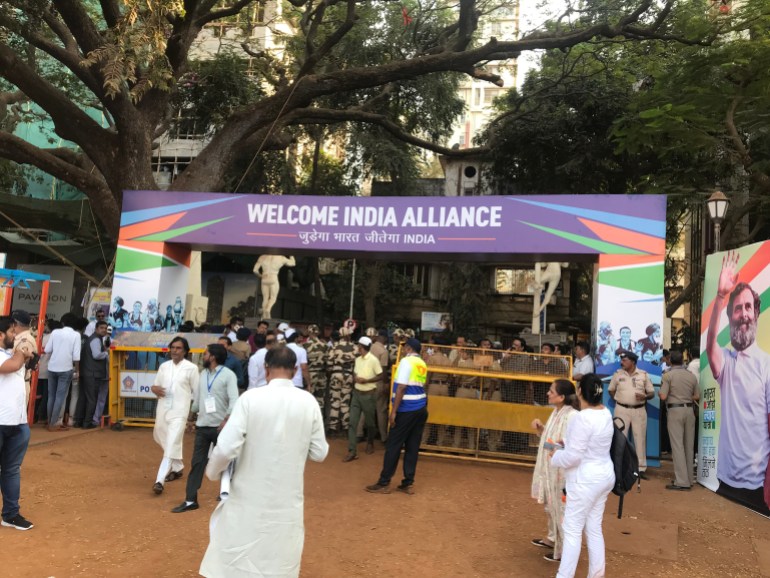
What’s next?
The INDIA alliance has also experienced fissures with key leaders exiting the bloc over political differences. But Mahadev said that through the yatras, the opposition’s manifesto has been shaped. “When we did the first phase of the yatra, we walked through different states and interacted with different stakeholders across the board who spoke about their issues. This helped shape our narrative and gave us the basis for several of our manifesto,” she said. “Several regional parties and our allies in the INDIA bloc also have representations and ideas which will be put forward as the promises we make during elections.” Mahadev acknowledged that it was unclear how much the marches would directly lead to votes for the Congress or its partners. But that, she said, was never the primary intention behind the yatras, in any case. “His footsteps may not always transform into votes in place but the idea of the yatras was to talk to people on the ground who came from various socioeconomic structures, vocations and even marginalised communities,” she said. “These meetings were not political gatherings but his interactions to listen and to understand their reality, understand their issues and be a voice for them.” For Gandhi, she said, the marches were about striving for “peace and unity”, and to “fight for India as a democracy”.What’s your Reaction?
