
US tariffs could drag South Asia’s economic growth below expectations in 2026
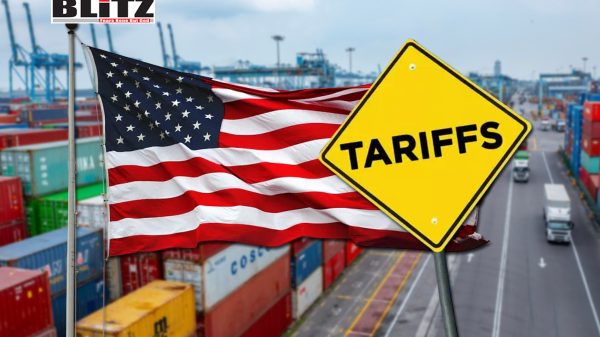
The World Bank has issued a sobering warning for South Asia, forecasting that the region’s economic growth will slow down significantly in 2026 due to escalating trade tensions and tariff hikes imposed by the United States. In its latest report, published on October 7, the multilateral lender revised its growth projection for South Asia from 6.4% to 5.8%, citing the ripple effects of Washington’s aggressive trade measures and a broader global economic slowdown.
The downgrade underscores how US protectionist policies under President Donald Trump’s administration are beginning to reverberate across developing economies, particularly in manufacturing-dependent regions like South Asia. With tariffs now targeting key exporters such as India, Bangladesh, and Sri Lanka, economists fear that the region’s recovery momentum – built on post-pandemic resilience, robust consumption, and export diversification – could falter in the coming years.
According to the World Bank, higher tariffs have made it more expensive for South Asian nations to import raw materials and intermediate goods, which form the backbone of their export-oriented industries. Washington’s 50% tariff on most Indian imports, introduced in August, coupled with punitive levies of 25% on Indian purchases of Russian oil, have dealt a dual blow to New Delhi’s economic plans. Meanwhile, Bangladesh faces a 35% tariff, and Sri Lanka a 20% levy – measures that threaten to undermine their fragile economic recoveries.
These tariffs, originally designed to penalize countries maintaining trade ties with Russia or running large surpluses with the US are now exacting a heavy price on domestic industries. For instance, Bangladesh’s textile sector – a cornerstone of its economy – relies heavily on imported fabrics, machinery, and dyes. The new tariffs could inflate production costs, making Bangladeshi exports less competitive in the global market. Similarly, Sri Lanka’s apparel and rubber industries, already struggling with high energy costs and inflation, face renewed pressure as the cost of importing essential materials surges.
The World Bank emphasized that such disruptions to supply chains could “stifle productivity gains and delay the region’s transition to higher-value manufacturing.” With South Asia increasingly integrated into global trade networks, tariffs imposed by a major economy like the US can create ripple effects that extend far beyond bilateral trade flows.
Despite the external pressures, India remains the region’s standout performer. The World Bank maintained that India will continue to be the world’s fastest-growing major economy, buoyed by strong domestic consumption, an improving agricultural outlook, and steady rural wage growth. Yet even for India, the impact of Washington’s tariffs cannot be ignored.
The report downgraded India’s 2026–27 fiscal year growth forecast from 6.5% to 6.3%, citing “tariff-related export challenges” and “potential investment slowdowns.” Key sectors such as automobiles, pharmaceuticals, and electronics – all reliant on global supply chains – are expected to face cost escalations and export barriers.
Finance Minister Nirmala Sitharaman, however, has sought to project confidence. Speaking last week, she argued that India’s economy has the “capacity to absorb shocks” and that ongoing structural reforms, digitalization drives, and increased public investment would help mitigate the impact of external headwinds. “We have navigated tougher challenges before,” she said, alluding to the pandemic-era disruptions and the 2022 global energy crisis.
Still, analysts warn that even a modest slowdown in India’s growth could have regional spillovers. As South Asia’s largest economy, India contributes over 75% of the region’s GDP. A dent in its expansion trajectory could weaken trade demand and cross-border investments for smaller neighbors.
The World Bank’s report presented a nuanced picture for other South Asian economies. Bangladesh is projected to see accelerated growth in the current and next fiscal years, driven by strong domestic demand and expanding remittances. However, the medium-term outlook remains uncertain due to the newly imposed US tariffs.
Economists have cautioned that while Bangladesh’s garment exports to Europe remain stable, its US market share could decline if tariffs persist. Moreover, the added strain on import costs could widen the country’s trade deficit and place pressure on the taka. The World Bank also noted that Bangladesh must strengthen its export diversification and improve logistics to maintain competitiveness.
Sri Lanka, still recovering from its 2022 financial crisis, is expected to regain momentum by 2026 as fiscal reforms take effect and tourism rebounds. Yet the new US tariffs could complicate Colombo’s fragile recovery. Higher import costs and reduced export margins may challenge the government’s efforts to stabilize foreign reserves and service debt obligations.
Meanwhile, Bhutan and Nepal face a different set of challenges. The report forecasts slower growth for both countries in the 2025–26 fiscal year, largely due to weaker remittances, climate-related disruptions to hydropower generation, and limited fiscal buffers. The Maldives, too, is expected to experience growth deceleration in 2026 amid “foreign exchange pressures” and declining tourism receipts.
Beyond tariffs, the World Bank identified several other risks that could hinder South Asia’s growth trajectory. These include a prolonged global economic slowdown, labor market disruptions, and socio-political unrest across multiple countries. The report warned that sluggish demand in advanced economies could dampen export growth, while political instability could deter investment.
In addition, rising food and energy prices continue to pose inflationary risks, particularly for low-income households. The combination of high import costs and volatile exchange rates could further erode purchasing power and widen inequality.
The World Bank’s revised forecast serves as a stark reminder that South Asia’s growth story, while impressive, remains vulnerable to external shocks and policy shifts in major economies. The tariffs imposed by Washington not only disrupt trade but also expose the fragility of a region striving to move up the global value chain.
For policymakers in New Delhi, Dhaka, Colombo, and beyond, the challenge lies in diversifying export markets, strengthening regional trade integration, and investing in domestic production capabilities. As the report concludes, “South Asia’s resilience will depend not only on its domestic reforms but also on its ability to navigate an increasingly fragmented global trade environment.”
If protectionist trends continue, 2026 may mark a critical juncture – a year when South Asia’s economic momentum slows, not due to internal failings, but because of the resurgence of global trade barriers and geopolitical rivalries that test the very foundations of globalization.
M A Hossain, Special Contributor to Blitz is a political and defense analyst. He regularly writes for local and international newspapers.
