
8000 KM Of Nightmare! How Conflict With Taliban Could Ensnare Pakistan In A “4-Front War” Scenario? OP-ED
For decades, India has lived in the perennial fear of a two-front war scenario on its Northern border with China and Western border with Pakistan. New Delhi has factored in this apocalyptic scenario in its war doctrine and strategic preparedness for years.
As India lived in the fear of a two-front war with its two nuclear neighbours, Pakistan invested in turning its western flank with Afghanistan into its strategic depth, to use Afghan territory and Kabul as a strategic bulwark against India.
Under this strategy, Pakistan aimed to use Afghanistan as a fallback territory or operational space in case of a military conflict with India, particularly to protect its military assets and leadership from India’s larger conventional forces.
At the same time, this strategy aimed to mitigate Pakistan’s geographic vulnerability — its lack of territorial depth due to its narrow, elongated shape — and to counter India’s numerical and military superiority by creating a buffer zone in Afghanistan.
However, with patience and tact, India has turned Pakistan’s ‘strategic depth’ into its ‘strategic vulnerability,’ and now Islamabad is living in the fear of a two-front war scenario.
More importantly, Pakistan might have to commit more resources and manpower on its Western flank to counter the Taliban.
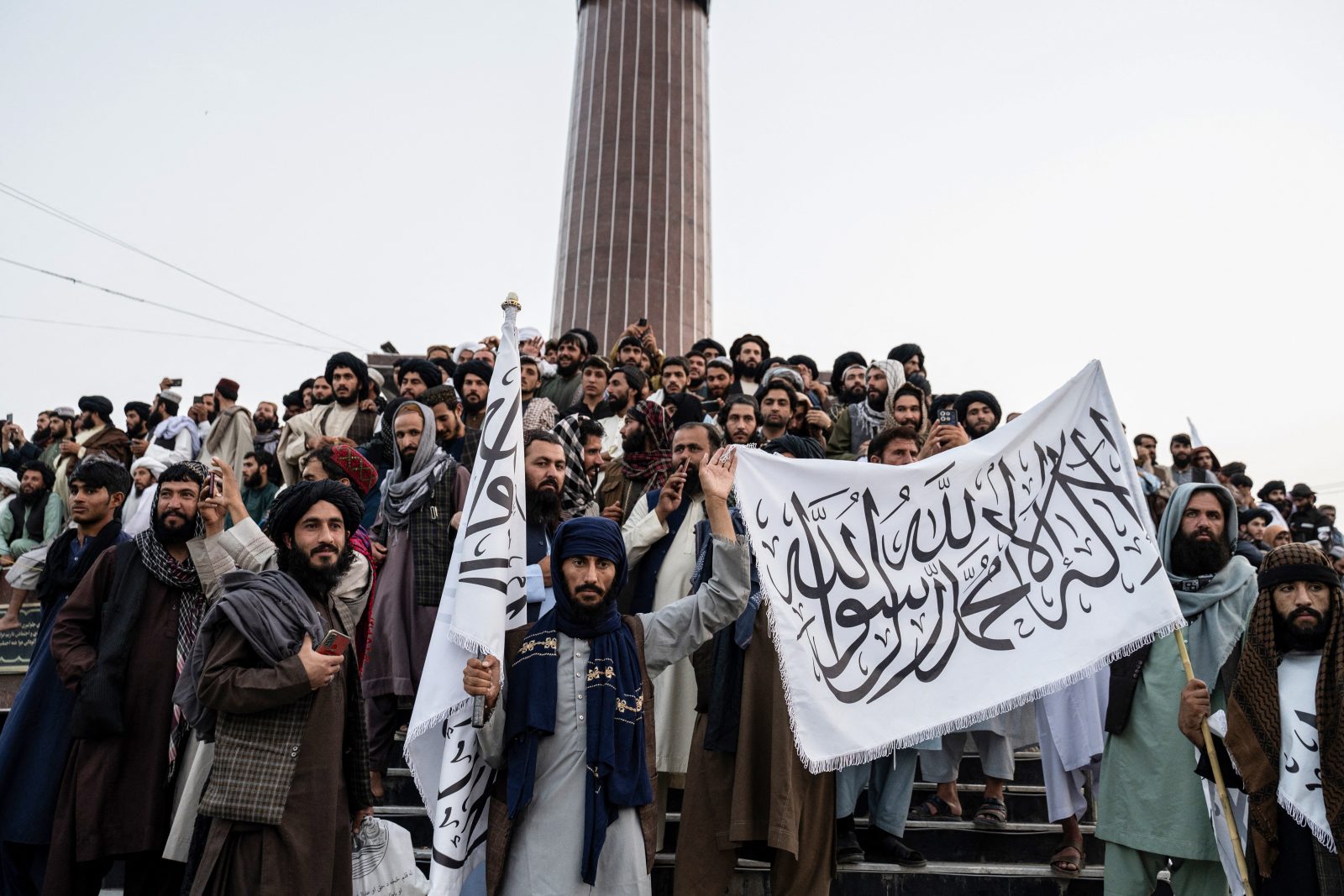
The Taliban is not a structured army and does not follow the standard rules of engagement, which Pakistan can expect from a professional army like India.
For decades, particularly since the humiliating defeat in the 1971 war, Pakistan has mastered the art of asymmetric and proxy warfare against India, arming and financing militant and armed groups inside India to “bleed India with a thousand cuts”.
Now, the “chickens have come to roost” for Islamabad.
Pakistan faces on its Western border the same threat of continued asymmetric and guerrilla warfare that it leveraged against India for years.
Pakistan’s Two-Front War Nightmare
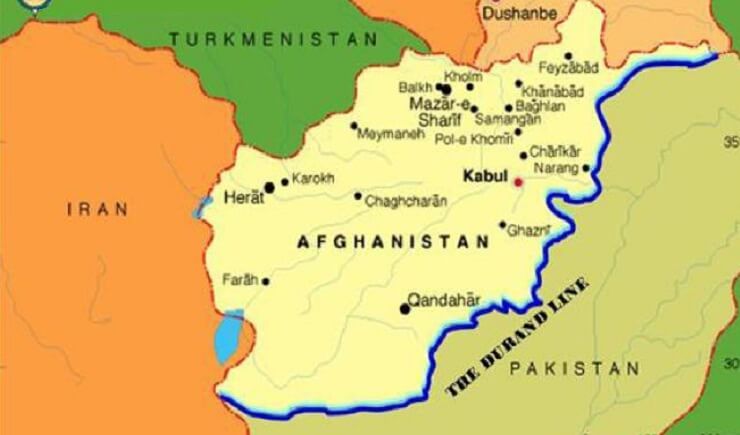
Pakistan shares an international border with three countries: India, Iran, and Afghanistan. It also shares a 438 km-long border with China in Pakistan-occupied Kashmir (PoK).
Pakistan has a 3,323 km-long border with India and a 2,430 km-long border with Afghanistan.
If Pakistan’s Eastern front with India and Western front with Afghanistan are both active, it would mean a 5,753 km-long active front line.
Additionally, Pakistan also needs to safeguard its 959 km-long border with Iran, due to the persistent threats from the Balochistan Liberation Army (BLA).
Furthermore, in the case of an active war with India, Pakistan also needs to secure its 1,046 km-long Southern coastline.
Protecting a nearly 8,000 km-long frontline is a herculean task for a country the size of Pakistan. For perspective, Pakistan’s highest width is approximately 1,125 km (700 miles) from east to west at its widest point. The country’s maximum length from north to south is about 1,875 km (1,165 miles), from the Hindu Kush mountain range to the Arabian Sea.
Ever since the conflict with the Taliban began earlier this month, the two-front war scenario is not just an abstract, hypothetical scenario, but a genuine concern in Pakistan.
In a recent interview with a news channel, Pakistani Defense Minister Khawaja Asif was grilled about whether the country is prepared for a two-front war.
Pakistan is prepared for 2 front war: Khawaja Asif
Anchor: According to war analysts, India might play dirty games along the border. Are you anticipating that?
Khawaja Asif: No, absolutely, you cannot rule that out. There are strong possibilities.
Anchor: For God’s sake, the… pic.twitter.com/K9ZMkeqADb
— OsintTV 📺 (@OsintTV) October 16, 2025
Notwithstanding the brave face put on by Defense Minister Asif, it is an open secret that Pakistan has for decades focused only on securing its Eastern front with India and has systematically ignored its Western front with Afghanistan.
Pakistan’s Historic Neglect Of The Western Front
Historically, Pakistan has deployed the majority of its forces (approximately 70–80%) along the Line of Control (LoC) and international border with India, leaving the western front under-resourced.
The core of Pakistan’s neglect is the “strategic depth” doctrine, formalized in the 1980s under Gen. Zia-ul-Haq, which viewed Afghanistan not as a fortified front but as a buffer/fallback against India.
In FY 2025–26, Pakistan hiked its defense budget to USD 11.67 billion, post the brief war with India in May. However, Pakistan’s defense capital expenditure focuses on fighter jets and air defenses, underscoring Islamabad’s focus on the Eastern front, as the Taliban has no air force.
Similarly, Pakistan’s expenses on maintaining a nuclear arsenal are exclusively focused on India.
This exclusive focus on the Eastern front and systematic neglect of the Western front was laid bare in 2011 when the US special forces penetrated Pakistan from the Western front for Operation Neptune Spear to kill Osama Bin Laden, and Islamabad failed to detect the incursion.
The Taliban Challenge
What makes Pakistan’s situation even more precarious is the fact that the Taliban is a force like no other. The Taliban is a loosely structured force that lacks a clear-cut hierarchy and a unified chain of command.
Thus, it is challenging to negotiate with the Taliban and ensure that the decisions reached by the Taliban leadership will be implemented on the ground by its foot soldiers.
Furthermore, the Taliban has historically relied on guerrilla warfare and suicide bombings in its fight against first the Russians and then the Americans.
Faced with superior conventional Pakistani military strength, there is no reason to doubt that the Taliban will once again resort to such tactics.
Professional armies all over the world struggle to fight against loosely structured militia forces that rely on guerrilla warfare; case in point, the Taliban victory against the Soviets, and then the Americans, the LTTE advantage over the Indian Peace Keeping Force (IPKF) in Sri Lanka in the 1980s, and even the recent struggle of the US forces in their battle against the Houthi rebels in Yemen.
Taliban’s Strategic Depth In Pakistan
Notwithstanding decades of Pakistani efforts to turn Afghanistan into its strategic depth, it is the Taliban that enjoys considerable strategic depth inside Pakistan.
The Taliban was born in Pakistan during the Soviet invasion, when millions of Afghan refugees were residing in Pakistan. Thousands of these refugees and Taliban sympathizers are still residing in Pakistan.
Furthermore, the Taliban has deep roots among the Pashtuns, who reside on both sides of the Durand line, the de facto border between Pakistan and Afghanistan.
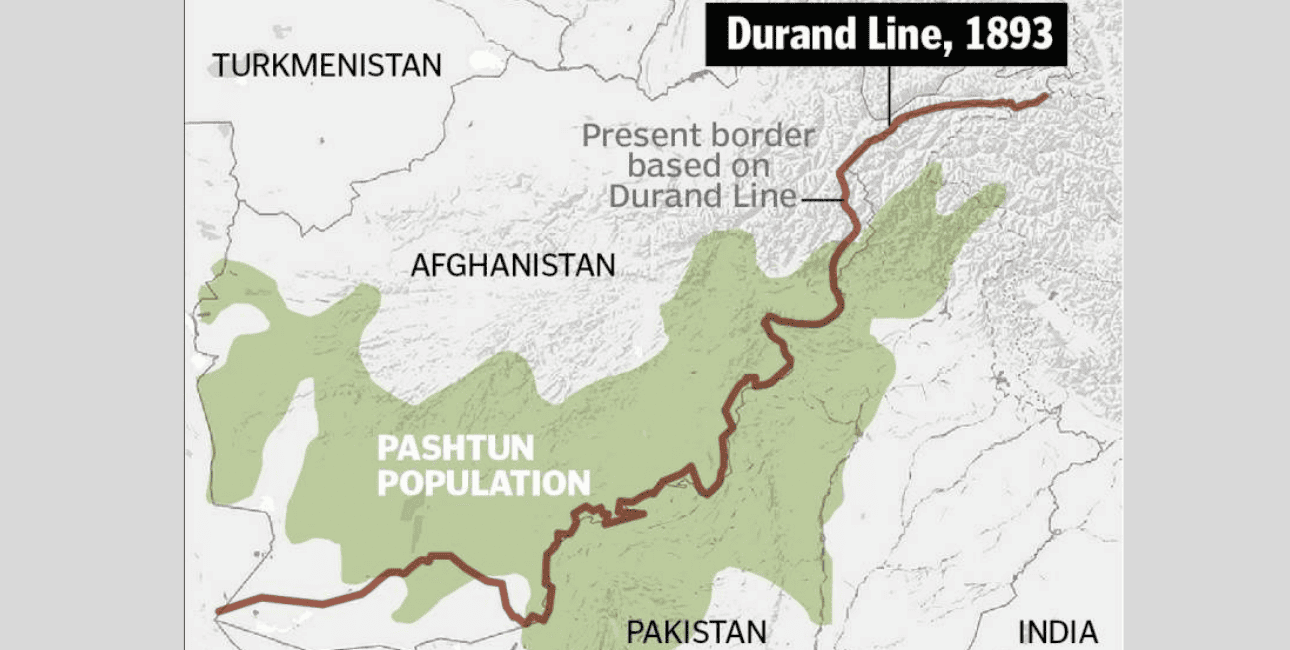
The Pashtuns and Taliban do not recognize this international border and have family ties on both sides of the border. In case of any conflict between the Taliban and Pakistan, many people in Pakistan’s Khyber Pakhtunkhwa province could support the Taliban, for both ideological and ethnic reasons.
There are already signs that the Taliban is trying to portray the conflict as not between two states but as an ethnic conflict between the Pashtuns and the Punjabis.
If this narrative takes hold in the Khyber Pakhtunkhwa province, then the conflict with the Taliban can easily turn into a civil war within Pakistan.
Notably, the ethnic faultlines run deep in Pakistan, and all ethnic groups, be it the Balochis, Pashtuns, Sindhis, or the Kashmiris, harbor long-seated discontent against the Punjabis.
The continued detention of former Prime Minister Imran Khan, an ethnic-Pashtun and arguably the most popular leader in Pakistan, adds another dimension to these ethnic divisions.
Together, all these factors mean that the Taliban enjoys considerable strategic depth in Pakistan.
2025 is already becoming the deadliest year for Pakistani security forces since 2009. The Pakistani security forces have already lost 940 security personnel this year, till October 14. In 2009, the Pakistani security forces lost 1,012 security personnel.
Pakistan Army is battling a full-blown insurgency in Balochistan and Khyber Pakhtunkhwa. Anti-government protests are also increasing in PoK (locally called Azad Kashmir).
Nitin J Ticku, a military expert and editor of EurAsian Times, says, “Pakistan certainly has a very powerful military with cutting-edge weapons, but the Taliban’s asymmetric warfare tactics, historical resilience, and potential alliances could drain Pakistan of men and material.
The Afghan Taliban are experts in guerrilla warfare, and based on this ability, they have been resisting Russian and American forces. Pakistan will have to be alert that if its rivals start supplying weapons to the Taliban, the scale of attacks (against Pakistan) would then increase dramatically.
Their style of warfare—characterized by hit-and-run attacks, ambushes, and blending into civilian populations—neutralizes the advantages of conventional militaries. The Taliban is “no easy pudding;” Pakistan’s superior weapons alone will not suffice against such adaptive and elusive fighters.
- Sumit Ahlawat has over a decade of experience in news media. He has worked with Press Trust of India, Times Now, Zee News, Economic Times, and Microsoft News. He holds a Master’s Degree in International Media and Modern History from the University of Sheffield, UK.
- VIEWS PERSONAL OF THE AUTHOR.
- He can be reached at ahlawat.sumit85 (at) gmail.com
