
Pakistan’s Afghan Retaliation Imminent After TTP’s Twin Attacks
A suicide bomber strapped with explosives blew himself up outside the District Judicial Complex in Islamabad on Tuesday afternoon, killing 12 people and wounding at least 36, including police officers. This was the first such attack in the Pakistani capital in over three years and points to a sharp escalation in militancy in the country in recent weeks.
Police confirmed that the militant outfit Tehreek-e-Taliban Pakistan (TTP) claimed responsibility for the attack. Investigators in Pakistan are examining how the bomber bypassed multiple checkpoints to reach the heavily guarded judicial area in the capital.
The blast occurred at a time when Islamabad is hosting many international events, including a Pakistan-Sri Lanka cricket match in nearby Rawalpindi. For many Pakistanis, the incident revived painful memories of the 2009 militant assault in Lahore that targeted the Sri Lankan cricket team and local players.
The suicide bombing in Islamabad bombing follows another major TTP attack on the Cadet College Wana in South Waziristan, Khyber Pakhtunkhwa (KP) on Tuesday, when TTP-affiliated militants stormed the military-run school. Around 650 people, including 525 cadets, were present at the time of the attack. Security forces reportedly killed all the attackers. Interior Minister Mohsin Naqvi told reporters that the operation succeeded without cadet casualties.
The attack in Wana has revived memories of the 2014 Army Public School (APS) massacre in Peshawar, where TTP militants killed over 130 children. The military’s Inter-Services Public Relations (ISPR) condemned the militants for attempting to repeat the “barbaric” APS attack.
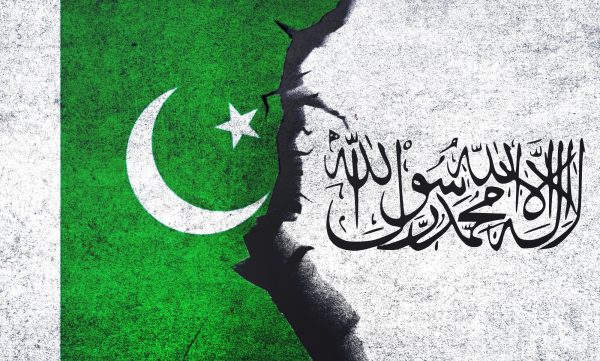
Pakistani officials have accused Afghanistan of direct involvement in the Wana attack. Naqvi stated that the Wana attackers were Afghan nationals who maintained contact with handlers across the border throughout the night. Pakistan’s Defense Minister Khawaja Asif pointed out that such terrorist operations require external support and sanctuaries.
Pakistan could launch strikes inside Afghanistan if the Taliban regime continues sheltering TTP fighters, Asif warned, adding that there should be no more illusions that the Afghan Taliban are sincere in wanting peace. “Let’s not fool ourselves … there were three rounds of talks,” he said, referring to the recent talks with the Taliban regime in Qatar and Turkiye.
These statements from Pakistani leaders indicate that the country remains frustrated with the Afghan Taliban’s refusal to curb the TTP and its affiliates. Meanwhile, Kabul continues to insist that TTP fighters are Pakistani tribal refugees, not militants. Furthermore, the Taliban’s rejection of the Durand Line as a legitimate international border underscores that the leadership in Kabul has no genuine interest in pursuing peace with Pakistan, Islamabad says.
Despite internationally mediated talks, the Taliban have resisted verification mechanisms to monitor TTP activities in Afghanistan. A 2024 trilateral agreement with Pakistan and the UAE aimed to relocate TTP fighters away from border areas. According to security officials, the UAE even provided funds to facilitate the process. However, Pakistani sources told The Diplomat that only a few hundred militants were moved away from the Pakistani border regions, with no further monitoring or lists shared with either Pakistan or the UAE.
History shows that the Taliban have rarely honored such commitments. It seems that ideological ties between the Afghan Taliban and the TTP make decisive action unlikely, regardless of diplomatic pressure on Kabul.
Amid these developments, Asif has once again reiterated that Pakistan reserves the right to strike TTP hideouts in Afghanistan. He accused the Taliban of harboring terrorists behind the latest violence.
A high-level Turkish delegation, including the foreign and defense ministers as well as the intelligence chief, is scheduled to visit Pakistan later this week to discuss Afghanistan and the TTP threat. It appears that Pakistan may give dialogue with the Taliban regime another chance, using Turkish mediation to bring the Taliban around to act against the TTP before it decides to use the military option again.
Meanwhile, the KP provincial government has convened a peace Jirga at the provincial assembly to address rising terrorism in the province. Pakistan People’s Party (PPP) leader and KP Governor Faisal Karim Kundi will attend, along with other federal government representatives. Besides, the Awami National Party (ANP), Jamiat Ulema-i-Islam-Fazl (JUI-F) and Jamaat-i-Islami (JI), all of which are part of the opposition in the KP Assembly, are participating in the meeting as well.
The convening of a Jirga indicates that Pakistan’s political leadership is determined to address the critical issue of the TTP threat. By projecting a unified national stance, it is keen to signal to the Afghan Taliban that internal divisions will not weaken its resolve on security.
The coming days will also test diplomatic efforts.
Turkiye and Qatar are continuing with their efforts to facilitate dialogue between Pakistan and the Taliban regime. However, a failure could trigger Pakistani military operations on TTP hideouts inside Afghanistan.
It is possible that such action would likely prove more intense than previous campaigns if the Taliban refuse to dismantle TTP networks. This strategy from Pakistan may have its own implications. The last strikes on Afghanistan, though never claimed officially by Pakistan, resulted in clashes along the border, killing at least 50 civilians.
A coherent strategy that combines border security, targeted and pinpointed strikes on TTP locations, domestic consensus, and sustained pressure on Kabul, offers the best chance to contain the TTP threat. Without it, the cycle of violence could risk further destabilizing the region.
