How Tariffs, Conflict and Power Shifts Redrew World Politics in 2025
International
oi-Prakash KL

2025 will be remembered as a year of sharp geopolitical shocks and accelerating realignments. At its core were three disruptive forces: a protectionist U.S. trade offensive under President Trump that destabilised global supply chains; unexpected conventional and cyber clashes between long-standing rivals in South Asia; and continued violent spillovers from the prolonged Israel-Palestine conflict that reshaped regional politics across the Middle East.
Tariff Wars
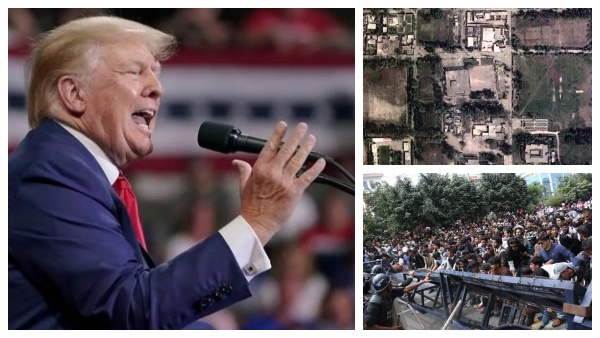
In 2025, geopolitical instability arose from U.S. trade tariffs, an India-Pakistan conflict triggered by terrorism, and the ongoing Israel-Palestine issue, impacting global supply chains and regional politics with the G20 summit in South Africa focusing on debt relief.
First, the Trump administration's sweeping tariff programme - a set of "reciprocal" and country-specific levies announced and implemented through 2025 - rattled markets and forced many trading partners into rapid retrenchment and negotiations. Tariffs ranged from universal baseline levies to very high, targeted duties on major partners; they triggered immediate supply-chain reshoring, retaliatory measures and a string of trade concessions and emergency talks with large exporters such as India, Canada and South Korea. The tariffs created acute short-term economic pain and political friction across multiple capitals, prompting emergency bilateral talks and trade-deal renegotiations late in the year.
Second, South Asia experienced one of the most alarming episodes of the year: a brief but intense India-Pakistan conflict in May. The TRF, a proxy of the Pakistan-based terrorist organization Lashkar-e-Tayyiba (LeT), carried out a terrorist attack in Pahalgam on April 22, killing tourists.
At least 26 civilians died. In retaliation, the Indian armed forces launched Operation Sindoor and hit terror infrastructure facilities of Pakistan-based militant groups Jaish-e-Mohammed and Lashkar-e-Taiba in Pakistan and Pakistan-occupied Kashmir. Over 100 terrorists killed. This led to the war between two nuclear-armed nations.
The confrontation included precision missiles and air strikes, a major beyond-visual-range aerial engagement, cyberattacks. Though the fighting lasted only days before a ceasefire, it underscored how local insurgent attacks, rapid escalation dynamics, and modern cyber and loitering-munition capabilities can produce near-state-level conflict between nuclear-armed neighbours - and how quickly regional stability can fray.
Middle East Instability
Third, the Middle East remained a centrifugal zone of instability. The multi-year Israel-Hamas war, subsequent negotiated pauses and hostages-for-prisoner agreements, and sporadic Hezbollah and Iran-linked strikes produced a persistent security crisis. The partial ceasefires of 2025 have been brittle; occasional flare-ups, proxy activity in Lebanon and maritime incidents near Yemen kept the region tense and forced renewed international mediation efforts. The conflict's humanitarian toll and regional ripple effects dominated diplomacy, defence budgets and refugee flows throughout the year.
Gaza Peace Deal: A Fragile Breakthrough After Years of War
In contrast to the grim outlook in Eastern Europe, 2025 brought an unexpected breakthrough in West Asia with the announcement of a fragile but historic peace framework for Gaza. After months of intense mediation involving the US, Egypt, Qatar, and the UN, Israel and Hamas agreed to a broad ceasefire package aimed at ending more than a year of devastating hostilities. The deal centred on phased reconstruction in Gaza, a gradual release of hostages and prisoners, limited Israeli troop withdrawals, and a roadmap for administrative reforms in the Palestinian territories. While the agreement did not resolve the core political dispute, it provided the first meaningful pause in violence since October 2023 and was hailed globally as a rare diplomatic victory in a deeply polarised region.
On the ground, the ceasefire allowed humanitarian agencies to resume operations at a scale not seen in years. Aid convoys entered northern Gaza, hospitals received medical supplies, and thousands of internally displaced families cautiously returned to their neighbourhoods. However, the peace remained fragile, threatened by mistrust between the parties, disagreements over border controls, and internal political pressures on both sides. Israel remained sceptical about Hamas' compliance, while Palestinian groups criticised the deal for not addressing statehood or long-term sovereignty. Even so, the Gaza peace framework became one of 2025's most significant diplomatic milestones-offering a rare glimmer of hope in a region long defined by conflict.
G20 Summit In South Africa
The Johannesburg G20 (hosted by South Africa) crystallised a political moment for the Global South. The summit issued a broad declaration on debt relief, climate finance and a stronger voice for developing countries, emphasing equity and sustainable development - even as tensions with the U.S. presidency (and related boycotts and diplomatic rows) exposed fractures in the group. The event signalled both a push for reforms of global institutions and the limits of consensus when powerful members break with the rest.
Youth-led Uprising Topples Government in Nepal - The 2025 Nepalese Gen Z Protests
One of the most dramatic political events of 2025 took place in Nepal, where widespread protests erupted in early September after the government imposed a sweeping ban on around two dozen social media platforms. What began as a reaction to censorship quickly transformed into a broader anti-corruption and anti-nepotism outcry, with mainly young people - the so-called "Generation Z" - who demanded transparency, accountability, and an end to political impunity.
The protests rapidly escalated: on 8 September police opened fire on demonstrators outside the parliament, resulting in dozens of deaths. The next day, protestors stormed public buildings, including the federal parliament and other government offices, setting them ablaze.
Democratic Renewal - Women's Political Leadership Gains Ground
The appointment of Sushila Karki as interim Prime Minister of Nepal - the first woman to lead the Himalayan republic - represents a landmark in gender and political representation.
In a broader sense, 2025 witnessed renewed momentum globally for inclusion, representation, and systemic reforms. As old political orders are hit by social discontent, younger generations demand more than symbolic representation: they insist on genuine change, accountability, and equality.
This development could encourage other nations to re-examine the representation of women and minorities in politics - especially where older elite structures have long dominated.
Other Issues
Digital and hybrid warfare matured into a central theatre of contestation. State-level cyberattacks during the India-Pakistan episode and widespread data intrusions became commonplace, convincing many governments to prioritise cyber-resilience, sovereign data policies and new deterrence postures. The mixture of kinetic strikes and digital operations raised urgent questions about escalation control and norms in cyberspace.
Domestic politics in major democracies produced consequential shifts: rising polarisation in the U.S. under the Trump presidency (compounded by aggressive trade and foreign policies), snap elections and leadership crises in several countries, and an emboldened right-and-left populist playbook across regions that reshaped parliamentary arithmetic and policy priorities throughout the year.
Climate and debt became political flashpoints. The climate financing, adaptation and debt-relief agenda - highlighted at the G20 and in multilateral borrowing talks - moved center stage as governments confronted mounting disaster costs and constrained fiscal space. Developing countries pressed for quicker, predictable finance and for reformed lending terms; the issue will remain central to geopolitical bargaining.
The year is ending with an uneasy mixture of diplomatic activism and hardened security postures. Major powers pursued back-channel diplomacy to prevent escalation (notably after South Asian and Middle Eastern flare-ups), while simultaneously increasing defence budgets and contingency planning. The combination - intensified diplomacy alongside security bolstering - created a world that is more reactive and risk-aware than the one that opened 2025.
-

Saiyaara Tops, Kantara, Coolie Follows Next: The Films That Drove Google Trends in 2025
-
Most Mispronounced Words of 2025: Louvre, Zohran Mamdani and Other Tongue Twisters That Tripped Up Broadcaster
-
'The Instagram Viral 19-Minute Video’ Everyone Is Searching, But Clicking Could Empty Your Bank Account
-
Tamil Nadu Holiday On December 5: Will Chennai Schools Reopen Or Students Get One More Holiday?
-
Dhurandhar First Review Out On Internet: Ranveer Singh’s Spy Thriller Sparks Massive Pre-Release Buzz
-
AVM Saravanan's Family Tree Explained - Know The Legacy of A Tamil Cinematic Dynasty
-
Rishab Shetty Sat Back & Laughed When Ranveer Said 'Female Ghost': Suchitra Calls Kantara Greedy Cinema
-
Putin India Visit: Russian President To Arrive In Delhi On Dec 4; Full Schedule Released
-
AVM Saravanan Death: Watch Celebs Paying Homage With Heavy Heart LIVE Online
-
Former Mizoram Governor Swaraj Kaushal, Husband of Sushma Swaraj, Passes Away as PM Modi Mourns His Death
-
Scorpio Horoscope For Today, December 04, Thursday - Dive Deep Into What Interests You!
-
Aquarius Horoscope For Today, December 04, Thursday - Expect Unexpected Twists!