
China Sets New Rail Speed Benchmark as Experimental Train Hits 700 Kmph in Seconds
China's latest test of a superconducting maglev train reached 700 km/h on a 400-metre track, marking a new world record in ultra-high-speed propulsion. The research highlights potential applications for rapid long-distance travel in transport, aviation and space concepts, while underscoring global competition in maglev R&D.
International
-Ashish Rana

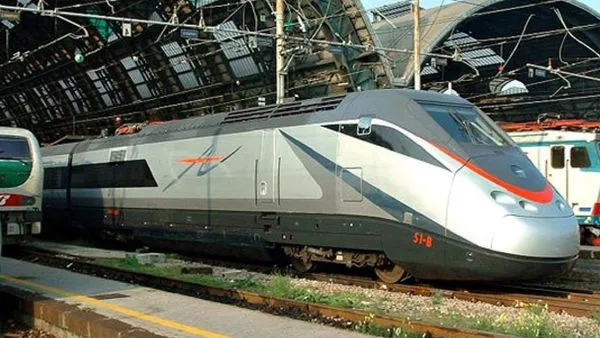
China’s latest test of a superconducting maglev train has set a new world speed record, with researchers accelerating a one-tonne vehicle to 700 km/h on a 400-metre track. The train reached this speed in about two seconds, then came to a controlled stop, according to project data.
China's National University of Defence Technology team has set a new world speed record for a superconducting maglev train, accelerating a one-tonne vehicle to 700 km/h on a 400-meter track, improving upon a January test that reached 648 km/h. This system, developed over 10 years, is intended to advance China's ultra-high-speed maglev transport research, potentially linking distant cities and impacting aviation and spaceflight through electromagnetic launch methods.
Video from the trial shows the silver vehicle streaking past like a flash of light, leaving a thin mist behind. Observers report that the maglev appears and vanishes so fast that the human eye struggles to track it, giving the scene a strong science fiction feel.
Fastest maglev train technology and key performance data
The maglev uses superconducting magnets to lift the train off the track and drive it forward without contact. This removes wheel-rail friction and allows very high acceleration. Researchers describe the thrust generated as strong enough to support rocket launch systems in future conceptual designs.
China’s National University of Defence Technology team conducted the experiment on a 1,310-foot track built for ultra-high-speed trials. A similar run in January reached 648 km/h, meaning the latest test improved the peak speed by 52 km/h. The system is now described as the fastest superconducting electric maglev train yet tested.
| Test detail | Measurement |
|---|---|
| Vehicle mass | About 1,000 kg |
| Track length | 400 metres (1,310 feet) |
| Top speed, January test | 648 km/h |
| Top speed, latest test | 700 km/h |
Fastest maglev train research history and global context
The current research group has spent around 10 years developing this ultra-high-speed superconducting system. Nearly thirty years earlier, the same university produced China’s first manned single-bogie maglev train. That achievement made China the third country worldwide to gain full operational know-how for maglev transport.
The project now sits within a wider race among major economies to push high-speed rail limits. For comparison, Japan’s experimental L0 maglev has exceeded 600 km/h in tests. The French-language commentary notes the L0 train “redéfinit littéralement la notion de vitesse” for modern transport using magnetic levitation principles.
Fastest maglev train applications in transport, aviation and space
Researchers highlight that such speeds could connect distant cities within minutes if deployed over long routes. The concept is also linked to future vacuum-tube systems such as hyperloop-style transport, where reduced air resistance could support sustained ultra-high-speed travel across large corridors.
Electromagnetic acceleration methods used in the test are being examined for aviation and spaceflight. Rockets and aircraft could use track-based electromagnetic launch systems to reach take-off speeds faster and more smoothly. Analysts expect this to cut fuel use and lower related costs if scaled successfully for operational platforms.
Project reports, cited by the South China Morning Post, state: "It resolves core technical challenges including ultra-high-speed electromagnetic propulsion, electric suspension guidance, transient high-power energy storage inversion, and high-field superconducting magnets," according to the South China Morning Post (SCMP). Li Jie, a professor at the National University of Defence Technology, said, "The successful development of this ultra-high-speed superconducting electric maglev system will accelerate the research and development process of China's ultra-high-speed maglev transport." Together, these points indicate China is moving its maglev research from laboratory testing towards broader transport planning.
-

New OTT Releases This Week in Tamil, Telugu, Hindi, Malayalam In Dec 4th Week - Full List
-

Mark 1st Day Box Office Collection: Sudeep's Film Beats Shivanna's 45 On Opening Day
-
Yogi Government Welcomes Centre’s Nod to Long-Term Metro Plan for Lucknow, Kanpur and Agra
-

Sarvam Maya Movie Review: What's Good, What's Bad In Nivin Pauly-Starrer?
-

Jana Nayagan Audio Launch: Vijay's Thalapathy Thiruvizha Date, Time, Streaming Info, Guest List, Ticket Deets
-

Mark Box Office Collection Day 1: Sudeep's Film Opens Well In Bengaluru, Mysuru
-

Hyderabad Horror! Man Burns Wife Alive, Pushes Daughter Into Fire
-

Five Killed as Rescue Helicopter Crashes Near Mount Kilimanjaro in Tanzania
-

Retta Thala Movie Review: What's Good, What's Bad In Arun Vijay's Film?
-

Vrusshabha Movie Review: What's Good, What's Bad In Mohanlal-Starrer?
-

Stranger Things Season 5 Volume 2 Release Date, Time in India: When to Expect Episodes 5–7?
-

Christmas Celebrations Disrupted Across India as Vandalism, Threats Surface in Multiple States


