What Is Somaliland, Where Is It and Why Israel’s Recognition Has Sparked Global Backlash
International
oi-Pankaj Mishra

Somaliland, a breakaway region of Somalia, has come into the spotlight after Israel became the first country to formally recognise it as an independent nation, drawing strong reactions from Somalia and the wider international community.
Israel has become the first country to formally recognize Somaliland as an independent nation, a self-declared state in the Horn of Africa, which has led to widespread international reactions, including condemnation from Somalia, Arab nations, and the UN. The US, however, distanced itself from Israel's decision although Prime Minister Benjamin Netanyahu signed a declaration of mutual recognition with Somaliland President Abdirahman Mohamed Abdullahi.
Where Is Somaliland?
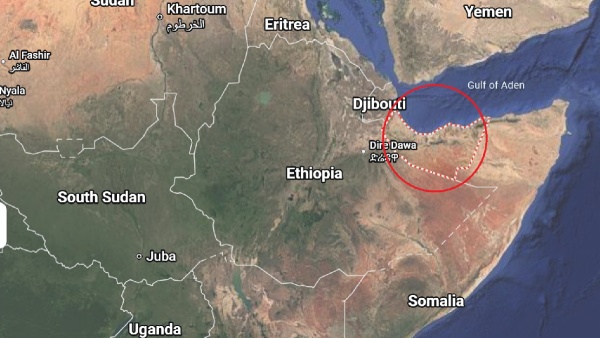
Somaliland is a self-declared state in the Horn of Africa, located in the northwest of Somalia along the Gulf of Aden, opposite Yemen and bordering Djibouti. The region sits on the strategically vital Red Sea-Gulf of Aden shipping corridor, close to major global trade routes and foreign military bases.
Why Is Somaliland in the News Now?
Somaliland has entered global headlines after Israel formally recognised it as an independent country, becoming the first nation to do so since the territory declared independence from Somalia in 1991. The move has triggered sharp reactions from Somalia, Arab and African nations, and prompted an emergency discussion at the United Nations.
Israel's Recognition and Fallout
Israel announced the decision on Friday, signing a declaration of mutual recognition between Prime Minister Benjamin Netanyahu, Foreign Minister Gideon Sa'ar, and Somaliland President Abdirahman Mohamed Abdullahi. Netanyahu said the move aligns with the spirit of the Abraham Accords and signalled he would raise the issue with U.S. President Donald Trump.
Somalia swiftly condemned the decision, calling it an act of "aggression" and demanding it be reversed-just days before Somalia is due to assume the presidency of the UN Security Council.
UN and International Reaction
The UN Security Council is set to hold an emergency meeting on Monday to discuss Israel's move. A joint statement by more than 20 countries, along with the Organisation of Islamic Cooperation, rejected Israel's recognition, warning it could destabilise peace and security in the Horn of Africa and the Red Sea region. Syria also issued a separate condemnation.
US Distances Itself
While Netanyahu said he would lobby Washington, Donald Trump distanced the US from Israel's decision, saying America would not follow suit. The US State Department reiterated that it continues to recognise the territorial integrity of Somalia, including Somaliland, despite recent US frustration with Somalia over security issues at the UN.
A Long-Running Independence Bid
Somaliland briefly gained independence in 1960 and was recognised by Israel and 35 other countries before voluntarily uniting with Somalia. It declared independence again in 1991, after Somalia collapsed into civil war. Since then, Somaliland has operated with its own government, currency and security forces, and has seen relative political stability and democratic transitions-unlike much of Somalia.
Still Unrecognised, Mostly
Despite decades of de facto independence, no country other than Israel has formally recognised Somaliland so far. However, the UK, Turkey, the UAE, Denmark and Taiwan maintain informal diplomatic ties.
Strategic Stakes Rise
With its location near one of the world's busiest maritime corridors, Israel's recognition has elevated Somaliland from a long-standing regional issue to a major geopolitical flashpoint, drawing global attention and intensifying debate over sovereignty, stability and influence in the Horn of Africa.
Abraham Accords and Israel's Broader Strategy
The Abraham Accords are a series of normalisation agreements signed from 2020 onwards between Israel and several Arab states, including the United Arab Emirates, Bahrain, Morocco and Sudan, aimed at reshaping regional diplomacy through economic, security and political cooperation.
By invoking the Abraham Accords in the context of recognising Somaliland, Israel appears to be signalling an attempt to extend this framework beyond the Middle East into Africa, linking diplomatic recognition with strategic partnerships around trade routes, security cooperation and countering regional influence, particularly near the Red Sea and Gulf of Aden.
-

Bigg Boss Kannada 12 Elimination: Not Rakshitha, This Contestant To Be Evicted In Sudeep's Show
-
Mark 1st Day Box Office Collection: Sudeep's Film Beats Shivanna's 45 On Opening Day
-
Jana Nayagan Audio Launch: Vijay's Thalapathy Thiruvizha Date, Time, Streaming Info, Guest List, Ticket Deets
-
Bigg Boss Tamil Eviction: Subiksha Out of The Show Through Mid Week Elimination?
-
Hyderabad Horror! Man Burns Wife Alive, Pushes Daughter Into Fire
-
BJP–Shinde Sena Finalise Seat-Sharing For BMC Polls: BJP To Contest On 140, Shiv Sena Gets 87
-
Digvijaya Singh Praises BJP-RSS While Sharing Old Photo of PM Modi, BJP Hits Back at Congress
-
BJP Leader Dushyant Kumar Gautam Urges Government to Remove Video Implicating Him in Ankita Bhandari Murder Case
-
Vindhya Vyapar Mela Ladies Washroom MMS: After Payal Gaming, 19-Minute Viral Video, New Clip Triggers Outrage
-
LeT Terrorist Sighting Sparks Joint Operation in Anantnag
-
Lucknow Flower Pot Theft Raises a Bigger Question: Why Do Indians Treat Public Property as Free Loot?
-
Mark 2nd Day Box Office Collection: Sudeep's Film Performs Well Despite Clashing With 45