
Myanmar Begins Phased National Election Amid Violence, Bans and Claims of Junta Control
The article examines the Myanmar election amid ongoing conflict, phased voting across a portion of the country, legal restrictions on opposition, and international scrutiny. It highlights security incidents, displacement, and concerns about legitimacy while outlining the electoral structure and stakeholder perspectives.
International
-Ashish Rana

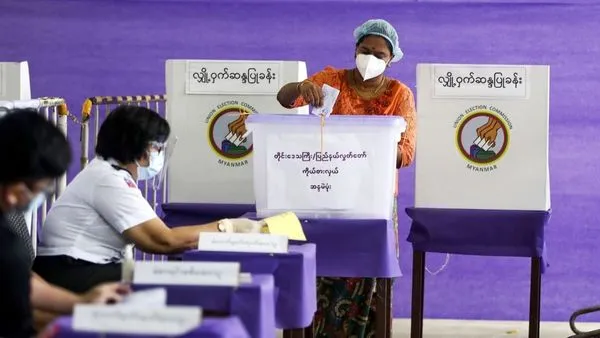
Myanmar is holding a month-long, phased national ballot that many domestic and international observers label a sham. Major opposition parties, including Aung San Suu Kyi's National League for Democracy, are banned, many leaders are jailed, and active conflict means voting is expected in only part of the country.
Myanmar is holding a month-long, phased national election, widely considered a sham due to the exclusion of major opposition parties like Aung San Suu Kyi's National League for Democracy, amid ongoing conflict and security concerns. The military authorities, supported by China and Russia, aim to cement their control, with voting planned in 265 of 330 townships, while facing criticism from Western governments, regional blocs, and human rights groups, as well as the UN.
The military authorities say the process will restore multi-party rule almost five years after the 2021 coup. Analysts argue instead that the Myanmar election is designed to cement junta control, with support from China and Russia, after years of stalemate, heavy fighting and economic collapse across large areas.
Violence and security concerns around the Myanmar election
Polling opened on Sunday amid security incidents. Local media and officials reported explosions in at least two regions. In Mandalay region, three people were hospitalised after a rocket hit an uninhabited house, regional authorities said, with one person in critical condition and damage also reported in Myawaddy township.
In Myawaddy, near the Thai border, more than ten houses were damaged late on Saturday following several blasts. BBC quoted a resident that a child died in the incident and three people were taken to hospital "in an emergency condition", highlighting how violence shadows the Myanmar election in frontline areas.
Civil war, logistics and territorial control in the Myanmar election
The military is fighting resistance forces that emerged after the coup, as well as long-standing ethnic armed groups. It lost ground in a series of defeats but retook some territory during 2024 using intense airstrikes, which analysts link to military cooperation and supplies from China and Russia.
Years of conflict have killed thousands of people and displaced millions. The fighting has destroyed livelihoods, shattered public services and driven a humanitarian emergency. A major earthquake in March and cuts to foreign aid worsened conditions, raising deep questions about how a nationwide Myanmar election can be conducted.
Officials plan voting in three stages over the next month in 265 of Myanmar's 330 townships. The remaining 65 townships are considered too insecure for polling. Even in areas scheduled to vote, some constituencies will not open, meaning overall turnout in the Myanmar election is difficult to predict.
| Myanmar election element | Figure / detail |
|---|---|
| Total townships in country | 330 |
| Townships scheduled to vote | 265 |
| Townships deemed too unstable | 65 |
| Voting schedule | Three phases over one month |
| Expected results announcement | Around end of January |
International criticism and legal pressure around the Myanmar election
A new election law targets people who disrupt or oppose the polls. More than 200 individuals have been charged under this legislation, which allows harsh sentences including the death penalty. Human rights groups say this legal environment chills debate and constrains any meaningful contest in the Myanmar election.
Film director Mike Tee, actor Kyaw Win Htut and comedian Ohn Daing were among high-profile figures prosecuted under the July law. State media said they each received seven-year prison terms after criticising a film promoting the Myanmar election, illustrating how public commentary has drawn criminal penalties.
"There are no conditions for the exercise of the rights of freedom of expression, association or peaceful assembly," the United Nations' human rights chief Volker Türk said. Civilians are "being coerced from all sides", Mr Türk added, noting that resistance groups have also threatened people who decide to vote in the Myanmar election.
Western governments, including the United Kingdom and the European Parliament, have dismissed the vote as a sham. Regional bloc Asean has urged political dialogue before any nationwide Myanmar election, arguing that inclusive talks are needed while much of the country remains under opposition or contested control.
Parties, phases and tactics in the Myanmar election
Six parties, including the military-aligned Union Solidarity and Development Party, are fielding candidates nationwide. Another 51 parties and independent figures are contesting only at state or regional level. Around 40 parties, including the National League of Democracy, were dissolved, removing the main challenger from the Myanmar election.
Aung San Suu Kyi and senior National League of Democracy leaders are in prison on charges widely criticised as political. Other members have fled abroad. Because of these bans and arrests, analysts say the Myanmar election lacks genuine competition, while the main pro-democracy movement operates underground or from exile.
"By splitting the vote into phases, the authorities can adjust tactics if the results in the first phase do not go their way," Htin Kyaw Aye, a spokesperson for election-monitoring group Spring Sprouts, told Myanmar Now. The phased structure of the Myanmar election therefore raises additional concerns about manipulation and pressure.
Voter experiences and public opinion on the Myanmar election
Despite the conflict, some citizens say they feel obliged to participate. BBC quoted voters the process appears more "disciplined and systematic" than past polls. "The experience of voting has changed a lot," said Ma Su ZarChi from Mandalay region, describing a different atmosphere during the Myanmar election.
Ma Su ZarChi said, "Before I voted, I was afraid. Now that I have voted, I feel relieved. I cast my ballot as someone who has tried their best for the country." The comments suggest some participants view the Myanmar election as a civic duty despite wider scepticism.
First-time voter Ei Pyay Phyo Maung, aged 22, told the BBC voting is "the responsibility of every citizen". "My hope is for the lower classes - right now, the prices of goods are skyrocketing, and I want to support someone who can bring them down for those struggling the most," Ei Pyay Phyo Maung said.
Ei Pyay Phyo Maung added: "I want a president who provides equally for all people." These views highlight economic hardship as a dominant concern, alongside political issues, for some participants in the Myanmar election, even as widespread conflict and displacement continue to shape daily life.
Others reject the entire process. In western Chin state, 80-year-old resident Ral Uk Thang said civilians "don't want the election". "The military does not know how to govern our country. They only work for the benefit of their high-ranking leaders. "When Daw Aung San Suu Kyi's party was in power, we experienced a bit of democracy. But now all we do is cry and shed tears," Ral Uk Thang told the BBC, reflecting deep resentment toward the Myanmar election.
Junta messaging and claims about the Myanmar election
The military authorities deny accusations that the poll lacks legitimacy. The junta says it wants to "return [the country] to a multi-party democratic system". After voting at a heavily guarded station in Nay Pyi Taw, junta chief Min Aung Hlaing insisted that the Myanmar election would be free and fair.
Min Aung Hlaing said, "I am the Commander-in-Chief of the Armed Forces, a civil servant. I can't just say that I want to be president," stressing that the Myanmar election will unfold in three phases. Earlier in the week, Min Aung Hlaing warned that people who refuse to vote are rejecting "progress toward democracy".
Across Myanmar, the combination of armed conflict, bans on major parties, restrictive laws and targeted arrests means the vote faces intense scrutiny. The phased Myanmar election is going ahead in only part of the country, under heavy criticism from many citizens, regional neighbours and Western governments.
-

Bigg Boss Kannada 12 Elimination: Not Rakshitha, This Contestant To Be Evicted In Sudeep's Show
-

Mark 1st Day Box Office Collection: Sudeep's Film Beats Shivanna's 45 On Opening Day
-

Jana Nayagan Audio Launch: Vijay's Thalapathy Thiruvizha Date, Time, Streaming Info, Guest List, Ticket Deets
-
Bigg Boss Tamil Eviction: Subiksha Out of The Show Through Mid Week Elimination?
-

Hyderabad Horror! Man Burns Wife Alive, Pushes Daughter Into Fire
-
BJP–Shinde Sena Finalise Seat-Sharing For BMC Polls: BJP To Contest On 140, Shiv Sena Gets 87
-
Digvijaya Singh Praises BJP-RSS While Sharing Old Photo of PM Modi, BJP Hits Back at Congress
-
BJP Leader Dushyant Kumar Gautam Urges Government to Remove Video Implicating Him in Ankita Bhandari Murder Case
-
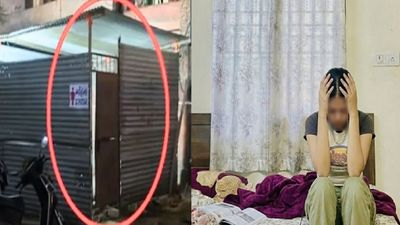
Vindhya Vyapar Mela Ladies Washroom MMS: After Payal Gaming, 19-Minute Viral Video, New Clip Triggers Outrage
-
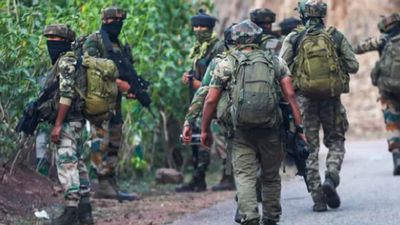
LeT Terrorist Sighting Sparks Joint Operation in Anantnag
-
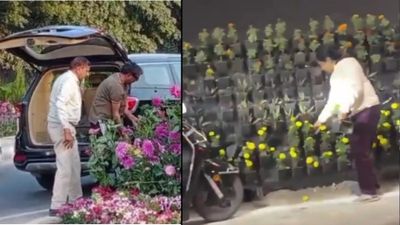
Lucknow Flower Pot Theft Raises a Bigger Question: Why Do Indians Treat Public Property as Free Loot?
-

Mark 2nd Day Box Office Collection: Sudeep's Film Performs Well Despite Clashing With 45


