
South Asia’s Strategic Shift: How India Lost the Diplomatic Initiative With Its Neighbors
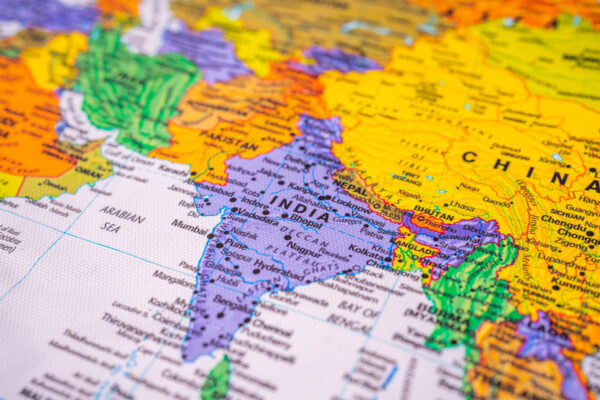
India is facing a severe strain on its relations across all its borders. New Delhi, the economic giant of South Asia, is dealing with a deterioration in relations with its neighbors – not in a bilateral isolated manner, but as a structural shift visible across the regional spectrum. These include rising tensions with Bangladesh, friction on the western border with Pakistan, and strategic shifts in Nepal, Sri Lanka, and the Maldives. The reason behind these shifts is a growing mistrust among the neighbors, owing to India’s security-centric diplomacy, ideological signaling, and aggressive leadership rhetoric.
Despite promises of connectivity, trade, and cooperation under India’s “Neighborhood First” policy, the influence India aspired to is not being realized. India’s extension of Lines of Credit (LOCs) to Bangladesh (roughly $7.9 billion) and Nepal ($1.6 billion), showed an intent of interdependence, but India was unable to build trust. Additionally, the challenges are compounded by politics and ideology. Hindutva-driven symbolism based on concepts such as “Akhand Bharat” and aggressive statements by prominent leaders, including Prime Minister Narendra Modi, tend to concretize India’s interventionist image, persuading neighbors to diversify their options and hedge in a multipolar setting of South Asia.
Formally articulated over a decade ago, India’s “Neighborhood First” policy aimed at strengthening regional connectivity, trade facilitation, and enhanced political engagement with its neighbors. The main objective was to project India as a cooperative South Asian leader that offers all sorts of support and aid to countries such as Bangladesh, Nepal, and the Maldives. The intent of win-win cooperation was reassured by high-level diplomatic visits aimed at institutionalizing dialogue and fostering long-lasting partnerships.
Practically, the policy delivered measurable outcomes. By extending lines of credit to Bangladesh, Nepal, and the Maldives, and financing transport, energy, and infrastructure projects, India reinforced its role as a reliable partner in the region. Furthermore, India also extended credible humanitarian support to its neighbors in times of natural disasters.
However, the “Neighborhood First” vision faced immense challenges in the realm of implementation. Multiple projects faced delays due to disagreements over territorial and water disputes, bureaucratic red tape, and conditions requiring the use of India-based contractors. For example, Bangladesh dropped 11 projects due to lengthy approval processes, Indian consultant appointments, and multiple layers of approvals. Nepal faced similar constraints, raising concerns about bureaucratic bottlenecks in approvals regarding infrastructure projects. These shortcomings illuminate the complex interplay between intent, implementation, and perception in the dynamic regional setting of South Asia.
In response to political flux and changing geostrategic incentives, India’s neighbors are hedging their alliances and asserting autonomy, depicting a structural shift across the South Asian landscape. Bangladesh is a prime example of this trend. After the ouster of long-time ruler Sheikh Hasina in August 2024, the new government of Nobel Laureate Muhammad Yunus, the interim leader of Bangladesh, is pursuing a broader diplomatic recalibration: increased engagement with Pakistan and China. This reversed decades-old Bangladeshi policy of reliance on India, signaling a shift in strategic priorities.
More recently, Bangladesh has witnessed intensified internal unrest, further complicating ties with India owing to the assassination of prominent social activist Sharif Osman Hadi, a key figure in the student movement that ousted Hasina. Although there are no verifiable claims of Indian involvement in the assassination, anti-India sentiments and attacks on Indian diplomatic property in Dhaka intensified due to allegations by protesters that the killers fled toward India.
In the case of Nepal, the memory of the 2015-16 economic blockade continues to shape relations. A widely accepted perception is that India exerted pressure during Nepal’s constitutional transition, and the result of this episode highlighted Nepal’s extraordinary dependence on Indian trade routes and key supplies. Consequently, Kathmandu decided to diversify its regional partnerships. Henceforth, Nepal strengthened ties with China and joined the Belt and Road Initiative (BRI), engaging with China on infrastructure and connectivity projects, aiming to free itself from overdependence on India. The policy can also be categorized as a broader hedging, seeking balanced relations with both India and China.
Such shifts are witnessed elsewhere as well. Sri Lanka’s longstanding turbulence with India led to its increasing reliance on China, both diplomatically and financially, a part of its recovery strategy after the extreme political crisis. Engagement with Beijing provides Sri Lanka a balance against India’s traditional influence.
While Sri Lanka’s case might be credited as a covert shift, the Maldives’ recalibration is much more explicit: the core driver of President Mohamed Muizzu’s electoral rise was the “India Out” campaign. The campaign framed Indian military presence as an intervention in Maldivian sovereignty. Following his election, Muizzu formally initiated efforts for the withdrawal of Indian military personnel from the Maldives, and by May 2024, the last contingent of Indian military personnel left the Maldives. Despite enhanced engagement between the two states, such as Modi’s visit in 2025, the Maldives maintains a strategic balance between external partnerships and ties with India, signaling an intent to reduce extraordinary reliance on India.
Meanwhile, in the case of India and Pakistan, persistent border tensions, military escalation episodes such as the one in May 2025, and diminishing diplomatic engagement structurally constrain bilateral relations. These issues are also compounded by a complete absence of meaningful bilateral stabilization despite mediation efforts by regional and international players.
Altogether, these cases exhibit an overt consolidation, if not an emergence of a multipolar order in South Asia: smaller states tend to increasingly hedge among major powers rather than an inclusive inclination toward one state, India.
While the aforementioned evidence suggests an explicit realignment among the states of South Asia, two factors stand out: ideological rhetoric in foreign policy and security-centric diplomacy. Both these factors undercut the trust fostered earlier by Indian economic engagement.
Under the current leadership, the foreign policy discourse of India is not neutral but is charged with symbolism and rhetoric associated with Hindu nationalism. For example, in 2023, at the inauguration of a new parliament building – overseen by Modi – a map was displayed that depicted countries such as Pakistan, Bangladesh, Nepal, and Myanmar as part of India – “Akhand Bharat” – sparking diplomatic outrage. Despite efforts at explanation by External Affairs Minister S. Jaishankar, the use of such civilizational imagery is part of a broader narrative under the current BJP government that projects India as a civilizational ideological state, not a secular democracy.
Such framing – despite resonating domestically – is interpreted by India’s neighbors as normative geopolitical ambitions, especially when there are territorial and cultural sensitivities. In this regard, symbolic political signals that are amplified in speeches in different settings can fuel suspicion about India’s long-term regional objectives, especially when neighboring states are vigilant about the preservation of their sovereignty and identity.
Apart from ideology, India’s security-first posture is also impacting the regional diplomatic environment. Moments of increased military emphasis have reshaped perceptions despite deep economic ties and lines of credit to neighbors. India is increasing significant deployments across multiple sensitive frontiers, such as a new airbase in Ladakh, just a few miles away from the China-India Line of Actual Control (LAC). Additionally, India has also deployed advanced drone surveillance and patrols along the India-Pakistan and India-Nepal borders, meant to cope with alleged terrorism and smuggling threats. This is coupled with a series of military exercises on the borders of Nepal, Bangladesh, and Pakistan.
These security gestures, though intended for military preparedness and drill readiness, overshadow engagement, especially in the case of Bangladesh and Nepal. In a multipolar South Asia where states are prioritizing strategic balance, India’s ideological domestic symbolism and militarized diplomacy are narrowing down the space for real and meaningful diplomacy, weakening the effectiveness of the economic leverage that India once attained.
Despite a massive trade potential of $62 billion, India is unable to unlock even half of it, particularly due to growing mistrust among its neighbors. Smaller states of South Asia are hedging strategically to assert autonomy, balance partnerships with the major powers, marking a clear structural shift in the region toward multipolarity.
