
From Hollywood Sets to Hard Power- Why Iran–US Tensions Are Entering a Dangerous New Phase
International
oi-Pankaj Mishra

There are days and then, there are days. Remember the time, when Iran was not portrayed in Washington as a permanent adversary. In the early 1970s, Hollywood films were shot in Tehran, Iranian students thronged American universities, and the Shah of Iran was one of Washington's closest allies in the Middle East. The 1978 film Caravans, starring Anthony Quinn, was shot extensively in Iran- an almost unthinkable prospect today. That era collapsed with the 1979 Islamic Revolution and the US embassy hostage crisis, transforming Iran from partner to pariah in American strategic thinking. More than four decades later, the arc of hostility has hardened, and recent developments suggest it may be entering a far more volatile phase.
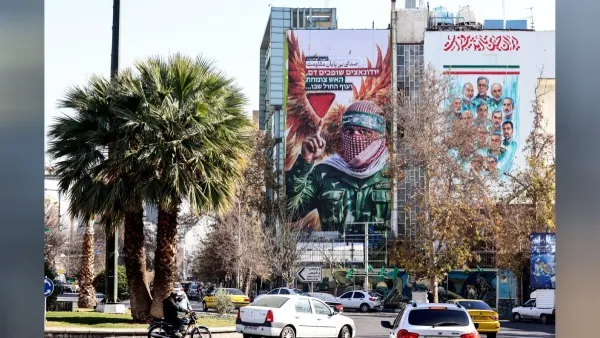
The article discusses the current volatile situation in Iran, highlighting increased tensions due to economic distress, protests, and warnings from Donald Trump, amidst a backdrop of regional conflicts and U.S. strategic interests involving sanctions and external pressure.
At the centre of the latest escalation is a blunt warning from Donald Trump. As protests over economic distress spread across Iran, Trump issued a stark message on Truth Social, declaring that the United States is "locked and loaded and ready to go" if Tehran uses lethal force against peaceful demonstrators. The statement is not merely rhetorical. It reflects a long-standing American strategy that combines sanctions, psychological pressure, and overt signalling to constrain Iran's internal and regional behaviour.
The protests themselves are rooted in Iran's worsening economic reality. Years of sanctions- reimposed in 2018 after Washington withdrew from the nuclear deal- have battered the rial, driven inflation to painful levels, and eroded public confidence in the state's ability to manage basic livelihoods. What began as shopkeepers protesting currency collapse has escalated into nationwide unrest, marking the most intense demonstrations in three years. Unlike purely political protests of the past, this wave is anchored in survival economics, making it broader and harder for the regime to isolate.

It is in this context that Trump's warning needs to be read carefully. Washington's insistence that protests must not be crushed violently is less about humanitarian concern alone and more about strategic leverage. A bloody crackdown would internationalise Iran's internal crisis, opening the door to tighter sanctions, diplomatic isolation, and possibly coercive action under the banner of protecting civilians. By publicly drawing a red line, the US is attempting to deter Tehran's security apparatus while simultaneously encouraging protesters by signalling external backing-without yet committing to direct intervention.

The tweet ( now X) above, which fits squarely into this pressure tactic, reads:
"US locked, loaded, ready to go: Trump warns Iran against using force on protesters"
Regionally, Iran today occupies a far more complex and contested position than in previous protest cycles. Its influence stretches across Iraq, Syria, Lebanon, and Yemen through a network of allied militias and political actors. However, that influence has come at a cost. Years of regional engagement have strained Iran's economy and fuelled domestic resentment over resources being spent abroad while living standards at home deteriorate. This internal-external contradiction is now sharper than ever.

The post-Israel-Gaza war environment has further tightened the screws. Iran's alignment with the so-called "axis of resistance" has put it in indirect confrontation with Israel and, by extension, the United States. Washington, still managing the aftershocks of Gaza, is acutely sensitive to any instability that could widen the conflict into a regional war. An Iran consumed by internal unrest is both a vulnerability and an opportunity-from the American perspective. It weakens Tehran's capacity to project power, but it also raises the risk of miscalculation if the regime lashes out externally to rally domestic support.

The intensity of the current protests, therefore, is not an isolated domestic event; it is embedded in a larger geopolitical chessboard. Economic despair has ignited public anger, sanctions have narrowed the regime's room to manoeuvre, and regional tensions have amplified the stakes of every internal decision Tehran makes. For Washington, signalling readiness serves as both warning and wager- betting that pressure will restrain Iran's hand without triggering open conflict.
The tragedy is that ordinary Iranians remain caught between a defiant state and a relentless external squeeze. As history shows, moments like these rarely resolve cleanly. They either force recalibration, or push adversaries closer to confrontation.
-
Russia Shares Drone Wreckage Video Near Putin’s Residence Amid Conflict Tensions
-
Tamil Nadu Weather: Chennai Welcomes New Year With Rains; Heavy Downpour In Perambur, Ennore
-

19-Minute Viral Video: Is Your Online Privacy Under Threat? Updates After Payal Gaming Video Raises Concerns
-
Happy New Year Quotes 2026: Funny Messages To Share On Instagram, FB And As WhatsApp Status
-

Cigarettes, Beedis, Pan Masala To Cost More From Feb 1 With New Tax, Cess
-

New Year 2026 Fireworks LIVE: Where to Watch New Year Celebrations In Auckland, US & UAE
-
Mumbai Weather Update: Surprise Rainfall Marks Start of 2026 - Watch Videos
-

Sara Tendulkar Spotted Holding Beer Bottle In Goa Beach? Here's How Netizens React To Viral Video
-
Leave Trump, China Now Claims Mediation In India-Pakistan War
-
Switzerland: 40 Killed, Over 100 Injured In Explosion At Swiss Ski Resort Town of Crans-Montana
-
Sickles, Ganja, and Reels: Decoding the Tiruttani Assault On Odisha Migrant In TN
-
Kerala Lottery Dhanalekshmi Winners December 31 - Full Results And Prize Details


