
At Least 20 Dead After Saudi Coalition Strikes UAE-Backed Separatist Forces in Yemen
International
oi-Ashish Rana

At least 20 fighters from Yemen's Southern Transitional Council were killed on Friday after airstrikes carried out by a Saudi Arabia-led coalition, marking a sharp escalation in tensions between Riyadh and the United Arab Emirates-backed separatist group.
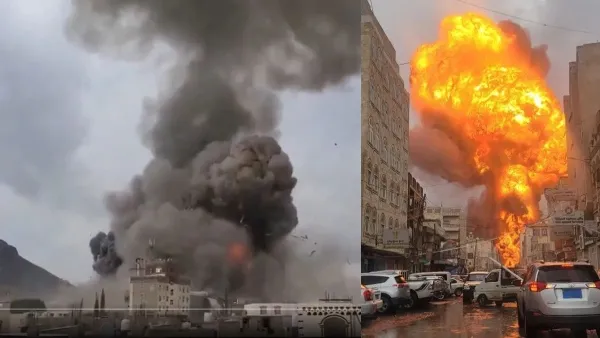
On Friday, airstrikes by a Saudi Arabia-led coalition killed at least 20 fighters from Yemen's Southern Transitional Council (STC), escalating tensions between Riyadh and the UAE-backed separatist group after the UAE withdrew forces from Yemen. The strikes targeted STC bases in Hadramout province, following a campaign by pro-Saudi forces, and marked the first time coalition air power was used against the STC since their takeover of Hadramout and Mahra in December.
The strikes came amid shifting alliances and mounting rivalry in Yemen's eastern governorates, just days after Abu Dhabi announced the withdrawal of its forces from the country.
Airstrikes Hit STC Bases in Hadramout
The fatalities were reported after coalition aircraft struck military bases in Al-Khasha and Seiyun, according to officials from the Southern Transitional Council. An STC military source confirmed that 20 UAE-backed separatist fighters were killed in the attacks.
Witnesses and STC sources said the strikes targeted both a military base and the airport in Seiyun, located in Hadramout province. Airport operations were disrupted, with no aircraft taking off or landing at Aden airport for over 24 hours. However, the transport ministry did not issue an official closure notice.
The air raids followed a campaign by pro-Saudi forces to take control of military sites in Hadramout, which officials described as a "peaceful" operation.
First Coalition Strikes Since STC Takeover
Friday's bombardment marked the first time coalition air power was used against the STC since the group seized control of most areas of Hadramout and Mahra earlier in December, including key oil facilities.
The escalation came shortly after the UAE said it was seeking de-escalation and confirmed that its remaining forces had exited Yemen.
Earlier in the week, the UAE withdrew troops after Saudi Arabia bombed the port city of Mukalla. The strike targeted a shipment that Saudi authorities alleged contained weapons from the UAE. Abu Dhabi denied the accusation, stating that the cargo consisted of vehicles and not arms.
War of Words Between STC and Saudi-Backed Forces
An STC military spokesperson described the confrontation as a "decisive and existential war" against Saudi-backed forces, framing it as a fight against radical Islamism, a long-standing concern of the UAE.
Hadramout governor Salem Al-Khanbashi, who leads the province's Saudi-backed local forces, rejected claims of escalation and insisted the operation was limited in scope.
"This operation does not target any political or social group," he said, adding that it aimed to peacefully and systematically transfer control of military sites.
Saudi sources later confirmed that the airstrikes were carried out by the Saudi-led coalition, which was formed in 2015 to combat Iran-backed Houthi rebels in northern Yemen. A Saudi military official warned that the attacks would continue unless the STC withdrew its forces from Hadramout and Mahra.
Gulf Rivalry Deepens Yemen's Conflict
Political rivalry between Saudi Arabia and the UAE has shaped Yemen's conflict for nearly a decade, but the STC's recent advances appear to have intensified tensions between the two Gulf powers.
Amr Al Bidh, the STC's foreign affairs representative, accused Riyadh of deception, claiming the so-called peaceful operation was never intended to remain non-violent.
"This was evidenced by the fact that they launched 7 airstrikes minutes later," Bidh wrote in a post on X.
Opposing the STC is the Yemeni military, allied with the Hadramout Tribal Alliance, a local coalition backed by Saudi Arabia. Both Riyadh and Abu Dhabi support rival political groups in Yemen, a country that sits along critical shipping routes near the world's main energy-exporting region.
Despite their rivalry in government-held areas, Saudi Arabia and the UAE remain core members of the coalition fighting the Houthi rebels, who seized the capital Sanaa in 2014 and continue to control much of the country.
Nearly a decade into Yemen's civil war, the Houthis remain entrenched, while competing Gulf-backed factions struggle for influence in territories still held by the internationally recognised government.
-

Mumbai Weather Update: Surprise Rainfall Marks Start of 2026 - Watch Videos
-
Switzerland: 40 Killed, Over 100 Injured In Explosion At Swiss Ski Resort Town of Crans-Montana
-
MP Minister Kailash Vijayvargiya Apologies Over 'Useless' Response After Bhagirathpura Tragedy
-
“Spare Us His Crocodile Tears”: US President Donald Trump Flags Editorial Critical of Putin
-

Mumbai Local Train Update: No Monthly Pass Booking on UTS App Anymore, RailOne Takes Over
-

Bigg Boss Tamil 9 Voting: Who is Leading & Who Would Be Evicted As Per Trends?
-

Libra Horoscope For Today, January 01, Thursday - Balance Yourself Within Today's Whirlwind Of Choices!
-
Tamil Nadu Rains: 5 Dists On Yellow Alert Today As Unseasonal Rains Lash Chennai
-

What Is Happening in Indore That Caused Seven Deaths as Kailash Vijayvargiya’s Comment Comes Under Spotlight?
-

Pisces Horoscope For Today, January 01, Thursday - Embrace Introspection and Emotional Depth!
-

Leo Horoscope For Today, January 01, Thursday - You're the Star of Your Own Show!
-

Capricorn Horoscope For Today, January 01, Thursday - Perseverance Is Your Ally


