
Tiruppur poised for major export gains under India-EU FTA
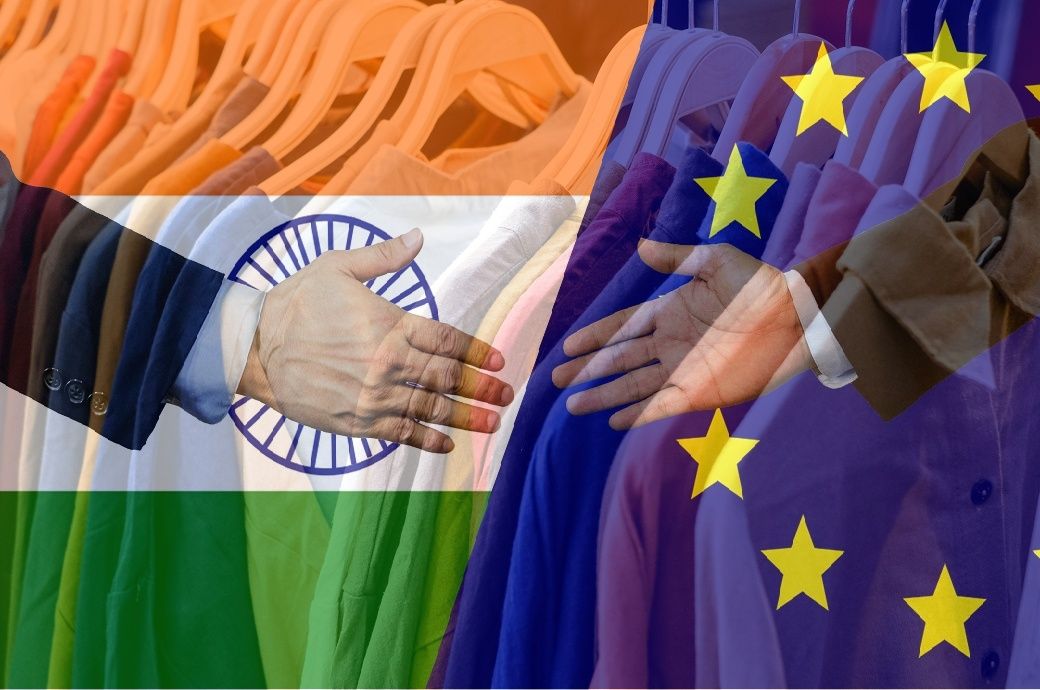
With tariff disadvantages eliminated and a clearer regulatory framework in place, the India-EU FTA is likely to trigger a long-awaited structural shift in India’s textile trade dynamics. Industry stakeholders believe the pact will not only accelerate exports but also strengthen domestic manufacturing, MSMEs and employment-intensive clusters that form the backbone of India’s apparel ecosystem.
Tiruppur, India’s flagship knitwear and RMG export hub, stands at the centre of this opportunity. The cluster records annual exports exceeding ₹45,000 crore (~$4.9 billion) and employs over one million workers, nearly 70 per cent of whom are women.
Long seen as a symbol of MSME-led and sustainability-driven growth, Tiruppur has consistently advocated duty-free access to the EU. Exporters now believe the FTA could help scale up shipments, modernise infrastructure and deepen the cluster’s integration into global supply chains.
R Sabhari Girish, chief sustainability officer at Sulochana Cotton Spinning Mills in Tiruppur, described the agreement as a defining moment for the sector. He said, “India-EU FTA is indeed mother of all deals. Especially for RMG it would be a breakthrough. We already have FTA with Australia, Japan, the UAE and New Zealand, but we could not generate sizeable business in these countries as these were not our traditional market. However, FTA with the UK and EU are different as we have already established a relationship in these markets. When FTA comes into force, India will have an edge over our peers, as we are self-reliant on raw materials. Our dependency on raw materials from other countries are far less and it is an ‘advantage India’ situation now.”
Despite competitors such as Bangladesh, Cambodia, Vietnam and Turkiye enjoying duty-free access to the EU, Indian exporters have managed to remain competitive. Girish noted, “Currently Bangladesh, Cambodia, Vietnam and Turkiye are enjoying duty free benefits with EU and still we can compete with them and have secured fourth place on our exports to Europe. EU's RMG market size is expected to be around $105 billion and with FTA coming into force, we expect substantial growth on our exports to EU, where the exports is expected to grow from existing $5 billion to almost $9 billion. Unlike other FTAs, India-EU FTA benefits both EU and India, so Europe is committed to enhance its sourcing from the Indian subcontinent.”
Echoing similar optimism, N Thirukkumaran, chairman of Ess Tee Exports India Pvt Ltd in Tiruppur, said, “It is a game changer for apparels as it is under zero duty, and this will help the RMG to Europe to grow very significantly in the next 2-3 years and diversify our market share. Tiruppur, one of India’s largest sustainable and environmentally friendly apparel manufacturing clusters, stands to benefit immensely from this trade deal.”
As the FTA moves towards implementation, industry leaders believe Tiruppur’s established buyer relationships, sustainability credentials and raw-material self-reliance place it in a strong position to capitalise on the opportunity.
Fibre2Fashion News Desk (CG)
