
Balochistan Violence: 15 Pakistani Soldiers, 92 Militants Killed
International
oi-Prakash KL

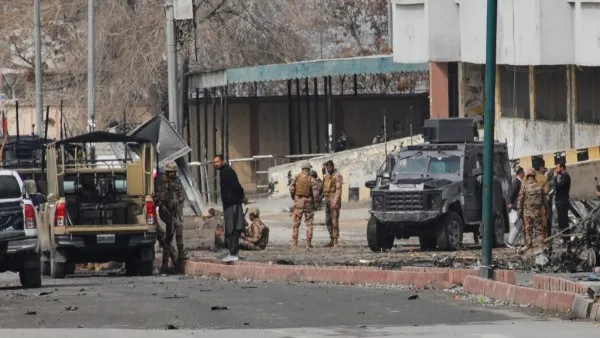
Pakistan witnessed one of its deadliest days of violence in recent years as coordinated militant attacks rocked the south-western province of Balochistan on Saturday. According to Pakistan's military, at least 92 militants were killed in retaliatory operations after insurgents carried out simultaneous strikes across multiple cities. The clashes also claimed the lives of 15 security personnel and 18 civilians.
The Balochistan Liberation Army (BLA), a separatist group long engaged in armed resistance against Islamabad, claimed responsibility for the attacks. The group asserted that dozens of Pakistani soldiers were killed, though these claims, like those of the military, remain unverified by independent sources.
On Saturday, coordinated militant attacks in Balochistan, Pakistan, resulted in the deaths of at least 92 militants, 15 security personnel, and 18 civilians, with the Balochistan Liberation Army (BLA) claiming responsibility. Pakistan's military responded with operations, while Prime Minister Shehbaz Sharif vowed to continue the war against terrorism; the province, rich in resources but marked by poverty and unrest since 1947, borders Iran and Afghanistan.
The BLA has accused the federal government of exploiting the province's rich mineral wealth without benefiting the local population, a grievance that has fueled decades of unrest.
In its official statement, Pakistan's military alleged that the militants carried out multiple strikes targeting civilians and security installations in and around Quetta, the provincial capital. The army claimed to have launched "clearance operations" across Balochistan, declaring that it had "successfully thwarted the evil design" of the rebels. As part of security measures, key administrative buildings in Quetta were sealed, mobile services were jammed, and train services were suspended.
Pakistan Prime Minister Shehbaz Sharif praised the military's response, vowing to continue Pakistan's "war against terrorism until its complete eradication." The attacks, however, highlight the persistent instability in Balochistan, a province that has remained a flashpoint since Pakistan's independence in 1947. The insurgency, rooted in demands for greater autonomy and even independence, has repeatedly challenged Islamabad's authority.
The Pakistani military also accused India of supporting the militants, a charge New Delhi has consistently rejected as baseless. Such allegations are not new; Islamabad has often blamed external forces for unrest in Balochistan, while India maintains that the conflict is an internal matter stemming from Pakistan's own governance failures.
Saturday's violence saw militants armed with grenades and automatic weapons attacking 12 towns and cities, targeting police stations, paramilitary posts, prisons, and government offices. The scale of the offensive reflects the BLA's growing capability to coordinate large-scale strikes, despite Pakistan's heavy military presence in the region.
Balochistan, Pakistan's largest province by area, covers nearly 44% of the country's landmass but is sparsely populated, housing only about 5% of Pakistan's 240 million people. Rich in natural gas and minerals, the province remains strategically significant, sharing borders with Iran and Afghanistan and boasting a long coastline along the Arabian Sea. Yet, despite its resources, Balochistan remains one of Pakistan's poorest regions, fuelling resentment among its ethnic Baloch majority.
-
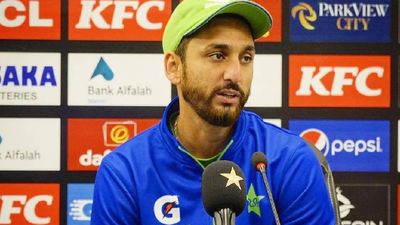
T20 World Cup 2026: Pakistan’s Road to Super 8 Qualification Post India Boycott
-
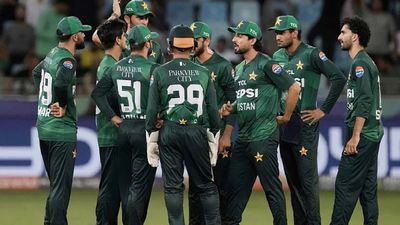
No India vs Pakistan Match: Pakistan To Participate In T20i World Cup, But Will Boycott India Game
-
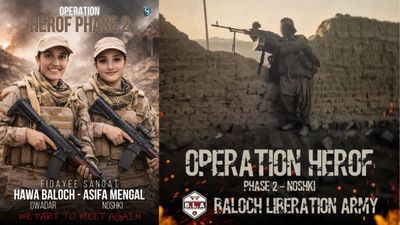
Balochistan Conflict: Who Is 23-Year-Old Asifa Mengal, Also Known As Hawa Baloch? 200 Pakistani Killed
-
India To Travel To Sri Lanka Despite Pakistan Boycotting T20 World Cup 2026 Match, Here’s Why
-

Dhurandhar, Banned In Theatres, Now Trending At No. 1 In Pakistan On Netflix, Wins Praise From Viewers
-
Hyderabad Gold Silver Rate Today, February 1, 2026: Gold Slides, Silver Sees Sharp Drop On Budget Day
-

Gunshots Outside Rohit Shetty’s Juhu Residence: Four Rounds Fired At 3 AM, Investigation On
-

Bengaluru Gold Silver Rate Today, February 1, 2026: Gold and Silver Prices Fall On Budget Day
-

Super Singer 11 Winner: Nikhil Defeats Saran, Dishathana To Emerge Victorious
-

Super Singer 11 LIVE: Where To Watch Grand Finale LIVE Online & Mobile?
-
Union Budget 2026 Date and Time: When Will FM Nirmala Sitharaman Present the Budget? Where to Watch Live
-

Gold & Silver Price Today In Chennai: Has It Become Cheaper Or Costlier On Budget Day?


