
The X-Press Pearl Crisis: Technical Failures in Handling, Not Blame
LISTEN TO STORY
WATCH STORY
By: A Special Correspondent
February 13, Colombo (LNW): The MV X-Press Pearl disaster in May-June 2021 off Sri Lanka’s western coast released toxic chemicals, oil residue, and billions of plastic pellets into the sea, devastating ecosystems and fishing communities. Rather than dwelling on assigning fault, the real issues stem from systemic gaps in maritime emergency protocols and port decision-making that allowed a containable hazard to escalate. With Singaporean parties open to negotiation through proper channels, focus should shift to procedural reforms for future prevention.
Origins of the Crisis
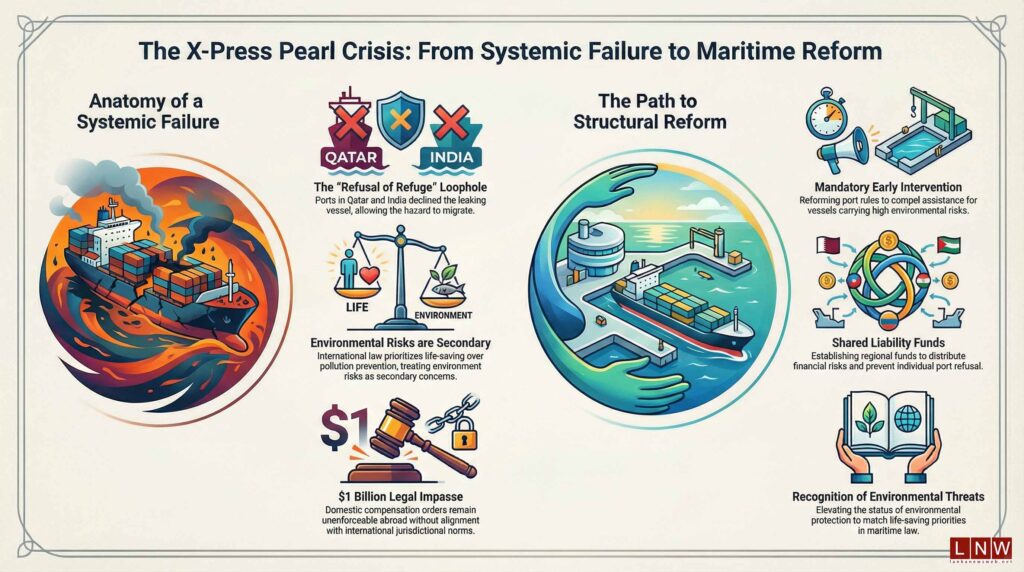
The fire aboard the Singapore-flagged vessel began with a leaking chemical container identified days before it neared Colombo. Ports in Qatar’s Hamad and India’s Hazira declined refuge, citing risks to their infrastructure, leaving the ship to proceed under port discretion rules that lack binding obligations for assistance. By arrival in Sri Lankan waters, the situation had worsened irreversibly, turning a manageable issue into an environmental catastrophe.
This sequence highlights how international maritime law prioritises life-saving over pollution prevention, treating environmental risks as secondary until damage occurs. Sri Lanka, positioned on a busy shipping corridor, inherited the problem without prior influence over upstream choices.
Flaws in Port Discretion
Global shipping relies on voluntary port decisions for distressed vessels, a flexibility that protects local interests but externalises costs to downrange coastal states. The X-Press Pearl case exposed this: no enforceable mechanism compelled early intervention, allowing hazards to migrate geographically. Ports face incentives to refuse, fearing legal liabilities without shared frameworks, resulting in deferred responsibility.
Sri Lanka’s experience underscores vulnerability for nations without advanced leverage or infrastructure to demand action elsewhere. Discretion, while rational for individual ports, creates a chain of inaction where environmental harm accumulates predictably.
Legal and Accountability Gaps
Sri Lanka’s Supreme Court ordered around US$ 1 billion in compensation in 2025, valid domestically but unenforceable abroad without international ratification. Singapore resists direct payment, arguing it upholds jurisdictional norms and global shipping predictability, where liabilities require arbitration or conventions. This stance frames the disaster as a multi-jurisdictional failure, not isolated negligence.
Rather than defiance, Singaporean communications emphasise legal process over unilateral demands, warning that bypassing it could raise insurance costs and alter trade routes. The impasse reveals limits in holding parties accountable across borders without aligned mechanisms.
Exclusion of Key Expertise
Post-disaster reviews by the Sri Lankan government omitted critical experts involved in the incident, undermining comprehensive analysis of handling errors. This procedural oversight missed opportunities to dissect technical decisions, such as anchoring protocols and containment strategies, perpetuating knowledge gaps. Inclusive processes could have identified specific lapses in communication and response coordination.
Path Forward Through Negotiation
Singapore’s position signals readiness for dialogue via recognised channels like arbitration, prioritising systemic fixes over retrospective penalties. Negotiations could address compensation while reforming port obligations, such as binding assistance for pollution risks. Sri Lanka stands to gain by engaging constructively, leveraging the accused parties’ willingness to avoid prolonged stalemate.
Reforms for Prevention
True resolution demands structural changes: mandatory early intervention protocols, shared liability funds, and elevated status for environmental threats in maritime law. Enhancing regional cooperation in the Indian Ocean corridor would distribute risks fairly, preventing recurrence. By focusing on these technicalities, stakeholders can build resilience beyond the X-Press Pearl’s shadow.
The post The X-Press Pearl Crisis: Technical Failures in Handling, Not Blame appeared first on LNW Lanka News Web.
