
Why Sarath Ganegoda Must Answer to CIABOC for SriLankan Airlines’ Losses
By Adolf
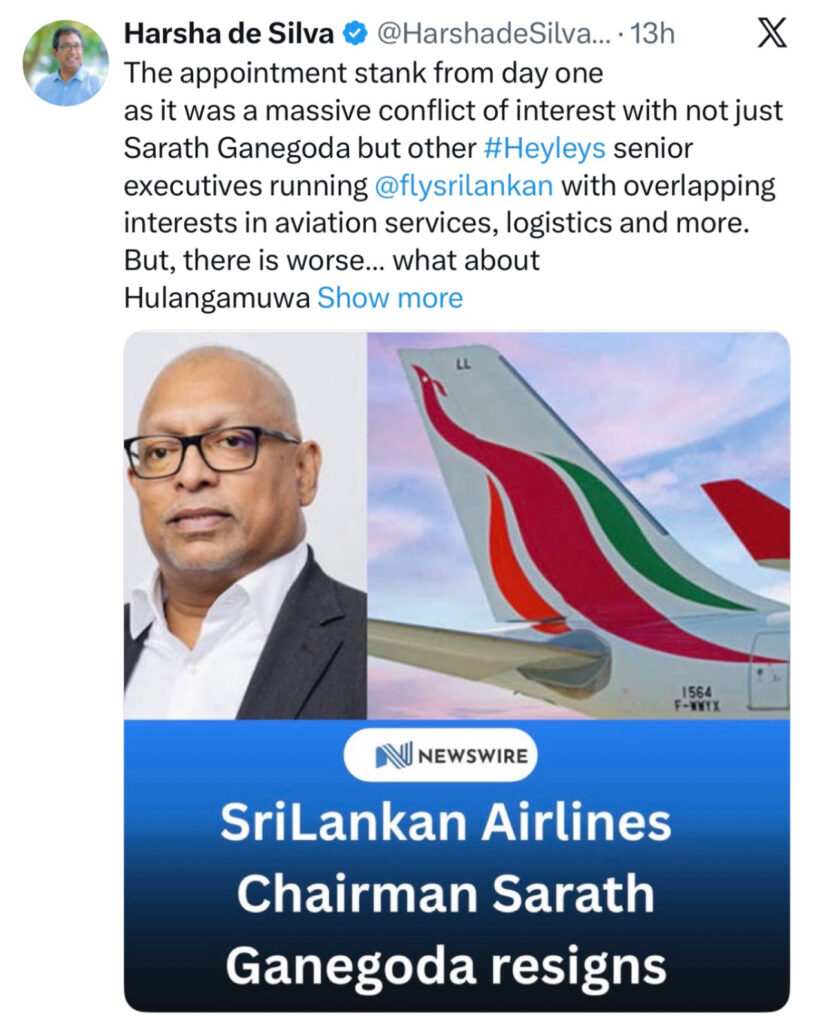
Resignation Brings Industry Relief
After a turbulent year, Sarath Ganegoda has finally resigned from SriLankan Airlines. For months, his tenure was at the centre of debates over governance, financial sustainability, and the national airline’s ability to compete in an intensely competitive aviation market. His departure is widely seen as a necessary step to restore confidence in the airline and the broader industry.
Governance Questions from Day One
Ganegoda’s appointment immediately raised eyebrows due to his corporate ties with Hayleys PLC, a major Sri Lankan conglomerate with aviation interests. Observers flagged potential conflicts of interest from the outset. Twelve months on, the airline reportedly continued to lose around Rs. 400 million per day—underscoring persistent questions about leadership accountability and decision-making.
Longstanding Operational Challenges
SriLankan Airlines has struggled for decades against well-capitalized international carriers and efficient regional hubs. Despite its strong brand and strategic location, the airline has accumulated significant losses, often placing a heavy burden on public finances. Past governments, irrespective of political affiliation, attempted reforms from restructuring to partial privatization—but sustainable turnaround has remained elusive.
Private Interests vs Public Responsibility
Ganegoda’s affiliations with Hayleys intensified concerns about governance. Hayleys participates in airline representation and logistics worldwide. Critics argue that overlapping roles between private conglomerates and state enterprises can blur lines of accountability, compromise board independence, and risk transparency—issues common across emerging economies.
The GSA Factor
The General Sales Agent (GSA) model is central to airline sales. Third-party companies handle ticketing and representation in markets where airlines have no direct commercial presence. For instance, British Airways uses GSAs in many countries. In Sri Lanka, GSAs connected to major conglomerates, including Hayleys, have represented foreign carriers. Critics note that such arrangements can create an uneven playing field for the national carrier if governance safeguards are insufficient.
Temporary Gains, Structural Problems
Supporters of private-sector leadership argue that experienced executives can bring efficiency, discipline, and global best practices. SriLankan Airlines did see operational improvements under focused management on routes, fleet efficiency, and partnerships. Yet, these gains were often temporary, highlighting the need for structural reform rather than short-term fixes.
The Call for Accountability
The airline’s situation underscores a broader issue for state-owned enterprises: balancing professional management with public accountability. Transparent governance, robust oversight, and independent boards are essential. If losses continue, the airline’s leadership and policy decisions must be scrutinized. Sri Lanka cannot afford to allow national assets to remain trapped in cycles of mismanagement. Strong governance frameworks and clear separation between private corporate interests and state responsibilities are essential to safeguard taxpayer money and ensure that the national carrier can regain competitiveness in the international aviation market. In the public interest a complaint should be made to the bribery commission to investigate the mismanagement and conflicts during Ganegoda’s tenure as Chairman of the Airline .
The post Why Sarath Ganegoda Must Answer to CIABOC for SriLankan Airlines’ Losses appeared first on LNW Lanka News Web.
