Who Really Won The U.S-Iran War? A Mirage of Victory And The Price Of Holding On To Power
International
oi-Pankaj Mishra

Wars rarely end with neat conclusions, and the U.S-Israeli war against Iran, Operation Epic Fury is no exception. Official declarations of success ring hollow when the geopolitical debris tells a different story. The U.S. and Israel may claim a decisive victory, but the truth is far more complex. The war has left Iran bloodied yet unbowed, the U.S. strategically overextended, and the region sliding into deeper instability. In essence, this was a war where everyone lost something vital...but Iran, paradoxically, may emerge with the more enduring kind of victory.
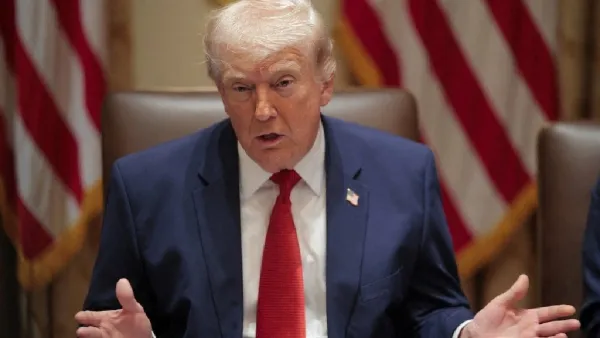
The U.S.-Israeli Operation Epic Fury, launched February 28, inflicted significant military damage on Iran but failed to achieve decisive objectives like regime change. The article posits Iran preserved its regime and regional influence through political resilience, while the U.S. faces strategic overextension and deepened regional instability.
When hostilities began on February 28 under President Donald Trump's orders, the stated objectives were ambitious: destroy Iran's nuclear infrastructure, break its missile capabilities, dismantle proxy networks across the region and push for a regime change in Tehran. Militarily, Washington and Jerusalem delivered devastating blows. As reports show, U.S.-Israeli bombing campaigns obliterated upwards of 90% of Iran's navy and missile infrastructure, assassinated hundreds of Iranian military leaders including members of the top command, and crippled Tehran's air defence grid. By traditional military metrics, this looks like an overwhelming success.

However, war in the 21st century isn't decided by the rubble count. Iran, facing overwhelming force, recalibrated the conflict onto asymmetric and political ground, a realm where the U.S. grip has weakened dramatically. Tehran executed a long-game strategy: draining the U.S. missile defence inventory, weaponising global energy disruption through the temporary closure of the Strait of Hormuz, and reframing the conflict as another case of Western overreach. Every day that Iran's regime survived became a symbolic rebuke to the notion of Western omnipotence. Every Patriot missile intercepted a $5,000 drone, not just a warhead- Tehran's low-cost attrition strategy turned American firepower into a liability.

Politically, Iran's survival is its victory. Regime change failed. The Islamic Republic remains battered but intact, retaining its ideological identity and regional influence through Hezbollah, the Houthis and resurrected Iraqi militias. Iran's narrative of defiance has already begun to resonate across the Middle East, where publics see a nation standing firm against two nuclear powers. As Asia Times argued, Iran may now leverage the conflict to isolate the United States diplomatically, seek sanctions relief under a postwar ceasefire, and exploit the fractures between Washington and its Gulf allies. In that sense, survival itself becomes strategic leverage.
The U.S. faces an unenviable strategic reckoning. The war's immediate aims, neutralising Iran's military, came at the expense of longer-term goals: stability in global energy markets, deterrence credibility against China and cohesion with NATO and Gulf allies. Energy prices have soared, European governments are distancing themselves from Washington's unilateralism, and the Indo-Pacific has become dangerously exposed as U.S. munitions stocks run perilously low. In geopolitical terms, America won the battle but weakened its position in the global order, an outcome that resembles the Iraq War's aftermath more than the end of World War II.
Israel, too, is discovering the hollowness of "total victory." Its military dominance is undeniable, but the psychological front, the constant rain of sporadic missile fire and the escalation of Hezbollah's capabilities, suggests no true sense of security. As Ynet News' analysis of a so-called "decisive victory" recognises, Israel's success is real but limited to the short-term disruption of Iran's plans, not their eradication. Like many of its previous campaigns, this one may simply reset the clock until the next round of confrontation.
Georgetown's Journal of International Affairs rightly warns that such a war risked strategic overreach and regional instability. That warning has proven prophetic. The U.S. and Israel might have won the operational war, but Iran has seized the narrative advantage, preserved its regime, and exposed the fragility of Western hegemony in a multipolar world.
In the end, the U.S-Iran war teaches a familiar lesson: in modern conflicts, the side that defines "victory" on its own terms often wins. By that measure, Iran- the weaker power militarily but the more resilient politically, has written the final chapter of this war. And it reads less like defeat than dangerous vindication.
-

‘14 million Iranians Ready To Die’: Pezeshkian’s Strong Message Amid Trump Deadline
-
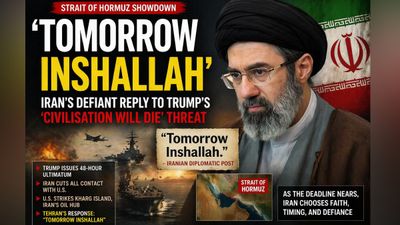
‘Tomorrow Inshallah’: Iran’s Two-Word Reply to Trump’s ‘Civilisation Will Die’ Warning
-
‘A Whole Civilization Will Die Tonight’: Trump Speaks Out As 48-Hour Ultimatum To Iran Nears End
-
Donald Trump Issues Stark Warning: Entire Iran Could Be Taken in a Single Night
-
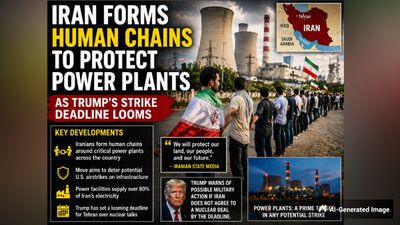
Civilians Form Human Chains as Iran Braces for Possible US Strikes
-
Iran Suspends Diplomatic Channels Ahead of Strait of Hormuz Deadline
-

Gold Rate Today 6 April 2026: IBJA Benchmark Gold Rates, Tanishq, Kalyan, Malabar, Joyalukkas Retail Prices
-

Tamil Nadu Election Prediction: AIADMK Set to Emerge as Winner, Says Pre-Poll Survey
-

Gold Silver Rate Today, 7 April 2026: City-Wise Prices, MCX Gold Down, Silver Steady Across Key Indian Cities
-

West Bengal Pre-Poll Survey: Opinion Poll Predicts Edge for TMC but big Rise In BJP's Vote Share
-

Gold Rate Today in Bangalore 6 April 2026: Latest IBJA Gold Rates, 22K Gold Prices at Jos Alukkas, GRT, Bhima,
-

Gold Silver Rate Today, 6 April 2026: City-Wise Prices, MCX Gold Steady, Silver Slips in Key Markets