
From Malaysia to the World: The Asian Legacy of Pope Francis
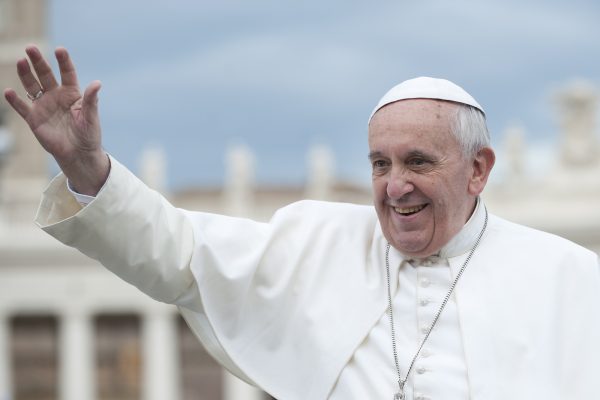
As April 21 marks the first anniversary of the passing of Pope Francis, his lasting impact on Asia and on the region’s role in the transformation of Catholicism is coming into light. Francis’ predecessor, Pope Benedict XVI, never visited Asia during the eight years of his pontificate (2005–2013), preferring to focus on Europe. Current Pope Leo XIV seems to be pivoting the Holy See toward Africa. By contrast, Francis attached great importance to Asia.
During the 12 years of his pontificate (2013–2025), Francis made seven apostolic journeys across the region, visiting more than 13 Asian countries. In September 2024, he returned one last time for the longest visit of his papacy. The extraordinary welcome he received in Indonesia belied the supposed indifference of Muslims toward a Christian leader. In Papua New Guinea, he demonstrated his fraternal commitment to peoples marginalized by the globalization of greed. In Timor-Leste, he encouraged the world’s youngest Catholic country to face the challenges of poverty and corruption. And in Singapore, he reminded the world that authentic interreligious dialogue cannot be limited to a few convenient formulas.
Beyond his numerous trips to the region, Francis also significantly increased the number of Asian cardinals. Under his pontificate, Asia became overrepresented in the College of Cardinals. At the same time, he placed Asian figures in key positions in the universal Church, whether in the Dicastery for Evangelization, the Dicastery for the Clergy, the Dicastery for Interreligious Dialogue, or at the head of Caritas, the humanitarian arm of the Catholic Church.
On the diplomatic front, Francis showed no lack of boldness and tenacity toward Asia. Whether advocating constantly for the Rohingya, a Muslim minority in Myanmar, or advancing diplomatic relations with Vietnam and China, Asia remained at the heart of his concerns. Without allowing himself to be caught up in the growing competition between China and the United States, Francis succeeded in 2018 in establishing an agreement with Beijing on the method for selecting bishops in China. This agreement, though criticized by factions opposed to the Chinese Communist Party, helped resolve a number of challenges on the ground and strengthened trust.
With Francis as pope, the Vatican drew noticeably closer to Asia, and Asian communities, traditions, and individuals gained an increasingly active role in shaping global Catholicism. Thus, during the conclave following his death, Asia occupied a prominent place for the first time. On the one hand, the issue of Sino-Vatican relations became a key criterion for evaluating the aptitude of a potential successor. On the other hand, for the first time, an Asian cardinal appeared among the most serious papabili: the Filipino Cardinal Luis Antonio Tagle. In the long history of the papacy, this reconfiguration is highly significant.
In Asia, as in the rest of the world, Francis shifted the lines. Through his insistence on forgotten peripheries, the plight of migrants, dialogue with Islam, the importance of integral ecology, and the promotion of synodality as an ecclesial style of communion, mission, and governance, Francis was a prophetic pope.
Discreetly but surely, this legacy continues to work, to unsettle, and to transform the peoples and Churches of Asia. A number of things that would have been unthinkable before Francis are now becoming conceivable. These new possibilities do not necessarily make headlines; they come about modestly, but they gently transform mindsets and practices. And this is not limited to the Asian countries Francis visited.
One remarkable example is the inquiry surrounding Sybil Kathigasu (1899–1948), a Malaysian national heroine. Although some aspects of her life are unconventional, the Bishop of Penang, Cardinal Sebastian Francis – a man named cardinal in 2023 by Pope Francis – has decided to open a cause to explore her possible canonization.
Sybil Kathigasu was a Eurasian woman born in Medan, Sumatra, in 1899. A deeply Catholic and passionate nurse, she married a doctor of Sri Lankan origin. The couple and their first children eventually settled in Ipoh, a small mining town in the heart of the Malay Peninsula, then under British colonization. Kathigasu managed the clinic where her husband practiced, administering various kinds of care while running her household with a masterful hand. Speaking Cantonese, English, Malay, and other languages of the region, this upper-middle-class mother was a woman of her time: educated, cosmopolitan, and determined. But in the mid-1930s, she became attached to a man in her circle and gave birth to a daughter, whom her husband raised as his own child.
As the war was approaching, Kathigasu remained calm, efficient, and organized. When Ipoh was bombed and captured by the Japanese, the family moved to a nearby hamlet and continued to provide care to those in need. Contrary to the Japanese occupation orders, Kathigasu secretly kept a radio to listen to BBC news. Moreover, by night she treated resistance fighters hidden in the jungle, including communists.
In August 1943, she was arrested by the Japanese police. Tortured for several months, she never betrayed the resistance fighters and did everything she could to take the blame so that her husband and children might survive. In August 1945, the Malay Peninsula was liberated from Japanese occupation. Kathigasu was in a cadaverous state, unable to walk, but deeply faithful. The British quickly recognized her qualities as a heroic resistance figure and took her to England to receive proper care.
There, the Eurasian nurse received the George Medal, becoming the only woman ever to receive such a British military distinction. Unable to recover from her injuries, she died on June 12, 1948.
Since then, her memory has oscillated between celebration and embarrassment. While for a time Kathigasu was celebrated as a determined and courageous patriot, she also arouses unease. As Malaysia’s Islamic identity became more prominent, this Catholic woman became a poor fit for the national narrative. Kathigasu also helped communists and had an extramarital affair – two points that disturb many Christians.
Kathigasu defies categorization, and she questions our assumptions about piety, politics, morality, national belonging and more.
Thus, daring to raise the possibility of declaring this Eurasian nurse a saint is far from a trivial act. Kathigasu does not fit the stereotype of the female Asian Catholic saint. She was married and had a profession. She had domestic servants, spoke several languages, and demonstrated great independence of mind. But she also possessed strength of judgment, saw difficulties coming, and did not flee. She knew what moral integrity and sacrifice meant.
Therefore, it makes perfect sense to recognize the holiness emanating from such a figure. Even if it disturbs, questions, or embarrasses, Kathigasu has the capacity to confront us with our own contradictions. Her complex story forbids naive, sometimes unchristian, definitions of sainthood. She inspires and elevates.
By daring to consider the holiness of Sybil Kathigasu, by daring to see this strong-willed Asian woman as a reflection of the light of a God who sacrifices Himself for others, the Cardinal of Penang is following in the footsteps of Pope Francis. He is bringing out of the shadows a powerful figure, a contemporary woman of clear-sightedness and courage, a figure who would have so much to say to us who live with the growing noise of war.
The canonization process for Kathigasu underscores how Pope Francis’s legacy continues to shift the lines, in subtle and surprising ways, even in unexpected places. Malaysia was never directly visited by Francis, but it still feels the effects of his pontificate. And this raises questions far beyond the peninsula. With a figure like Sybil Kathigasu – a courageous and sophisticated woman who has so much to tell us today – Malaysia is speaking to the entire world.
