
China’s Aggressive Bay of Bengal Push & Pakistan’s Threat Trigger India’s Major Eastward Shift: OPED
OPED By PM Heblikar
With Indian Prime Minister Narendra Modi repeatedly emphasizing that the Indo-Pacific stands for a free, open, and inclusive region, India’s eastern seaboard is fast emerging as the vital hinge of New Delhi’s Indo-Pacific strategy.
This arc, stretching from West Bengal to Tamil Nadu and extending into the Bay of Bengal through the Andaman & Nicobar Islands, sits at the intersection of trade routes, geopolitical contestation, and emerging security risks.
There are enough reasons why India’s security calculus is gradually shifting eastward. No wonder why Pakistan’s Army Chief, Field Marshal Asim Munir, is also indicating that future strategic pressure could manifest along India’s eastern seaboard—reflecting a broader awareness of maritime vulnerabilities.
Similarly, and this is more significant, China’s long-term strategic design linking Yunnan province to the Bay of Bengal through Myanmar represents a continental-maritime fusion strategy. Because the infrastructure corridors and port access in Myanmar could enable dual-use capabilities, allowing Beijing to expand its influence into the eastern Indian Ocean.
Of course, there has been a delay in China in operationalizing it because of the civil wars within Myanmar. And that is of strategic value to India, as it gives New Delhi the space to implement measures to safeguard its interests.
The East Coast as Strategic Geography
India’s East Coast has now emerged as a primary strategic frontier, given the fact that it anchors access to the Bay of Bengal, hosts critical infrastructure, and serves as the launchpad for engagement with Southeast Asia.
All told, maritime power is always a decisive factor in any country’s global profile. And here, one should be reminded of what the famous US naval strategist Alfred Thayer Mahan said. “Control of the Indian Ocean shapes the balance of power in Asia.”
Likewise, Admiral John C. Aquilino, the 26th Commander of U.S. Indo-Pacific Command (INDOPACOM) from April 2021 to May 2024, observed that the Indo-Pacific is the priority theatre in which the future of the international order will be determined.
Andaman & Nicobar: India’s Forward Fortress
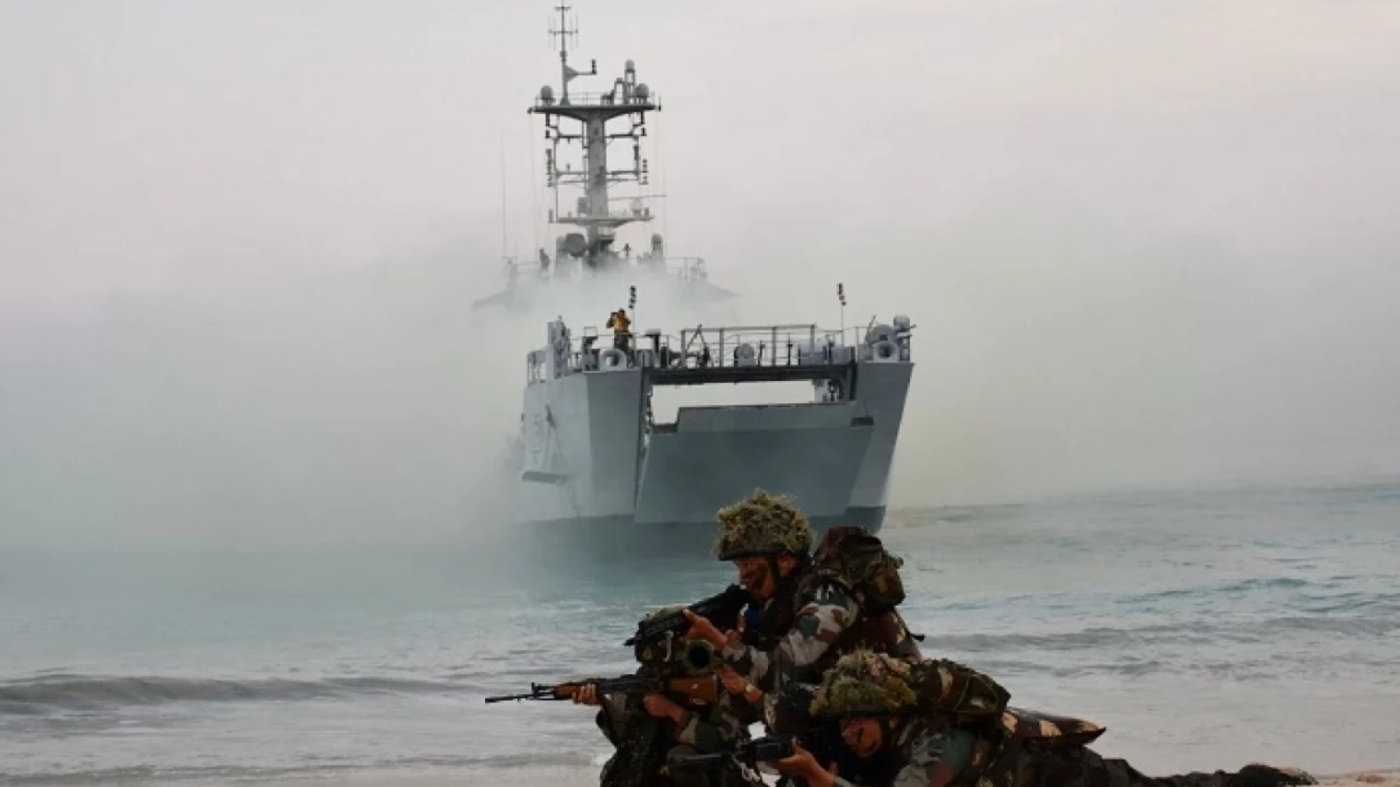
For India, at the heart of any strategy to control the Indian Ocean lie the Andaman & Nicobar Islands, located near the Strait of Malacca—one of the world’s most critical maritime chokepoints.
Singapore’s Prime Minister Lawrence Wong has underscored that the stability and openness of Malacca are vital to global trade and regional security. This, in turn, places the Andaman & Nicobar islands at the frontline of India’s maritime strategy.
As it is, India’s maritime doctrine emphasizes that secure seas are a prerequisite for national prosperity. To ensure this, the Andaman & Nicobar Command must therefore evolve into a fully integrated forward-operating hub—an unsinkable aircraft carrier in strategic terms.
Hormuz and Malacca: A Strategic Reality Check
India’s continued dependence on energy flows through the Strait of Hormuz underscores a persistent vulnerability on its western flank. Disruptions in the Gulf have immediate economic consequences for the country, as evidenced by the ongoing conflict with Iran.
If Hormuz represents India’s enduring vulnerability, Malacca represents its emerging strategic opportunity. Developing the East Coast provides a hedge—diversifying trade routes, strengthening resilience, and shifting strategic focus eastward.
Bridging Economic Ambition and Security Imperatives
The eastern seaboard is an economic powerhouse in the making. It is time now to view the infrastructural growth there through a strategic lens.
As External Affairs Minister S. Jaishankar has noted, connectivity today is about trust, resilience, and strategic autonomy. Ports, industrial corridors, and logistics networks must be designed to withstand geopolitical shocks.
Non-Traditional Security: The Emerging Frontier
The East Coast’s vulnerability extends beyond conventional threats. Cyber risks to port infrastructure, climate change impacts on coastal zones, and supply chain disruptions are increasingly central to national security.
ASEAN frameworks also emphasize cooperation in maritime security, connectivity, and sustainable development.
Expanding the Partnership Arc: From QUAD to the Extended Indo-Pacific
Another dimension of India’s eastern strategy should be outward-looking—embedding the East Coast within a wider network of trusted partners. The Quadrilateral Security Dialogue (QUAD) provides a natural anchor, but its real value lies increasingly in the domain of non-traditional security.
As India prepares for high-level diplomatic engagements, including the anticipated visit of US Secretary of State Marc Rubio this month, the emphasis is likely to deepen on resilient supply chains, maritime domain awareness, critical technologies, and disaster response.
Beyond the QUAD, a broader coalition of like-minded partners can be aligned with India’s East Coast architecture. Canada, Japan and South Korea bring capital and technology; Vietnam offers maritime convergence; and Taiwan represents a critical node in advanced manufacturing and semiconductors.
Equally important is the integration of India’s maritime neighborhood. Sri Lanka, the Maldives, Mauritius, and Seychelles remain central to India’s SAGAR vision, particularly in areas such as coastal surveillance and disaster response. Further east, outreach to Papua New Guinea, Fiji, and Timor-Leste reflects a gradual extension of India’s Indo-Pacific footprint.
An Over-the-Horizon Assessment
Looking ahead, three trends will shape the East Coast’s trajectory:
• Intensifying maritime competition in the Bay of Bengal
• The rise of Andaman & Nicobar as a decisive strategic lever
• The transformation of economic corridors into security assets
Conclusion
India has a glorious maritime history of spreading its influence in Southeast and Northeast Asia. Therefore, India’s eastern seaboard is going to redefine its continental frontiers, which throw both challenges and opportunities.
A reimagined East Coast Economic Community—anchored in both economic dynamism and strategic foresight—offers the pathway forward. By building better ports and coastal infrastructure, improving maritime surveillance, and partnering with friendly countries, India can make its eastern seaboard a critical component of Indo-Pacific strategy. This approach will help secure its eastern flank while positioning India as an important player in the region.
In doing so, it will not only secure its eastern flank but also shape the evolving balance of power in the Indo-Pacific.
- PM Heblikar retired as a Special Secretary in the Government of India. An expert on insurgency and counter-insurgency developments in India’s northeast, he had held several sensitive posts in the central government dealing with external security issues. His opinion in this essay is personal.
