
Are snakebites rising in South Asia — and what’s responsible?
Where do snakebites occur most frequently in South Asia?
Data about snakebites in South Asia is patchy, a fact which prompted the WHO to add snakebite poisoning to its list of neglected tropical diseases in June 2017. No official data has been available from Pakistan since 2007, when 40,000 snakebites occurred, killing 8,200 people, according to the WHO. Nepal’s official Ministry of Health and Population does not have official data for snakebite deaths, either. However, a study carried out by doctors in Nepal showed that 40,000 people are bitten by snakes every year there, too, of whom about 3,000 die. The WHO estimated that 33,000 snakebites in Sri Lanka between 2012 and 2013 had resulted in 400 deaths. It is thought that these numbers are severely underreported, however, due to the lack of research into snakebites in South Asia. “Because they’re underreported, it’s thought to be maybe not as large of an issue,” said Rmaah Memon, a resident physician at Harvard Affiliated Emergency Medicine Residency at Massachusetts General Hospital and Brigham and Women’s Hospital. Furthermore, as the study from the University of Kelaniya suggests, snakebites in Sri Lanka may already be increasing. That study carried out climate change projections and estimated that the annual snakebite burden could increase by 31.3 percent over the next 25 to 50 years.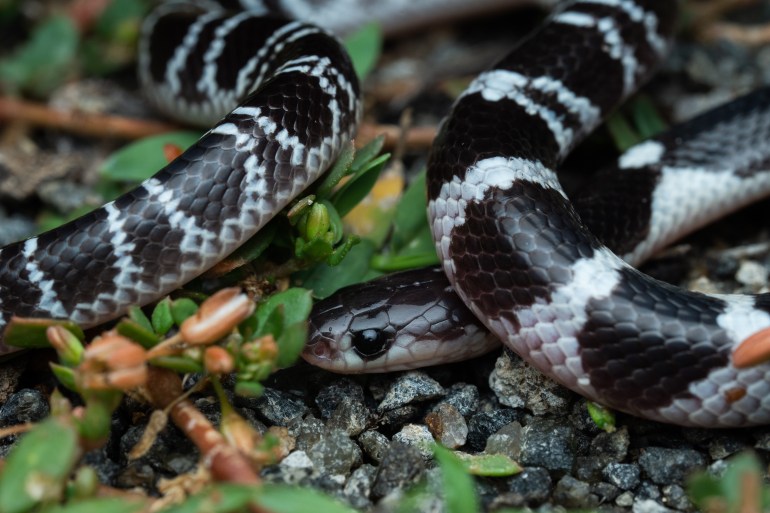
Which snakes are the most common?
Common species of snakes found in Pakistan and India include the big four: the common krait, Russell’s viper, saw-scaled viper and the Indian viper (naja naja). Other species include the king cobra, which averages 3-3.6 metres in length but can grow as large as 5.4 metres. It is found in northern India and also in Nepal alongside the banded and common kraits, green pit vipers, checkered keelbacks and the Nepal kukri snake. In Sri Lanka, species of Russell’s viper and the common krait are found, as well as the Indian python.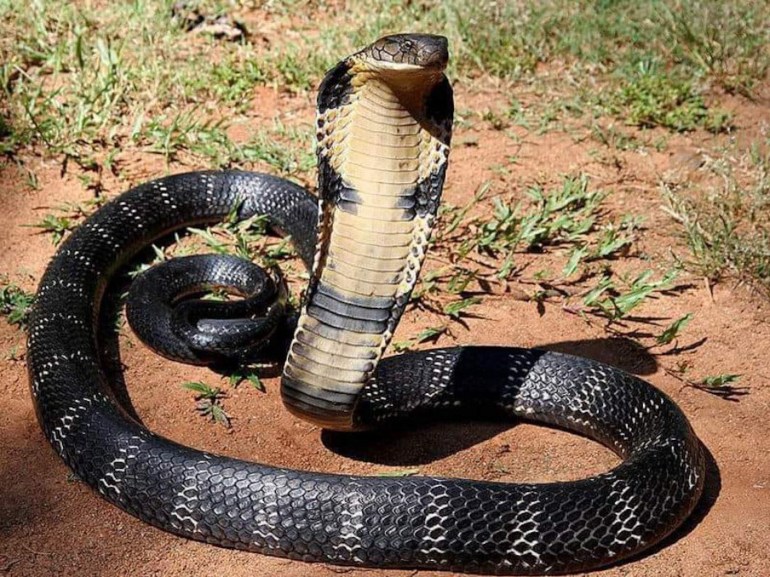
How dangerous are snakebites?
Of the 5.4 million snakebites which occur each year, 1.8 to 2.7 million result in “envenoming”. Envenoming is when the poison from a snakebite results in a possibly life-threatening disease. “Snake venom can kill the victim from a few minutes up to two to three hours if not treated in time,” said Sadanand Raut, a doctor who, along with his wife Pallavi Raut, has made it his mission to prevent snakebite deaths entirely in the Narayangaon region of India’s Maharashtra state. Raut is also a member of the WHO roster of experts for snakebite envenoming. Raut explained that the type of snake venom depends on the species of snake. He said that Indian cobras have very quick-acting neurotoxic venom, which means it has a paralysing effect that can cause symptoms minutes after the bite. While krait bites inject the same type of venom, it may take longer – four to six hours after the bite – for symptoms to show. Krait bites might not hurt initially, but cause issues such as an inability to open the eyes, difficulty in breathing and cardiac problems when left untreated, Raut added. Other snakes such as Russell’s vipers and saw-scaled vipers release vasculotoxic venom. These snakebites are very painful and result in necrosis, which means death of the body tissue. Raut explained that vasculotoxic venom can result in the thinning of the blood and can even lead to kidney failure. The symptoms can begin to show within minutes of the bite.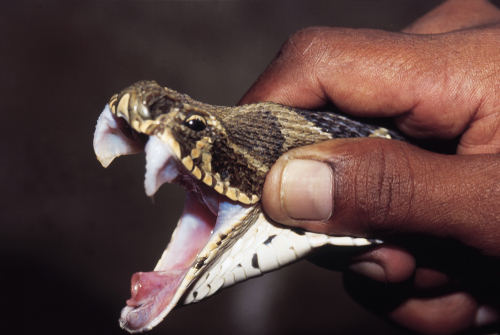
What happens when a snake bites you?
The effects of a poisonous snakebite can be terrifying, according to those who have survived. Kabiraj Kharel was about 18 years old when a krait bit his right hand. Kharel, now 50, whose family are farmers, had been removing ears from a batch of corn at his home in Sagarnath, Nepal, close to the Indian border, when he noticed the bite. Kharel recalled feeling terrified. “I thought I was going to die,” he told Al Jazeera. He rushed to get medical help. The nearest hospital was 25km (15.5 miles) from his house. Kharel said that he was aware of his surroundings for the first 20km, then his eyes and tongue began to tingle and go numb. After that, he lost consciousness. Venomous snakebites can cause difficulty in breathing, an inability to open the eyes and cardiac problems. Symptoms can be felt quicker with some types of snakes – for example, Indian cobras – than others such as kraits. If a venomous snakebite is left untreated or is treated too late, it can result in paralysis, breathing difficulties, bleeding disorders and kidney failure. Sometimes, the tissue damage can be bad enough to merit the amputation of a limb, resulting in permanent disability. Snakebites that are left untreated or are treated too late can prove fatal as well. Kharel regained consciousness after being given doses of antivenom at the hospital. He woke up disoriented. “I thought to myself, ‘Where am I?’” Jignasu Dolia, a wildlife biologist and conservationist in northern India’s Uttarakhand area, who carries out conservation-based research on king cobras, explained that not all snakebites result in envenoming, in fact about half of king cobra bites are “dry bites”, which means the snake does not inject any venom or may only inject small, non-lethal quantities. However, all snakebites should be considered venomous until proven otherwise and victims should be taken immediately to a hospital emergency room.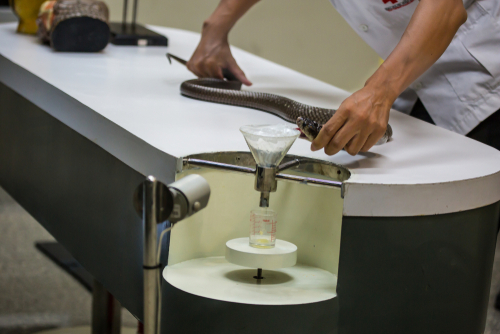
How does antivenom work?
Dolia explained that antivenom is produced by “milking” venom out of snakes, injecting a small amount into an animal, usually horses, and harvesting the antibodies produced to refine them into the antidote. Pakistan has, in the past imported antivenom from India, said Memon. Memon said that the antivenom does not work as well on snakebites in Pakistan, even for the same species of snake, due to slight variations in geography and diet.Can people easily access antivenom?
Awareness is a serious issue. Memon cited a 2000 study which showed that 44.5 percent of people interviewed in rural Sindh were unaware that antivenom even existed. In rural Pakistan and India, in particular, there is often a significant time delay between snakebites and treatment for victims. Memon added that people in rural Pakistan and India sometimes delay going to hospital because they prefer to visit local natural healers instead. While natural healers are important figures in local communities, they do not have access to the necessary antivenom. This also results in the underreporting of snakebite cases. “Because they’re underreported, it’s thought to be maybe not as large of an issue,” said Memon. She added that antivenom production across South Asia needs to be improved. In Pakistan, only one authorised site of antivenom production exists – Islamabad’s National Institutes of Health (NIH). Antivenom is very expensive, so making it more affordable would also be a step in the right direction, she said. Most antivenom also needs to be refrigerated, which can be a problem in Pakistan where there are electricity outages, especially during the monsoon season. “Creating a kind of composition of antivenom that does not need refrigeration would be ideal.”How is climate change affecting snakebites?
Climate change is another major issue. Research by Emory University, published in July 2023, showed a considerable increase in the likelihood of being bitten by a snake for every degree Celsius that daily temperatures increase. There are many different species of snake and optimal living conditions vary for each, which is why it is hard to predict or even generalise about the effect of global warming on snakes generally. Rising temperatures, however, are known to make habitats for some species of snake unsuitable for them. Conditions can become too dry for snakes to thrive, explained Michael Starkey, conservation biologist and founder of Save the Snakes, a California-based organisation dedicated to conserving snakes and mitigating human-snake conflict. This can cause snakes to move to areas where conditions are better – often areas where humans are living, thus increasing the likelihood of humans and snakes interacting.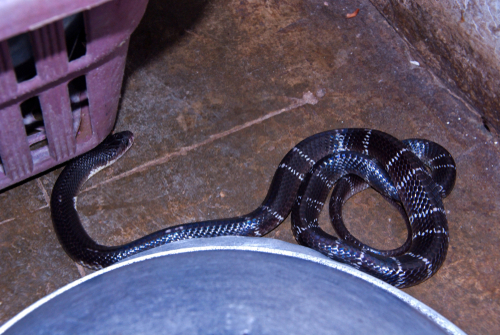
Why do we need snakes?
Experts say that it is essential for humans to learn to coexist with wildlife better, including with snakes, for their own benefit. Snakes can actually be very helpful to humans. They typically eat rats and rodents and also serve as prey for hawks, owls and larger snakes. If snakes die out, the food chain and ecosystem will fall out of balance. “They’re a pest control service and help with our ecosystems,” explained Starkey. Globally, rodents destroy 20 to 30 percent of crops each year, according to the International Rice Research Institute, which says it is dedicated to abolishing poverty and hunger among people and populations that depend on rice-based agrifood systems.
So, how do we prevent snakebites and protect snakes?
Awareness of simple measures that will prevent snakes from entering homes or getting into crops will help, said Starkey. These include keeping grains in airtight containers so they do not attract rodents which in turn, attract snakes. General pest control around properties may also help. There needs to be more awareness about what treatment to seek, said Memon, whose own grandfather died from a snakebite near the family home in Tharparkar in the southern Sindh province. Instead of visiting doctors, people in South Asia rush to natural healers to treat snakebites. This leads them to miss the “golden window of time” to treat the bites quickly, explained Raut, adding that awareness should be spread in schools, rural centres, tribal institutes and medical institutions. Memon said that the production of antivenom needs to be ramped up throughout South Asia, adding that making it more affordable would be a step in the right direction. Most antivenom also needs to be refrigerated, which can be a problem in Pakistan where there are electricity outages, especially during monsoon season. “Creating a kind of composition of antivenom that does not need refrigeration would be ideal.”What’s your Reaction?
