
As Cyclone Ditwah Recedes, Sri Lanka Confronts the Failures That Made a Disaster Inevitable
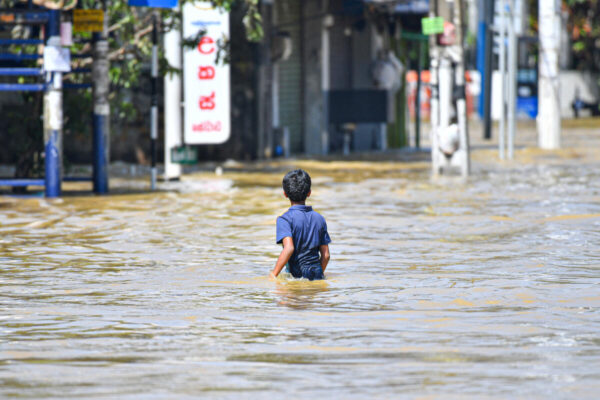
Last week, Sri Lanka faced its worst natural disaster, barring the 2004 tsunami. According to data available on the morning of December 3, Cyclone Ditwah has killed over 470 Sri Lankans. The toll is likely to increase as over 360 are still missing. Close to 1.6 million people, including around 275,000 children, have been affected, and over 41,000 houses have been damaged.
The National Building Research Organization (NBRO) said there have been 215 severe landslides across seven districts. Out of 4,000 transmission towers that were disabled, 2,800 were back online by Wednesday.
The total economic losses incurred are estimated to be around $6-$7 billion. This is more than the country’s foreign reserves.
Ditwah has left Sri Lanka, but its impact is only beginning to unfold.
Health authorities have warned of infectious diseases among those living in flood-affected areas. The Northeast monsoons are also due soon, and many worry that the monsoonal rains will lead to more floods and landslides.
Sri Lanka is not a stranger to floods, but no one was prepared for the scale of the rainfall that triggered the flooding. Lakshman Galagedara, a professor in hydrology, estimated that Sri Lanka received nearly 13 billion cubic meters of water in just 24 hours on November 28. This is equal to about 10 percent of Sri Lanka’s average annual rainfall. The discharge rate was about 150,000 cubic meters per second, close to the Amazon River at peak flow. But unlike the Amazon, whose basin stretches over 7 million sq km, Sri Lanka’s catchment area is minuscule. Nearly all of this water turned to runoff because the soil had already been saturated due to previous rains. The results were floods and landslides that the country had not seen hitherto.
The disaster was part climate change and part the result of Sri Lanka’s unplanned development. Scientists have predicted that climate change would increase the severity and frequency of cyclones in the Indian Ocean. There is also an increase in Category 3–5 cyclones around the world, and these intensify much faster than before. This gives authorities less time to respond. This is what happened in Sri Lanka. Most places received more than 300 mm of rain within a day. Large reservoirs could not absorb the rainfall and main rivers, such as the Kelani, Mahaweli, and Deduru Oya, overflowed simultaneously.
By November 29, many places were underwater, some provinces were cut off from other parts of the country, and communication and electricity were disabled in large swaths of the island.
However, things wouldn’t have been this bad if unregulated development hadn’t eroded Sri Lanka’s natural defenses. Wetlands have been filled for housing, expressways, and commercial projects. Rivers and canals are clogged with encroachments. In the hill country, deforestation and construction have destabilized slopes. Many years ago, Sri Lankan officials had identified high-risk areas for floods and landslides. However, no one had been relocated, and construction had continued in these areas.
The roots of these vulnerabilities reach deep into Sri Lanka’s economic and political history. Since economic liberalization was set in motion in 1977, the state withdrew from long-term planning and regulatory oversight. State investment in flood control, environmental protection, and scientific capacity has been minimal. Local government bodies, known for corruption, were authorized to approve construction plans. National agencies tasked with land-use planning, meteorology, and disaster management operate with limited budgets. During the economic crisis that began in 2020, this institutional weakening accelerated. Recruitment, frozen for five years, only started this year. Basic maintenance of drainage networks, reservoirs, and early-warning systems was neglected from prolonged budget constraints.
Only the military has retained some capacity. The armed forces deployed thousands to rescue stranded families, ferry food and medicine, clear roads, etc. Their reach, discipline, and logistical experience were indispensable. Yet, the military has also been facing chronic capital expenditure limitations. Although Sri Lanka allocates more than $1.5 billion a year for defense, most of that funding is recurrent expenditure. As mentioned above, capital expenditure has stagnated for years, leaving the military without the specialized equipment needed for large-scale climate emergencies. The military only has a few heavy-lift helicopters to evacuate families, too few high-water vehicles to reach remote communities, and insufficient boats, drones, pumps, and engineering tools to operate at the speed modern disasters demand.
The Cabinet’s decision to establish a “Rebuilding Sri Lanka” fund under the Presidential Secretariat shows that the government understands that the country must move beyond ad hoc responses. But rebuilding should not be limited to repairing what was damaged. Sri Lanka needs to rethink how it understands risk and allocates resources.
Sri Lanka must try to recover its natural buffers, including wetlands, mangroves, and upper-watershed forests. It must enforce zoning regulations, relocate families from high-risk zones, and modernize drainage and reservoir systems. Hydrological and meteorological monitoring networks need to be upgraded. Urban planning must become sustainable, particularly in Colombo and the fast-growing suburbs that feed the capital. These measures require political commitment, not just technical expertise.
Sri Lanka must also modernize its approach to disaster response. That means reconfiguring the military’s capabilities for climate-related missions, redirecting capital spending toward air mobility, engineering units, and communications technology, and integrating military assets with civilian agencies through clearly defined protocols. A long-term investment plan, rather than annual emergency allocations, would allow the country to build the hardware and institutional muscle needed for future crises.
