
Asia’s models in fighting graft
Corruption in most countries has worsened over the past decade, according to a new survey by Transparency International. Yet last year, one region bucked the global trend, offering a few lessons in how to tap people’s propensity for honesty in public life.
Eight countries in Asia, from Sri Lanka to East Timor, have shown continued growth in anti-corruption progress, more than any other region.
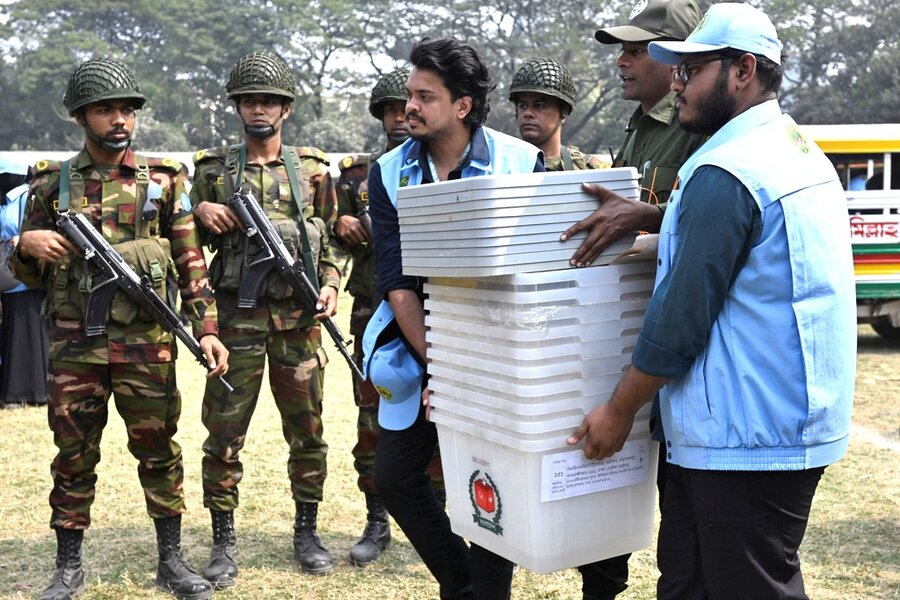
If the rest of the world wants to follow one example of this Asian effort for clean governance, it can keep an eye on a Feb. 12 vote in Bangladesh.
Voters in that South Asian nation’s parliamentary elections cite corruption as their main issue (followed by inflation). They “express clear expectations for leaders who demonstrate care, competence and accountability,” stated a poll by two Dhaka-based think tanks.
That strong sentiment arose from the country’s dramatic break with authoritarian rule in 2024 following student-led protests over issues like political patronage. And it helped Bangladesh improve slightly in the latest global index on corruption.
It has also boosted the popularity of an Islamist political party in the largely Muslim country. Despite its anti-feminist leanings, the Jamaat-e-Islami party is widely seen among young people as the least corrupt. (About 4 in 10 voters are under 37 years of age.) Support for the party, which promises to end corruption and restore judicial independence, is high in opinion polls.
To ultimately protect people from the abuse of power, according to Transparency International’s representative in Bangladesh, requires leaders “to demonstrate their integrity through action.”
Two other South Asian countries, Nepal and Sri Lanka, offer a similar model. Both saw recent youth-led uprisings that fundamentally set each nation on a path of reform. Sri Lanka had a big jump last year in the global index, while Nepal faces a crucial election in March to cement its anti-corruption gains.
Popular demands for clean government have helped Taiwan, India, and Malaysia make some progress on that front. In Vietnam, progress against bribery and other forms of graft is due mainly to the ruling Communist Party’s desire to cling to power and ensure a flow of new foreign investment.
Last year, Asia saw a “frustration ... at weak governance and limited accountability,” stated Transparency International, resulting in “a surge in young people taking to the streets.” Most countries in the region still score low on the global index. But the few examples of “limited" signs of progress, as the global watchdog calls it, are based on an infinite supply of demand for principled leadership.
