Bangladesh Election 2026: Tarique Rahman Leads BNP as Hasina Remains in India
International
-Gaurav Sharma

Dhaka/New Delhi: Bangladesh is set for a national election on February 12, the first major political test since the 2024 student uprising that toppled former Prime Minister Sheikh Hasina. With nearly 130 million eligible voters, the election is being held under an interim administration led by Nobel laureate Muhammad Yunus, across about 43,000 polling stations.
India’s stakes are high. Historically, New Delhi’s relations with Dhaka have fluctuated depending on the ruling party. The Awami League generally maintained strong ties, cooperating on trade, security, and infrastructure projects, while the BNP and Jamaat-e-Islami were viewed as more Pakistan-leaning and Islamist-leaning, raising concerns in New Delhi. The 2015 Land Boundary Agreement and energy cooperation under Hasina’s long tenure provided stability, but the 2024 protests and Hasina’s ouster upended the political landscape.
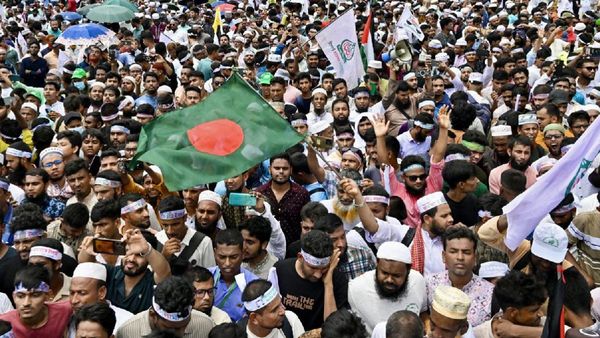
The student-led demonstrations began over government job quotas favoring descendants of 1971 freedom fighters and escalated into a nationwide movement against Hasina’s rule. Security forces cracked down, leaving around 1,400 dead, and Hasina fled to India on August 5, 2024. Subsequently, a Dhaka court sentenced her to death in absentia for crimes against humanity, and statues of her father, Sheikh Mujibur Rahman, were toppled amid a wave of anti-Awami League sentiment.
The BNP, led by Tarique Rahman, has returned to prominence. Tarique, son of former PM Khaleda Zia, assumed leadership after returning from London in December 2025. The party’s 51-point manifesto pledges “Bangladesh Before All,” emphasizing justice, rights, fairness, and pragmatic foreign policy, including stable ties with India. Tarique is seen as the leading candidate for Prime Minister in the upcoming polls.
Meanwhile, Jamaat-e-Islami has re-entered the political arena in alliance with the National Citizen Party and youth-led groups from the 2024 protests. Its platform emphasizes regional cooperation with neighbors including India, Bhutan, Nepal, Myanmar, Sri Lanka, Maldives, and Thailand, while maintaining focus on strengthening ties with the Muslim world.
Minority safety remains a pressing concern. Between August and December 2024, more than 2,000 communal attacks targeted Hindus, Buddhists, and Christians. Incidents such as the brutal killing of Dipu Chandra Das have drawn criticism from New Delhi, which has urged Dhaka to investigate and prosecute perpetrators without political bias.
India has begun recalibrating its diplomacy. External Affairs Minister S. Jaishankar and High Commissioner Pranay Kumar Verma met Tarique Rahman in Dhaka in recent months, signaling New Delhi’s willingness to engage with the BNP regardless of past tensions. Both countries are now exploring pragmatic cooperation post-election, including security, trade, and regional stability.
The youth vote is critical, with nearly 44% of registered voters aged 18–37. Surveys suggest these voters prioritize restoring democratic norms, economic stability, and recalibrating ties with India over historical party loyalties.
As Bangladesh heads to the polls, the election will determine not only the country’s domestic future but also the trajectory of India-Bangladesh relations for years to come. Analysts predict that post-poll alliances, particularly between the BNP and Jamaat-led youth coalitions, could reshape diplomatic engagement and regional stability in South Asia.
-

Journalist Ravi Nair Convicted in Adani Defamation Case; Sentenced to One Year Jail Term
-
AI Posts Must Be Labelled, Deepfakes Removed In 3 Hours: What India’s New IT Rules Mean For Social Media Users
-
Four Stars Of Destiny! Gen Naravane Shares Penguin Post Denying Publication
-
What Is On-Screen Marking OSM? CBSE Plans Digital Evaluation For Class 12 Exams 2026
-
Railways To Run 62 Holi Special Trains From March 1–22 Linking Delhi, UP, Bihar; Check Routes And Schedule
-
Gold Silver Rate Today, February 10, 2026: What Is Driving City-Wise Gold And Silver Prices In India
-
Pakistan Govt Takes U-Turn, Clears India Clash At T20 World Cup 2026 As ICC Rejects All PCB Demands
-
Mumbai Water Cut for 30 Hours in Mid-February; M East, M West Areas to Be Affected
-
Metro Services May Be Halted on March 7 Over Fare Hike, Warns Activist Vatal Nagaraj
-
CM Yogi Adityanath Asks BJP MLAs To Keep Offices Open, Stay Active In SIR Voter Roll Revision
-
Gold Silver Rate Today, February 9, 2026: Know City-Wise Prices as MCX Futures Signal Strong Momentum