Bangladesh’s Hindu Killings Are Not Isolated Crimes, They Are a Pattern of Failure
International
oi-Madhuri Adnal

The killings of Hindu men across Bangladesh in December 2025 are not isolated crimes but the latest expression of a long-running pattern of persecution faced by the Hindu minority. Within less than a month, at least twelve Hindus were killed, many through mob violence and extrajudicial punishment, underscoring how quickly minorities become exposed when political unrest intersects with religious radicalism and institutional failure.
Those killed include Dipu Chandra Das, Amrit Mondal (also known as Samrat), Dilip Bormon, Prantosh Kormokar, Utpol Sarkar, Zogesh Chandra Roy, Suborna Roy, Shanto Das, Ripon Kumar Sarkar, Pratap Chandra, Swadhin Chandra and Polash Chandra. While authorities have attempted to present each death as a separate criminal episode, the cumulative pattern reveals systematic vulnerability rather than coincidence.
In December 2025, at least twelve Hindus were killed in Bangladesh, primarily through mob violence, highlighting the ongoing persecution faced by the Hindu minority amidst political unrest and religious radicalism; victims included Dipu Chandra Das and Amrit Mondal. These killings, often triggered by blasphemy allegations or other accusations, reflect a pattern where mobs take the place of legal processes, and official responses have not adequately protected the minority community.
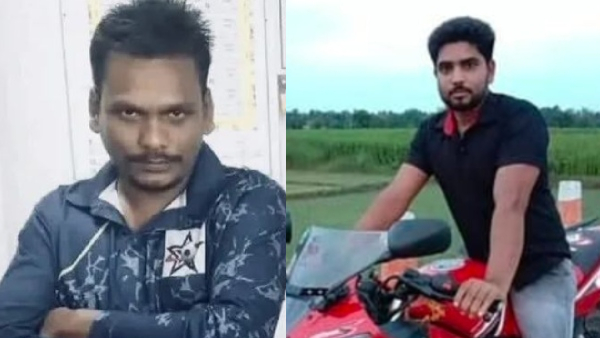
The persecution of Hindus in Bangladesh points to a deep-rooted strain of radicalism that has been allowed to entrench itself within the country's socio-political fabric. Communal bigotry, reinforced by sustained anti-India rhetoric, has steadily degraded the environment in which minorities live. Public discourse increasingly frames hostility toward Hindus as ideological resistance rather than extremism, blurring the line between political mobilisation and communal intimidation.
The language of change, reform and student-led movements has largely served as a superficial justification for this shift. In practice, these narratives have been instrumentalised to advance radical agendas, shield extremist mobilisation from scrutiny and recast Bangladesh as a persistent irritant to India, positioned in opposition to India's growing stature as a leading voice of the Global South. Domestic minorities have become collateral damage in this ideological posture.
A significant number of the December killings followed blasphemy allegations, a charge that has become a powerful tool for targeting Hindus. Such accusations often emerge without evidence, formal complaints or investigation, yet they are sufficient to incite mobs and legitimise extreme violence. In other cases, victims were accused of extortion or criminal conduct, but the outcome remained the same: mob justice replaced lawful arrest and judicial process.
The
killing
of
Dipu
Chandra
Das,
a
Hindu
garment
worker
in
Mymensingh
district,
exemplifies
this
dynamic.
Accused
of
making
derogatory
remarks
about
Islam
during
a
workplace
event,
he
was
assaulted
by
a
mob,
tied
to
a
tree,
hanged
and
set
on
fire.
Investigators
later
stated
that
no
direct
evidence
of
blasphemy
was
found,
highlighting
how
easily
unverified
claims
can
escalate
into
public
execution
when
state
safeguards
collapse.
Similarly,
Amrit
Mondal
was
beaten
to
death
in
Rajbari
district,
with
authorities
later
emphasising
his
alleged
criminal
background
to
dismiss
any
communal
angle.
Yet
regardless
of
allegations,
his
death
at
the
hands
of
a
mob
rather
than
through
arrest
reinforced
a
widespread
perception
among
Hindus
that
due
process
is
often
denied
when
the
accused
belongs
to
a
minority
community.
These killings unfolded amid widespread protests and political instability that strained law enforcement and administrative capacity across multiple districts. As seen during previous periods of unrest, Hindu communities once again became disproportionately exposed, targeted either through organised hostility or because they were perceived as lacking political protection.
Religion has increasingly been elevated into a central political instrument. Radical Islamist groups and their affiliates, including student organisations, have relied on religious nationalism to mobilise support ahead of elections. Lacking substantive governance agendas, these groups depend on identity-based mobilisation, with Hindus becoming convenient targets in a polarised environment.
The interim government led by Mohammad Yunus has condemned the killings and reiterated opposition to mob justice. Arrests have followed some incidents, but for Hindu minorities, such responses offer little reassurance. Protection is measured not by post-incident condemnation but by preventive action, rapid intervention and consistent accountability all of which have repeatedly failed.
The persecution of Hindus in Bangladesh is defined by repetition: repeated allegations, repeated mobs, repeated deaths and repeated official assurances that fail to alter outcomes. The killings of Hindu minorities are not anomalies; they are part of an established pattern in which political unrest, radical mobilisation and anti-India posturing converge, leaving minorities acutely vulnerable.
Until allegations religious or criminal are addressed through lawful mechanisms and minorities are protected irrespective of political expediency, the persecution of Hindus in Bangladesh will persist.
-

Mark 1st Day Box Office Collection: Sudeep's Film Beats Shivanna's 45 On Opening Day
-
Jana Nayagan Audio Launch: Vijay's Thalapathy Thiruvizha Date, Time, Streaming Info, Guest List, Ticket Deets
-
Bigg Boss Tamil Eviction: Subiksha Out of The Show Through Mid Week Elimination?
-
Hyderabad Horror! Man Burns Wife Alive, Pushes Daughter Into Fire
-
BJP–Shinde Sena Finalise Seat-Sharing For BMC Polls: BJP To Contest On 140, Shiv Sena Gets 87
-
Digvijaya Singh Praises BJP-RSS While Sharing Old Photo of PM Modi, BJP Hits Back at Congress
-
BJP Leader Dushyant Kumar Gautam Urges Government to Remove Video Implicating Him in Ankita Bhandari Murder Case
-
Vindhya Vyapar Mela Ladies Washroom MMS: After Payal Gaming, 19-Minute Viral Video, New Clip Triggers Outrage
-
LeT Terrorist Sighting Sparks Joint Operation in Anantnag
-
Lucknow Flower Pot Theft Raises a Bigger Question: Why Do Indians Treat Public Property as Free Loot?
-
Mark 2nd Day Box Office Collection: Sudeep's Film Performs Well Despite Clashing With 45
-
US Air Travel Disrupted: Over 1,100 Flights Cancelled, Nearly 4,000 Delayed