Beds Unavailable, Staff Exhausted: Canada’s Health System Faces Breaking Point
International
oi-Gaurav Sharma

The death of 44-year-old Indian-origin engineer Prashant Sreekumar in an Edmonton hospital has sharpened focus on deep problems in Canada’s healthcare system. Prashant reportedly waited around eight hours in the emergency room at Grey Nuns Hospital with severe chest pain before collapsing, while Canada-based Indians describe ER waits of up to 16 hours and months-long delays for appointments.
During those hours at Grey Nuns Hospital on 22 December, Prashant’s blood pressure reportedly climbed as high as 210. Family members said medical staff mainly gave Tylenol while Prashant stayed in visible distress. When hospital staff finally moved Prashant for emergency treatment, he collapsed and died within seconds, turning a day that began with hope for help into a sudden bereavement.
The death of Indian-origin engineer Prashant Sreekumar in an Edmonton hospital highlighted issues within Canada's healthcare system, including long emergency room waits, as Sreekumar waited eight hours before collapsing, and faced concerns with the "Medicare" system.
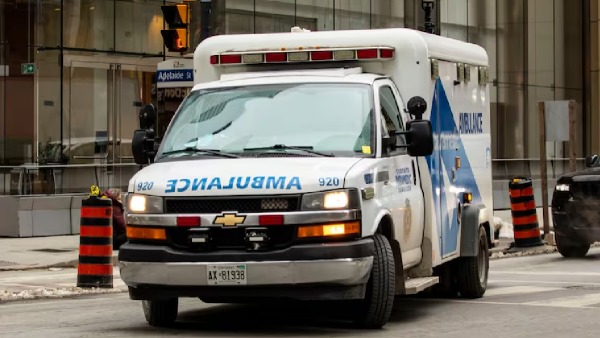
Canada healthcare system under strain and public dissatisfaction
Standing near Prashant’s body, a video showed his wife voicing anger and grief, saying that "the hospital killed him". In the same clip, Prashant’s wife added, "Basically, the hospital administration and the employees of Grey Nuns Community Hospital have killed my husband, by not providing him with timely medical help," directly blaming delays in emergency care for the loss.
Prashant’s case highlighted concerns long raised by Canadian patients, journalists and Indian immigrants about the Canada healthcare system. Emergency medicine stresses the “Golden Hour”, where the first 60 minutes after a serious event are critical for survival. An eight-hour wait for someone with severe chest pain and soaring blood pressure suggested a serious breakdown in emergency response standards.
How the Canada healthcare system, called Medicare, is organised
Canada’s healthcare system is structured under the Canada Health Act of 1984 and is known as Medicare. Medicare is publicly funded and run by government, offering universal coverage for citizens and permanent residents without direct charges at the point of care. It covers around 70% of healthcare needs, while the remaining 30% comes from private providers offering services like dental care, vision care and psychotherapy.
Most Canadians pay for these uncovered healthcare services through insurance. A Washington Post report noted that at least 70% of residents held either public or private health insurance. While the federal government sets broad Canada healthcare system principles, regulates medicines, funds provinces and covers groups like Indigenous communities on reserves, military personnel and federal inmates, provincial and territorial governments run hospitals and decide staffing levels and covered procedures.
Local administrations also manage public insurance schemes such as OHIP in Ontario and decide which services fall under Medicare. According to the Canadian Institute for Health Information, Canada spent about $308 billion on health in 2021, around 12.7% of national GDP. An OECD “Health at a Glance 2025” report said Canada performed well on indicators like life expectancy, preventable deaths and overall access to care.
Canada healthcare system gaps: primary care shortage and ER overload
Despite these broad indicators, the Canada healthcare system faced serious gaps, especially around primary care access and emergency services. An Ipsos survey found around 56% of people were satisfied with public healthcare, meaning a sizeable share had concerns. One of the biggest problems was a shortage of primary care doctors and nurse practitioners, with millions lacking a regular clinic or family physician.
A 2025 Canadian Medical Association study estimated that about 5.9 million people, or one in five residents, did not have reliable access to primary care providers. While around 81% of the population technically had a primary care option, only 37.5% could secure an urgent appointment within 24 hours. Without timely GP or clinic access, many patients turned to hospital emergency rooms for problems that could have been treated elsewhere.
This pressure on emergency departments worsened overcrowding in the Canada healthcare system. Data from the Canadian Institute for Health Information indicated that about 20% of ER visits, roughly 16 million cases, concerned conditions suitable for primary care settings. INFOnews reported that ERs in Quebec were routinely above capacity, with an average occupancy of 120% and some sites reaching 200%, making long waits almost standard.
Canada healthcare system wait times and pressure on hospitals
The Canadian Medical Association reported that non-urgent patients now faced average ER wait times of more than 22 hours for admission. For urgent patients, waits ranged from 6.5 to 8.5 hours. The Canadian Institute for Health Information also found that once admitted from an ER, hospital stays were often prolonged, with 9 in 10 completed visits lasting more than 48.5 hours after arrival.
Long delays extended beyond emergency rooms into scheduled care under the Canada healthcare system. Research by the Fraser Institute showed that patients referred by a general practitioner waited an average of 30 weeks in 2024 for specialist procedures. This was more than triple the 9.3 weeks recorded in 1995. Some essential surgeries were hit hardest, including Orthopaedic Surgery with waits of 57.5 weeks and Neurosurgery with 46.2 weeks.
| Canada healthcare system metric | Figure | Year / Source |
|---|---|---|
| ER wait (urgent patients) | 6.5–8.5 hours | Canadian Medical Association |
| ER wait (non-urgent admission) | Over 22 hours | Canadian Medical Association |
| Average referral-to-treatment wait | 30 weeks | Fraser Institute, 2024 |
| Orthopaedic Surgery wait | 57.5 weeks | Fraser Institute |
| Neurosurgery wait | 46.2 weeks | Fraser Institute |
Staff shortages across the Canada healthcare system
Behind these delays lay serious workforce shortages throughout the Canada healthcare system. The OECD’s “Health at a Glance 2025” report recorded 2.8 practising physicians per 1,000 people in Canada, compared with an OECD average of 3.8 per 1,000. Fewer doctors meant longer queues to see specialists, slower diagnostics and more stress for frontline staff in both clinics and hospitals.
A federal report titled “The State of the Health Workforce in Canada”, released in 2022, warned of worsening shortages. Projections suggested the country could lack 78,000 doctors by 2031 and 117,600 nurses by 2030. With demand for care rising because of an ageing population and increased immigration, the Canada healthcare system risked facing more overloaded wards and longer waiting lists unless staffing grew.
How patients and immigrants experience the Canada healthcare system
After Prashant’s death, Canadian journalist Rajinder Saini told India Today TV that ER waits in the Canada healthcare system often ranged between eight and 16 hours. Saini said some patients returned home without admission after waiting through the night and reported deaths where people never reached a doctor. Saini also pointed to Canada’s rising population, saying bed capacity had not kept up.
An India Today Digital report highlighted how international students, who usually lack Medicare coverage, struggled within the Canada healthcare system. The Canadian Medical Association stated that people outside Medicare, including foreign students, might face bills of about $260 CAD for a clinic visit and around $1,000 CAD for an ER visit. These costs added financial anxiety to already long waiting times for young migrants.
Local media described more signs of distress within the Canada healthcare system. Capital Daily reported that the number of people leaving ERs without treatment rose by 86% in seven years. In British Columbia alone, between 2024 and 2025, about 141,961 patients left emergency departments before receiving full care. A CBC report put the national figure at roughly 500,000, suggesting that 5% to 15% of ER visitors departed untreated.
Speaking to CBC, emergency doctor Fraser MacKay, also a board director at the Canadian Association of Emergency Physicians, said these departures were a direct consequence of long waits in the Canada healthcare system. Patients often arrived with hope, waited for hours and then left because they needed rest, childcare, work or simply lost faith that they would be seen in time.
Canada healthcare system failures highlighted by other tragic cases
Another case, reported by CBC, showed similarities with Prashant’s death and drew more attention to the Canada healthcare system. In 2024, 16-year-old Finlay van der Werken was taken to Oakville Trafalgar Memorial Hospital with intense abdominal pain. Triage staff labelled the case “emergent”, meaning a doctor should see Finlay within 15 minutes, but that did not happen.
Instead, Finlay reportedly waited more than eight hours as symptoms grew worse. When doctors finally examined Finlay, sepsis had already developed, leading to cardiac arrest. Finlay later died due to organ failure. Finlay’s parents argued that timely treatment might have saved their child and, like Prashant’s family, they accused the hospital network of negligence and filed a lawsuit.
For families like Prashant’s and Finlay’s, numbers about the Canada healthcare system translated into painful human stories. The promise of “free and universal” care clashed with experiences of stress-filled corridors, crowded waiting rooms and limited staff. While official reports still showed reasonable satisfaction levels, affected families saw gaps that, in their view, contributed directly to preventable deaths.
Prashant Sreekumar’s death underlined the human impact of delays and staff shortages in the Canada healthcare system. Medicare continued to guarantee universal access on paper, yet long ER waits, lack of primary care and pressure on hospital resources created conditions where timely help sometimes failed to arrive. For many residents and newcomers, those systemic weaknesses turned a promise of security into grief and anger.
-

Mark 1st Day Box Office Collection: Sudeep's Film Beats Shivanna's 45 On Opening Day
-
Jana Nayagan Audio Launch: Vijay's Thalapathy Thiruvizha Date, Time, Streaming Info, Guest List, Ticket Deets
-
Bigg Boss Tamil Eviction: Subiksha Out of The Show Through Mid Week Elimination?
-
Hyderabad Horror! Man Burns Wife Alive, Pushes Daughter Into Fire
-
BJP–Shinde Sena Finalise Seat-Sharing For BMC Polls: BJP To Contest On 140, Shiv Sena Gets 87
-
Digvijaya Singh Praises BJP-RSS While Sharing Old Photo of PM Modi, BJP Hits Back at Congress
-
BJP Leader Dushyant Kumar Gautam Urges Government to Remove Video Implicating Him in Ankita Bhandari Murder Case
-
Vindhya Vyapar Mela Ladies Washroom MMS: After Payal Gaming, 19-Minute Viral Video, New Clip Triggers Outrage
-
LeT Terrorist Sighting Sparks Joint Operation in Anantnag
-
Lucknow Flower Pot Theft Raises a Bigger Question: Why Do Indians Treat Public Property as Free Loot?
-
Mark 2nd Day Box Office Collection: Sudeep's Film Performs Well Despite Clashing With 45
-
US Air Travel Disrupted: Over 1,100 Flights Cancelled, Nearly 4,000 Delayed