
Calculating Iran’s Losses in Op. Epic Fury as CRS Nearly Doubles the U.S. Aircraft Count From 42 to 81
A newly updated Congressional Research Service (CRS) report counts 81 US military aircraft as lost or damaged in the ongoing conflict with Iran. EurAsian Times analyzes the losses Tehran sustained during the ongoing conflict.
The latest figure is nearly double the 42 aircraft the Congressional Research Service tallied in a May 2026 report, as the EurAsian Times reported at the time.
The jump from 42 to 81 most likely reflects updated reporting and newly available public information.
In addition to the Congress research figures, two other reports published by the Congressional Budget Office and the Pentagon’s inspector general had earlier provided deep insights into the war. The latest CRS report reportedly cited that data.
“As of August 1, 2026, the armed conflict with Iran has cost DoD approximately $38 billion. That amount reflects the costs of replacing expended munitions and equipment lost in battle, increased flying hours, other operations, and increased fuel costs,” the Congressional Budget Office (CBO) stated in the report last month.
Meanwhile, the Pentagon’s IG report estimated the US campaign cost $33.4 billion between February 28 and June 30, with at least $22.3 billion spent on munitions alone.
Citing information published by the CBO, the latest CRS states that the overall cost of the lost aircraft is between $1.9 billion and $3.3 billion, depending on the Pentagon’s replacement costs. However, CNN News was informed by some unidentified sources that the cost of the war is much higher–at least $45 billion–excluding damage to US infrastructure and bases spread across the Gulf, repeatedly struck by Iranian forces.
The revised losses in the Congress report include manned aircraft, helicopters, and drones, though it clarifies that the total is not a count of destroyed aircraft, adding that some damaged aircraft may have returned to active service after repairs.
It lists 12 F-15E jets as destroyed/damaged, up from four F-15E Strike Eagle Fighter jets listed in the May 2026 report. The US lost three F-15E fighters in a friendly-fire incident related to the Kuwait Air Force aircraft, whereas the fourth was downed by Iran using shoulder-mounted air defense systems, as previously noted by the EurAsian Times.

Both CBO and IG reports also earlier listed just four F-15E losses. Therefore, the eight F-15Es mentioned in the new report are likely the jets that were damaged in an Iranian strike on the Muwaffaq Salti Air Base in Jordan in September 2026. Citing an unidentified US official, Reuters earlier reported that Iran had struck an A-10 Warthog, leaving it with a missing wing, while eight F-15s sustained light damage and were returned to service.
The latest list also includes the F-35A, the US Air Force’s most prized and expensive stealth fighter. The CBO report had earlier noted that replacing/repairing the aircraft would cost $120 million, without saying whether it would be written off or repaired.
Although some OSINT observers at the time believed this acknowledged the F-35 loss, others warned that the CBO was only recording the repair cost while leaving room for a potential replacement.
Furthermore, the latest list also reiterates the loss of the E-3 Sentry Airborne Warning and Control System (AWACS), which was struck and damaged while on the ground at Prince Sultan Air Base, Saudi Arabia, during an Iranian missile and drone attack.
However, instead of merely reporting the loss, it expressed concern about losing this highly specialized aircraft and the far-reaching effects it could have on the USAF.
“Congress may assess whether losses in certain high-demand platforms that are aging and limited in number, such as the E-3 Sentry, create capability gaps or increase risk in other theaters,” it stated.

Notably, the US Air Force has only 16 of these critical AWACS remaining in its inventory, and losing each could disproportionately affect American combat posture in the Western Pacific, where the threat of war with China is never off the table.
Another newly listed loss on the updated CRS is the US Navy’s MH-60S Sea Hawk helicopter, which did not appear in the May 2026 list. On July 1, an MH-60S Sea Hawk from a George H.W. Bush aircraft carrier made an emergency landing in the Arabian Sea, although the Navy ruled out hostile action at the time.
Most of the rise since May is attributed to drones. The report now counts 45 MQ-9 Reapers lost, up from 24 in its May report. This is also a considerable increase from the 30 Reaper losses cited in the IG report. Furthermore, a US Army AH-64 Apache that was shot down over the Strait of Hormuz in June 2026 has also found its name on the list.
Notably, the newly published report raises several issues for Congress to address, including whether the Pentagon provides enough detail about the losses for lawmakers to assess the consequences and potential solutions.
CRS notes that the Department of Defense’s reporting on the losses has been limited or vague, especially since even the September 2026 Lead Inspector General report relied in part on earlier CRS open-source tallies rather than providing a fully independent, comprehensive public accounting.
What Did Iran Lose In The War?
Iranian authorities have offered only limited, selective figures on their own military and civilian casualties and have not published a comprehensive accounting of equipment destroyed during Operation Epic Fury launched by the US in coordination with Israel.
Iran has nothing equivalent to the CRS list. Open-source counts already disagree: one tracker puts Iranian aircraft losses above 90 airframes, mostly transports and tankers, while a narrower documented list counts 43.
Open-source trackers have recorded dozens of Iranian aircraft—combat jets, transports, tankers, trainers, and helicopters—destroyed primarily on the ground at air bases early in the campaign, although a few were downed in air.
In the initial days of the war, two Iranian fighters, a Northrop F-5 and a F-4 Phantom II, were destroyed in an Israeli strike at Tabriz Shahid Madani International Airport. Around the same time, the US destroyed two Iranian Sukhoi Su-22 aircraft at Shiraz Shahid Dastgheib Airport, along with two Lockheed C-130 Hercules and an Il-76 transport aircraft.
CENTCOM released footage of the two Su-22s. Satellite imagery was later cited for the two C-130s and the Il-76 at the same airfield. Further Phantom losses have been reported at the 3rd Tactical Air Base in Hamadan, but not documented to the same standard.
A Qatari Air Force Boeing F-15QA shot down two Iranian low-flying Sukhoi Su-24 tactical bombers on March 2, 2026, after they failed to react to radio warnings.
In the second week of March 2026, Israel said it had destroyed multiple IRIAF F-14 Tomcats in a massive air strike on Isfahan Airport, and 16 aircraft used by the IRGC Quds Force at Mehrabad International Airport were also struck. At the time, experts posited that these strikes may have wiped out the entire Tomcat fleet, particularly since some of these jets had already been destroyed in the 12-day war between Israel and Iran in June 2025.
Historian Tom Cooper estimated that only about 10 Tomcats were flyable when the war began, compared with roughly 35 still listed on paper.
Satellite imagery confirmed at least two, and probably three, destroyed at Isfahan; some higher counts include airframes later described as wooden decoys. Iranian state media released footage on June 10 of an F-14 returning from a mission, so the “fleet finished” claim did not hold.
At Mehrabad, imagery after the Israeli strikes showed damage to at least 17 aircraft, including a Boeing 747 and a Harbin Y-12. Separate open-source lists also record Boeing 707 and 747 tankers destroyed at airfields between March and April.
An Israeli Air Force F-35I “Adir” stealth fighter jet shot down an Iranian YAK-130 aircraft over Tehran on March 4, as the EurAsian Times reported. On March 10, videos documenting the demolition of a Lockheed C-130 Hercules, a Lockheed P-3 Orion, and an Il-76 at Ayatollah Hashemi Rafsanjani Airport in Kerman, Iran, were released by CENTCOM.
Later that month, reports also surfaced of Iranian J-7 fighter jets and Bell 214 helicopters. In addition to these, several Iranian drones–deployed on a large scale–were shot down by US forces, although these were mainly one-way attack platforms.
Those drone losses are the hardest to count. Many were expendable one-way airframes, and neither side has published a reconciled total. Iran also claimed shootdowns of Israeli drones, including Heron and Hermes airframes, in early March; those claims are likewise unreconciled.
Iran has not released an official inventory of destroyed ships, but the sinking of IRIS Dena in the Indian Ocean became one of the starkest and most unforgettable symbols of the US war against Iran, especially since it was the first such sinking since World War Two.
Dena was a Moudge-class frigate, sunk on March 4 about 19 nautical miles off Galle, Sri Lanka, while returning from India’s International Fleet Review. The US said the Los Angeles-class submarine USS Charlotte fired two Mark 48 torpedoes and one hit. Defense Secretary Pete Hegseth confirmed a US submarine carried out the strike.
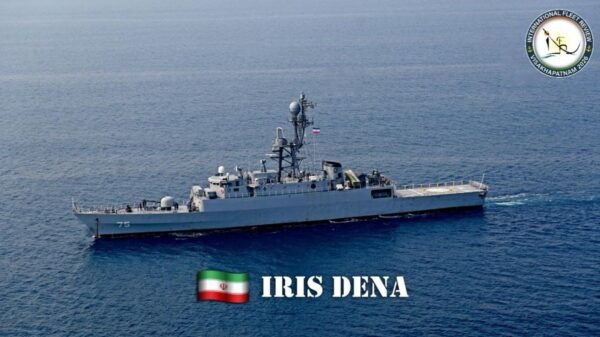
Sri Lanka recovered 32 survivors; Iran later put the dead at 104. Some reports said the ship carried no operational armament because of the exercise, and that its Bell 212 was not aboard.
The accurate historical marker is narrower than “first sinking since World War Two”: first ship sunk by a US submarine since 1945, and first submarine sinking in combat since ARA General Belgrano in 1982. India and Sri Lanka both joined the search.
Furthermore, the US forces destroyed 17 Iranian warships, including a submarine, in the early days of the conflict, as the EurAsian Times reported at the time. These numbers likely climbed in the weeks leading up to the April 7 ceasefire and may have risen further after hostilities broke out in July 2026.
In fact, The Aviationist recently published photos of an F-35C that returned from the theatre bearing markings of three submarines, a surface combatant, a Shahed-type drone, an artillery piece, and several ground-based launchers.
Those markings record claimed engagements. They are not a confirmed naval order of battle.
Over the months, US forces have repeatedly endorsed destroying or damaging Iranian Navy and coastal targets, with Donald Trump alleging that the whole force had been wiped out.
Open-source reporting has suggested that a large portion of Iranian air defenses that are part of a meticulously built layered network, including the S-300, Bavar-373, Khorad-15, to name a few, were also destroyed in US and Israeli strikes. Additionally, both the US and Israel claimed to have destroyed several ballistic missile launchers in the initial days.
Israel said one early wave put more than 25 fighters against over 35 missile storage and launch sites around Tabriz and Kermanshah. Without a pre-war inventory or a public battle-damage assessment, none of these claims can be turned into a share of the force destroyed. Mobile launchers are the largest gap: a struck site is not proof the missile was in it.
That said, these figures are not fully confirmed, as Tehran has not officially published its losses.
Nonetheless, despite suffering major losses throughout the war, Iran has survived, dealing a blow to joint US-Israeli aspirations of completely destroying its ballistic missile or even the Nuclear program.
