
Civic Discipline: The True Architect of Prosperity
Development is a psychological revolution
- We often blame the leaders for a country’s state, but leaders are usually a reflection of the collective values of the people. They emerge from the same schools, the same villages, and the same culture
- There is a pervasive myth that “hard work” alone is enough. In the modern era, it must be “Smart Work” , the marriage of work ethic with technology
- Lee understood that a minister under obligation is no longer a servant of the people; he is a servant of his benefactor. By removing his close ally, Lee sent a shockwave through the system: Friendship ends where the state begins
 The history of global development is often told through the lens of GDP growth, industrial output, and foreign direct investment. However, beneath the surface of every “economic miracle” from Singapore and Japan to post-war Germany lies a far more potent engine: the collective psychology and discipline of its people.
For a nation like Sri Lanka, blessed with a strategic location and abundant natural resources, the persistent failure to achieve sustainable development points toward a systemic internal deficit. It is not merely a failure of leadership, but a failure of the social fabric. Without a disciplined, educated, and unselfish citizenry, the most brilliant economic policies are destined to wither.
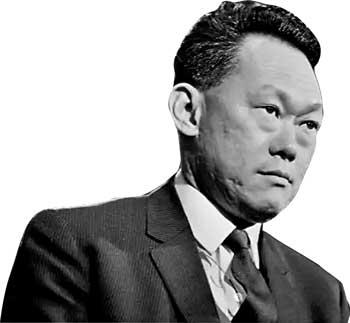 |
| Singapore’s Lee Kuan Yew didn’t just build skyscrapers; he built an immune system for his country. |
1. The Trap of the ‘Tribal’ Mindset
The transition from a “tribal” or “idiot” mentality (in the classical Greek sense of idiaōtēs (a person focused solely on private affairs rather than the public good) to a “civilian” mentality is the first hurdle.
In Sri Lanka, social organisation often remains rooted in narrow loyalties: ethnicity, religion, or political patronage. When people think as a “tribe,” they view the state as a resource to be plundered for their specific group rather than a common treasure to be protected. A “civilian” mentality, by contrast, understands that the individual prospers only when the system prospers.
2. Economic Literacy and the Culture of Unselfishness
Development requires a population that understands the basic mechanics of an economy. When a majority of citizens demand subsidies they haven’t earned or tax cuts the state cannot afford, they are demonstrating a lack of economic education.
True development requires delayed gratification. A disciplined nation understands that today’s sacrifices, be it through taxes, austerity, or hard work are the investments for tomorrow’s prosperity. When “unselfishness” becomes a national trait, people stop littering because they value public space; they stop evading taxes because they value public services; and they stop demanding “government jobs” that add no value to the economy.
3. The Ethics of Hard and Smart Work
There is a pervasive myth that “hard work” alone is enough. In the modern era, it must be “Smart Work” , the marriage of work ethic with technology.
A developed nation is one where the average citizen seeks to optimise their output. In many developing contexts, the work culture is often performative rather than productive. Discipline in the workplace punctuality, meritocracy, and a commitment to excellence remains the hallmark of nations that have successfully escaped the middle-income trap. When a culture rewards “smart shortcuts” (corruption) over “smart innovation,” development stalls.
4. Decency, Culture, and Social Cohesion
Culture is often seen as a static remnant of the past, but in a developing nation, culture must be a living, breathing force for progress. “Decency” in public life, how we treat a stranger, how we drive on the road, and how we respect the environment is a direct indicator of national maturity.
A disciplined society has high “Social Capital.” This means there is a high level of trust between strangers. When you trust that the person next to you will follow the law and act decently, the “cost of doing business” drops significantly. You don’t need a policeman on every corner or a lawyer for every handshake.
5. Security and Global Awareness
A modern citizen must be educated on world affairs. In an interconnected world, isolationism is a death sentence. Understanding global security, geopolitical shifts, and technological trends allows a citizenry to demand foreign policies that are pragmatic rather than emotional.
When the majority of the population is easily swayed by populist rhetoric or xenophobia, the country becomes vulnerable to internal strife and external manipulation. An educated citizenry acts as a shield against the “security threats” that arise from misinformation and communal disharmony.
6. The Digital Leap: Technology as a Mindset
Technology is not just about owning a smartphone; it is about a scientific temper. A disciplined society uses technology to increase transparency and efficiency. If the people are resistant to digitising government services because it removes the “opportunity” for bribery or bypasses “tribal” hierarchies, the country cannot modernise.
7. The Mirror of Leadership
We often blame the leaders for a country’s state, but leaders are usually a reflection of the collective values of the people. They emerge from the same schools, the same villages, and the same culture.
If the people value “freebies” over “freedom,” or “patronage” over “performance,” they will elect leaders who provide exactly that. The path to development for Sri Lanka does not start at the Parliament; it starts at the doorstep of every household. It begins with the decision to be a disciplined, educated, and civic-minded Citizen rather than a mere inhabitant.
True development is a psychological revolution. Until the “tribal” impulse is replaced by the “civilian” duty, the dream of a developed nation will remain a distant horizon.
Key Pillars of a Developed Citizenry:
Pillar: Transition needed
A. Social – From Tribalism to Civic Solidarity
B. Economic – From Dependency to Productivity
C. Ethical – From Selfishness to Public Decency
D. Intellectual – From Superstition to Scientific Temper
The Iron Surgeon: Why Sri Lanka Needs the “Lee Kuan Yew Treatment”
In the history of nations, few transformations are as surgical as Singapore’s. Lee Kuan Yew didn’t just build skyscrapers; he built an immune system for his country. His philosophy was simple but brutal: A nation is only as strong as its least corrupt leader.
The “Travel Mistake”: The Anatomy of an Obligation
The story of the minister and the business magnate is a masterclass in preemptive justice. In a “Third World” mentality, a minister traveling with a tycoon is seen as a perk of power. In Lee Kuan Yew’s “First World” mentality, it was a security breach.
Lee understood that a minister under obligation is no longer a servant of the people; he is a servant of his benefactor. By removing his close ally, Lee sent a shockwave through the system: Friendship ends where the state begins.
Sri Lanka’s Dilemma: Can the Present Leadership Act?
Can the current President of Sri Lanka take such bold decisions? To do so, a leader must navigate three massive “tribal” barriers that currently hold Sri Lanka back:
1. The Culture of Political Patronage
In Sri Lanka, politics is often a “family business” or a “club.” Leaders are often indebted to the very ministers who are accused of corruption because those ministers brought in the votes or the funding. To cut off a “corrupted limb” requires a leader who is willing to lose his majority in Parliament to save his integrity in history.
2. Arguments vs. Actions
Sri Lanka has a surplus of rhetoric. We have “Anti-Corruption Commissions,” “Charge Sheets,” and “Inquiries.” However, Lee Kuan Yew’s Singapore didn’t rely on inquiries; it relied on consequences. System change happens when the “cost of corruption” becomes higher than the “reward of corruption.”
3. The Tribal Mentality vs. The Civilian Mentality
As noted in the initial stage of this article, the majority of the population often views their leaders through a tribal lens. If “their” man is corrupt, they defend him. If the “other” man is corrupt, they attack him. A leader can only make bold decisions if the civilians demand a standard of decency that transcends party lines.
The Blueprint for a True System Change
If the current leadership truly wants to reach the “First World,” the following “Lee Kuan Yew” steps are non-negotiable:
- Sacrifice the Inner Circle: The first person arrested for corruption must be a “friend” of the leadership. This proves that the law is blind.
- Meritocracy over Loyalty: Appointing people based on their “tribe” or “party service” is the root of failure. We need the best minds, not the best “yes-men.”
- Radical Transparency is needed to change the system through the application of technology to the system to prevent influences on ministers.
The tragedy of Sri Lanka is that we have often mistaken arguments for actions. We argue about who is more corrupt rather than deciding that no corruption is acceptable.
The current President stands at a crossroads. To be a “Lee Kuan Yew,” one must be prepared to be lonely. You must be prepared to jail your allies, disappoint your friends, and dismantle the very machine that brought you to power.
Without this “Iron Surgery,” the system isn’t being changed, it’s just being managed.
The writer, Major General Dr. Boniface Perera, is a battle hardened Infantry Officer who served the Sri Lanka Army for over 36 years, dedicating 20 of those to active combat.
In addition to his military service, Dr. Perera is a respected International Researcher and Writer, having authored more than 200 research articles and 16 books. He holds a PhD in economics and is an entrepreneur and International Analyst specialising in National Security, economics and politics. He can be reached at [email protected]
The post Civic Discipline: The True Architect of Prosperity appeared first on LNW Lanka News Web.
