
Conflict over the clock: China among countries where time is political

State control through time
For as long as 56-year-old Payzulla Zaydun can remember, time has been a point of contention between the Uighurs in Xinjiang and the authorities in Beijing. Xinjiang’s provincial capital, Urumqi, is geographically two hours behind Beijing, and Zaydun recounts that when he attended university in Urumqi in the 1980s and 1990s, some of his fellow Uighur students deliberately arrived two hours late for class if classes were only listed in Beijing time. “They believed that Xinjiang time should be used in Xinjiang, and there was a sense that as an Uighur there was a responsibility to uphold the local time,” Zaydun told Al Jazeera from Maryland in the US. Therefore, many local shops and businesses in Urumqi also opened and closed following a two-hour time difference in adherence to the local time over Beijing time. However, that is not the case any longer. Upholding the local time in Xinjiang is much more difficult today, Zaydun says. “If you openly challenge the Beijing time now, you can be prosecuted for subversion,” he says. “My elderly mother never used Beijing time before, but then a few years ago she suddenly started using Beijing time when we talked on the phone because she feared the consequences if she didn’t.” Canadian-Uighur activist Rukiye Turdush says enforcing the use of Beijing time in Xinjiang is just one of many ways the Chinese authorities are trying to dilute the Uighur identity, alongside means such as social control, large-scale surveillance and mass detentions. “Language, religion, culture, space and time are all elements of the Uighur national identity that the Chinese are trying to tear apart in Xinjiang,” Turdush says. Other minorities in China are also experiencing that the keeping of time is the strict preserve of China’s central authorities. “For other minorities in China’s outer regions such as the Tibetans and the Mongolians time is also controlled from Beijing,” says Yeh of the University of St Thomas. Although there are practical and economic advantages to a single time zone, the impetus for standardisation was more about a signal the Chinese Communist Party wanted to send when it came to power in 1949. “The Chinese state did not exercise full control over China before 1949, but the Communists sought to change that in order to consolidate and legitimise their power in China,” Yeh explains. In pursuing that mission, controlling time became part of an official narrative about a China united under the party’s rule, which spurred the creation of a single time zone that temporally aligned the entire country with Beijing. Under President Xi Jinping, who came to power in 2012, there has been a renewed focus on assimilating China’s minorities into the dominant Chinese culture promoted by the Communist Party. “Due to that, the authorities have taken a tougher stance against any kind of separatist notions among the minority groups, including any ideas about belonging to a separate time zone,” Yeh says.Time is sovereignty
China is not the only place where time is shaped more by politics than by geography. One look at the jigsaw puzzle that constitutes the world’s distribution of time zones clearly indicates this and recent events in Ukraine are a case in point. In January, Russian authorities announced that annexed regions of Ukraine were to switch from Ukrainian time to Moscow time.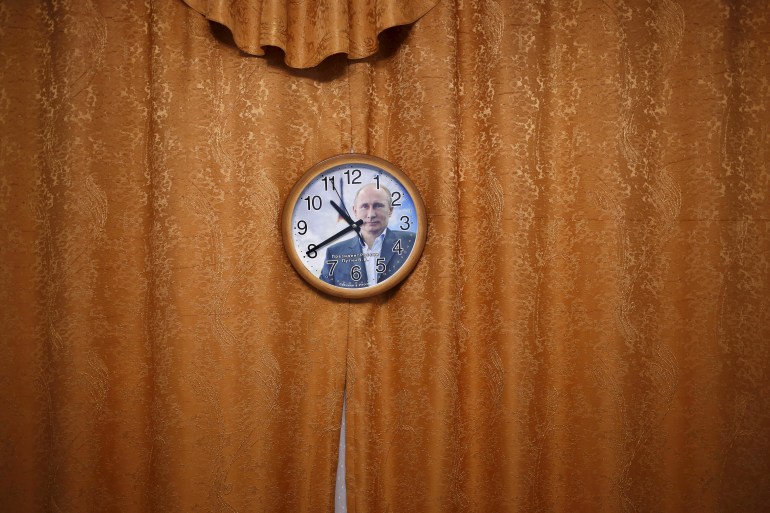

Time zones are constructed
The jigsaw puzzle that makes up the map of time zones across borders and around the world reflects the many political considerations and histories at play in the creation of clock time. Shifting geopolitical circumstances also means that the world’s time zone puzzle will likely continue to change into the future, according to the University of Iceland’s Benediktsson. “I usually say that time zones are social constructions,” says Benediktsson, noting that the placement of countries within certain time zones was determined by people and can therefore be changed by people over and over again.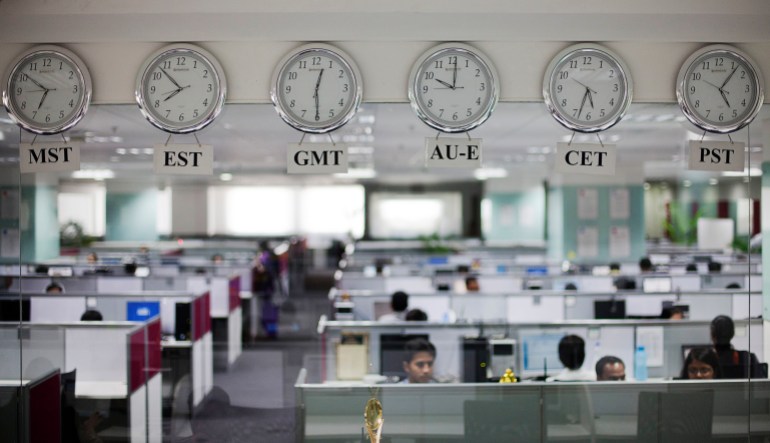
What’s your Reaction?
