H-1B Visa Fee FAQs: Who Has to Pay and When? How Long Will the Rule Last?
International
oi-Madhuri Adnal


The Trump administration's latest announcement has put the H-1B visa program under intense scrutiny. US companies will now be required to pay a $100,000 fee to hire foreign workers under this visa category.
This change has already created ripples across the tech industry. Amazon has advised its H-1B and H-4 visa employees to stay in the United States, while Microsoft has urged its staff to return before 21 September 2025.
The Trump administration mandated a $100,000 fee for new H-1B visa applicants, effective September 21, 2025, impacting US companies hiring foreign workers in specialized fields. Existing H-1B holders are exempt unless they stay outside the US for over a year, and tech companies like Amazon and Microsoft have reacted to the new rule.
What is the H-1B Visa?
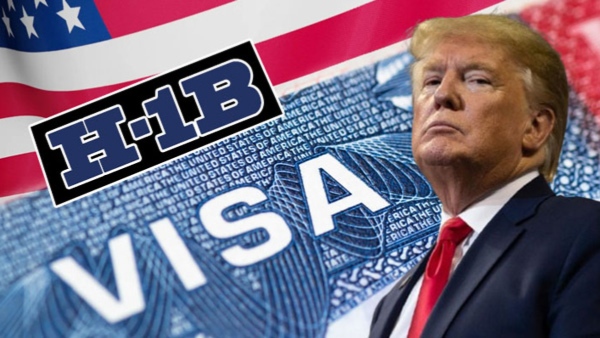
The H-1B visa is a non-immigrant visa that allows US companies to hire skilled foreign professionals in specialized fields such as IT, engineering, and finance. To qualify, applicants must hold at least a bachelor's degree and specific expertise.
Who Will Pay the New H-1B Fee?
The $100,000 annual fee applies only to new applicants.
Existing H-1B visa holders are exempt.
However, workers outside the US for more than one year must return before 21 September 2025 to avoid complications.
Why Has the H-1B Visa Fee Been Increased?
The proclamation titled "Restriction on Entry of Certain Nonimmigrant Workers" was signed by President Trump. It argues that while the H-1B visa was created to fill skill gaps, it has been misused to replace American workers with lower-paid foreign labor.
How Long Will the Rule Last?
The rule takes effect on 21 September 2025 and will remain valid for 12 months unless extended. The Department of Homeland Security may later decide whether fees also apply to returning H-1B holders.
Legal Challenges Against the H-1B Fee
Experts believe the new rule could face legal pushback.
Doug Rand, former USCIS official, said a $100,000 fee tied to visa entry "isn't likely to survive in court."
Tom Jawetz, former DHS attorney, compared the policy to "mobs demanding protection money."
Impact on Tech Giants
Major US tech companies like Amazon, Microsoft, and other IT firms heavily rely on the H-1B visa program. This fee hike has forced them to issue strong warnings to employees about travel and visa renewals.
H-1B Visa Fee FAQs
1. What is the new H-1B visa fee announced in 2025?
The Trump administration has introduced a $100,000 annual fee for new H-1B visa applicants.
2. Who needs to pay the $100,000 H-1B visa fee?
Only new applicants are required to pay. Existing H-1B holders are exempt.
3. Are current H-1B visa holders affected by the fee?
No, current holders are not affected unless they stay outside the US for over one year.
4. What happens if H-1B workers remain outside the US after September 21, 2025?
They may be considered as new applicants and forced to pay the $100,000 fee.
5. Why has the Trump administration increased the H-1B visa fee?
The rule argues that H-1B visas were being misused to replace American workers with cheaper labor.
6. When does the new H-1B visa rule take effect?
The rule takes effect on September 21, 2025, and will remain valid for 12 months unless extended.
7. Will the fee also apply to returning H-1B visa holders in the future?
The Department of Homeland Security (DHS) may decide later whether the fee applies to returning holders.
8. Can this H-1B visa fee rule face legal challenges?
Yes. Experts believe the rule could face court challenges for being excessive and discriminatory.
9. How are tech companies reacting to the $100K H-1B fee?
Amazon, JP Morgan and Microsoft have urged their visa employees to stay in the US or return before September 21, 2025.
10. How will this impact foreign professionals and US employers?
It could significantly raise hiring costs and discourage companies from sponsoring foreign workers.
-

Trump Calls Jimmy Kimmel ‘Talentless’ as ABC Pulls the Plug on Late-Night Host
-
Trump Unveils “Gold Card” Visa: Million-Dollar Ticket to America
-
Trump Drops a Bombshell on H-1B Visas: $100,000 a Year Per Worker
-
Donald Trump Claims Mediation In 11 International Conflicts, Including India-Pakistan War
-
Navi Mumbai International Airport First Look Revealed: Opening Date, Design And Capacity
-
New OTT Releases This Week In Telugu, Kannada, Hindi, Malayalam, Hindi In Sep 3rd Week
-
Who Is Robo Shankar's Daughter Indraja?
-
Heavy Rains Lash Chennai, Suburbs Flooded; Yellow Alert For 21 Dists Across Tamil Nadu
-
Tamil Nadu Power Cut On Sep 19: Coimbatore, Chennai, Theni To Be Hit By Supply On Friday
-
'Thank You, I Love You All': Robo Shankar's Final Words To Media Days Before The Death
-
Arjen Robben Death Rumours: Did Former Footballer Die of a Respiratory Illness?
-
Bigg Boss Kannada 11 Contestant Ranjith in Family Property Dispute