H-1B Visa Hold-Up: What Indians Should Know About US Shutdown
International
oi-Ruchika Pareek


The United States has entered its first government shutdown in nearly six years after President Donald Trump and congressional leaders failed to agree on a budget. While the political deadlock unfolds in Washington, its effects are being felt worldwide-especially by Indians who rely on US visas for work, study, and travel.
What Is a US Government Shutdown?
US federal agencies operate only when Congress approves funding. When a budget is not passed on time, federal offices suspend non-essential work, leaving hundreds of thousands of employees either furloughed or working without pay. Essential services like border security continue but often operate under strain.
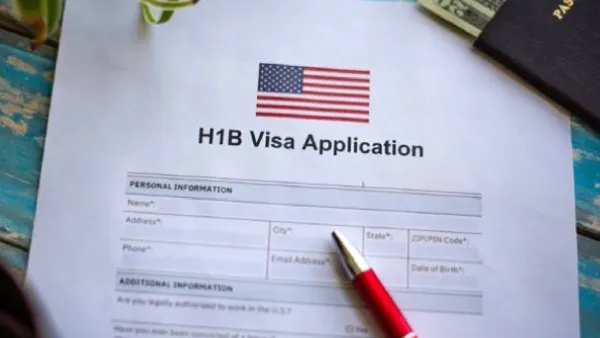
The US government has shut down due to budget disagreements, impacting Indian citizens particularly regarding visa and passport services; the H-1B visa program faces the sharpest disruption due to the Department of Labor's halt in operations, while international students experience minimal impact. Additionally, rising visa costs, including a $250 Visa Integrity Fee, are now applicable.
Shutdowns are not unprecedented in the US; they have occurred repeatedly since the 1970s, lasting from a few days to several weeks. The longest recent shutdown spanned 35 days between December 2018 and January 2019.
Impact on Visa and Passport Services
For Indians, the key question is whether embassy and consular services remain operational. The US Embassy in India has clarified that visa and passport operations will continue "as the situation permits". In practice, this means basic services remain accessible but may be slowed by reduced staffing or limited resources, especially for non-urgent cases. Past shutdowns indicate that fee-funded services like consular work continue, but often with patchy schedules, longer waits, and occasional suspensions.
H-1B Visas Face the Sharpest Disruption
The H-1B visa program, the primary work visa for skilled Indian professionals, is likely to be most affected. Every H-1B petition starts with a Labour Condition Application (LCA) filed with the US Department of Labor (DOL). Only after LCA approval can petitions move forward with the USCIS.
Since the Department of Labor relies on congressional funding, its operations have halted during the shutdown. Only petitions with LCAs approved before October 1 can proceed. Immigration attorney Nicole Gunara told NDTV:
"No one can get a new H-1B, transfer employers, or change status to H-1B unless they already got the LCA certified and downloaded before today."
The PERM certification for employment-based green cards is also paused, delaying new applicants even though the USCIS, funded through fees, continues processing cases already past this stage.
Silicon Valley attorney Sophie Alcorn explained to HT:
"The shutdown creates a mixed bag of consequences, hitting new applications the hardest while largely sparing those already in process. For the Indian diaspora, the biggest impact is from the Department of Labor."
Expiring Visas Pose Urgent Risks
More than 70% of H-1B visas each year go to Indians, making them the most exposed group during the shutdown. Those with pre-approved LCAs can continue, but new applicants, transfers, or amendments are blocked until the DOL reopens.
Houston-based immigration lawyer Rahul Reddy told the Indian Express:
"If my H-1B is expiring on October 10, I can't file a new application right now because even if I submit a Labor Condition Application, there is no approval... People nearing deadlines may be affected."
What About International Students?
International students face minimal disruption. Their immigration status is tracked through SEVIS, a fee-funded system, so operations continue. Universities remain open, and classes go on as usual.
Reddy added that the main impact would be on research projects funded by the federal government:
"Not much. It may affect some departments or projects funded by government agencies, but overall, most students are unaffected."
Duration of the Shutdown
Shutdowns have no fixed end date. They could end in days if Congress reaches a compromise or stretch for weeks if the political deadlock continues. Meanwhile, delays for approvals from the Department of Labor will persist.
Rising Visa Costs
The shutdown coincides with new charges for non-immigrant visa applicants. From October 1, all applicants, including students, must pay a $250 Visa Integrity Fee and an additional $24 I-94 fee, on top of standard processing charges. This adds to the financial burden for Indian families seeking US education or employment visas.
-

Bigg Boss Tamil 9 Full Contestant List Leaked Ahead Of Launch?
-
Stampede At Vijay's TVK Rally: Tamil YouTuber Felix Gerald, 2 TVK Workers Arrested Over Karur Tragedy
-
Kantara 2 Advance Booking: 1.5 Lakh Tickets Sold, Rs 9 Cr Earned; 324 Shows Full In Bengaluru
-
New OTT Movies/Series In October 2025 In Hindi, Malayalam, Tamil, Telugu, English - Full List
-
Junior OTT Release: Is This Kannada/Telugu Film Out On Amazon Prime Or Aha? Find Out
-
Ayudha Pooja: Check Auspicious Time For Vahana and Vehicle Pooja Today
-
Stalin Sir, Don't Touch My TVK Workers: Vijay Warns CM In First Video 3 Days After Karur Tragedy
-
Hema Malini's Car Meets With Accident En Route to TVK Stampede Site In Karur
-
‘Godman’ Chaitanyanand Saraswati Probe Uncovers Sleazy Evidence, Sex Toys, Fake Photos With World Leaders
-
Bengaluru Power Cut Today: Four-Hour Outage In These Areas On Sep 30
-
Mohsin Naqvi Apologises To BCCI, Heads To Lahore Amid Asia Cup Trophy Row: Sources
-
Kamalashree Passes Away: Kannada Film Industry Mourns The Death of Veteran Actress