How China, Russia Won In US-Iran War Without Directly Entering It As Escalation Threatens Wider World War
International
oi-Ashish Rana

Billionaire investor Ray Dalio has issued a stark warning that the ongoing Iran conflict should not be viewed as a limited regional crisis or a war nearing resolution. In a new blog post, Dalio argued that the current turbulence is part of a much broader unraveling of the global order, following the same historical pattern that has preceded major wars in the past.
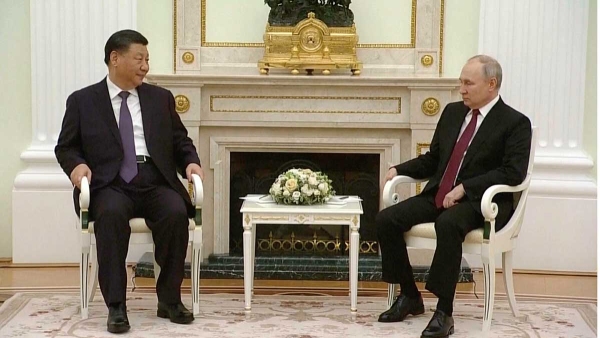
Investor Ray Dalio warns the Iran conflict signifies a broad global unraveling, linking it to his "Big Cycle" theory of weakening orders and interconnected wars resembling past world wars, with China and Russia emerging as relative winners amid the erosion of the existing world order.
"We are now in a world war that isn't going to end anytime soon," Dalio wrote, describing the present moment as more than a single flashpoint. According to him, the world is already witnessing a network of interconnected conflicts unfolding across military, economic, technological and geopolitical fronts.
Dalio says today's conflicts now resemble a 'classic world war'
Dalio said that while the phrase "world war" may sound exaggerated, the underlying structure is already visible in the way multiple conflicts are now overlapping. He pointed to the Russia-Ukraine-Europe-US war, the Israel-Gaza-Lebanon-Syria war, the Yemen-Sudan-Saudi Arabia-UAE war, and the US-Israel-GCC-Iran war as examples of theatres that can no longer be treated in isolation.
"Together, these conflicts make up a very classic world war that is analogous to past world wars," he wrote.
His view is that the Iran war is not a standalone event but one part of a much larger global realignment in which alliances, military resources and geopolitical leverage are all being tested simultaneously.
'Big Cycle' theory: Why Dalio believes the world is entering a dangerous phase
Dalio tied the current moment to his long-standing "Big Cycle" framework, which argues that history moves through repeating phases where monetary systems, domestic political orders and geopolitical structures weaken at the same time.
He said he is seeing signs that the world has already entered that stage.
He wrote that he has "many indicators suggesting that we are in the part of the Big Cycle when the monetary order, some domestic political orders, and the geopolitical world order are breaking down."
Dalio compared the current environment to the periods just before the First and Second World Wars, specifically 1913-14 and 1938-39. While he said the timing is not exact, his message was clear: the conditions that typically precede broader conflict are already visible.
He laid out a sequence that begins with dominant powers weakening relative to rising rivals. From there, economic warfare expands through sanctions and trade restrictions, alliances become more rigid, proxy conflicts multiply, and debt and financial stress intensify, particularly among overstretched powers. He also warned that critical industries and supply chains come under tighter state control, trade chokepoints become strategic weapons, and new war technologies accelerate.
Dalio argued that the world has already reached the stage where "multi-theater conflicts increasingly happen simultaneously."
Dalio warns financial repression and direct major-power clashes could come next
According to Dalio, the next phase of this cycle becomes even more dangerous. He said internal dissent often gets suppressed as governments face rising pressure, while the chances of direct confrontation between major powers increase.
He warned that states may resort to "big increases in taxes, debt issuance, money creation, FX controls, capital controls, and financial repression to finance the wars."
In the most extreme scenarios, he added, "markets are shut down."
For Dalio, the way Washington handles the Iran conflict now could have major long-term consequences. He said the amount of money and military equipment the United States commits, how depleted it becomes, and how effectively it protects its allies "will enormously influence how the world order changes."
China and Russia emerging as relative winners, Dalio says
Dalio argued that the geopolitical winners and losers of the current conflict are already starting to emerge.
"All things considered, it appears that China and Russia are the relative economic and geopolitical winners from this war," he wrote.
He said the shape of global alliances is becoming increasingly clear and can be understood not only through military ties but also through diplomatic signals.
"It is quite easy to see objectively how the sides are lining up via indicators such as their treaties and formal alliances, their votes at the United Nations, their leaders' statements, and their actions."
He further added that "China is aligned with Russia and Russia is aligned with Iran, North Korea, and Cuba," positioning them against the United States and its partners.
Dalio says post-1945 world order is fading as US enters conflict overstretched
Dalio's warning goes beyond battlefield calculations. He argued that the post-1945 global system itself is eroding.
"The world order has changed from a multilateral rules-based world order led by the dominant US power and its allies to a might-is-right world order with no single dominant power enforcing order, which means that we can expect more fighting," he wrote.
He also cautioned that the United States is entering this phase from a position of vulnerability.
"It is also obvious that overextended powers cannot successfully fight wars on two or more fronts," Dalio wrote, suggesting that America's wide-ranging commitments and growing domestic strains could weaken its ability to manage multiple crises at once.
His clearest warning came in a final line that summed up the tone of the entire post: "The classic dynamic at this stage in the cycle is for conflicts to intensify rather than subside."
In Dalio's framework, the Iran war is not the close of a crisis but evidence that a deeper global cycle is already advancing. His message is that the world is moving into a more dangerous phase, where overlapping conflicts, rising bloc politics and financial strain are likely to drive further escalation rather than calm.
-

Tamil Nadu Election Prediction: AIADMK Set to Emerge as Winner, Says Pre-Poll Survey
-
Gold Silver Rate Today, 7 April 2026: City-Wise Prices, MCX Gold Down, Silver Steady Across Key Indian Cities
-
West Bengal Pre-Poll Survey: Opinion Poll Predicts Edge for TMC but big Rise In BJP's Vote Share
-
Gold Rate Today in Bangalore 6 April 2026: Latest IBJA Gold Rates, 22K Gold Prices at Jos Alukkas, GRT, Bhima,
-
Gold Silver Rate Today, 6 April 2026: City-Wise Prices, MCX Gold Steady, Silver Slips in Key Markets
-
Gold Rate Today 7 April 2026: Updated IBJA Gold Rates, 22K Prices At Tanishq, Kalyan, Malabar, Joyalukkas
-
Donald Trump's Address On Iran War: Trump Threatens To Wipe Out Iran In One Day, Briefs On Rescue Operation
-
Mumbai Metro Line 9 Phase 1 Opens April 7 After 10-Years, Mira Road-Bhayandar Now Directly Connected To City
-
School Assembly News Headlines Today April 07: Top National, International, Sports, Business News
-
Arshdeep Singh Girlfriend Revealed? Fans Spot Clues In Hand-Holding Snap, Link To Samreen Kaur
-
IPL RR vs MI Rain Update: Showers Disrupt Rajasthan Royals vs Mumbai Indians Match in Guwahati
-
Hyderabad Gold Silver Rate Today 7 April 2026: Fresh Gold, Silver Price Update for Buyers