
How one man nurtures a network of cricket and community in Beirut
Beirut | | 5 min read
Unfazed by Beirut’s harsh summer sun, two teams are playing a spirited game of cricket in the parking lot next to St. Joseph Church. More than a hundred other people sit cheering or socializing on picnic mats nearby.
Most of those on the makeshift pitch and the sidelines are migrant workers from South Asian and African countries where cricket is popular – and they’re eager for their turn to play. The gatherings each Sunday offer not only a reminder of home, but also an opportunity to express solidarity and connect with other migrants.
Sugath Priyanta Fernando – the match organizer who built up this informal support network of cricket and community – sits under the shade of thick-trunked trees watching the game and enjoying a frozen treat like those made in his home country, Sri Lanka. Having arrived in Lebanon 30 years ago as a migrant worker himself, he’s available at the cricket matches if any migrant wants to discuss visa or other employment issues. A Monitor contributor who interviewed several dozen migrants working in Beirut found that many of them rely on Mr. Fernando and his network for information, advice, and assistance.
“When I first came to Lebanon, people helped me,” Mr. Fernando says. “Now, I feel it’s my responsibility to help others. If we don’t help each other, who will?”
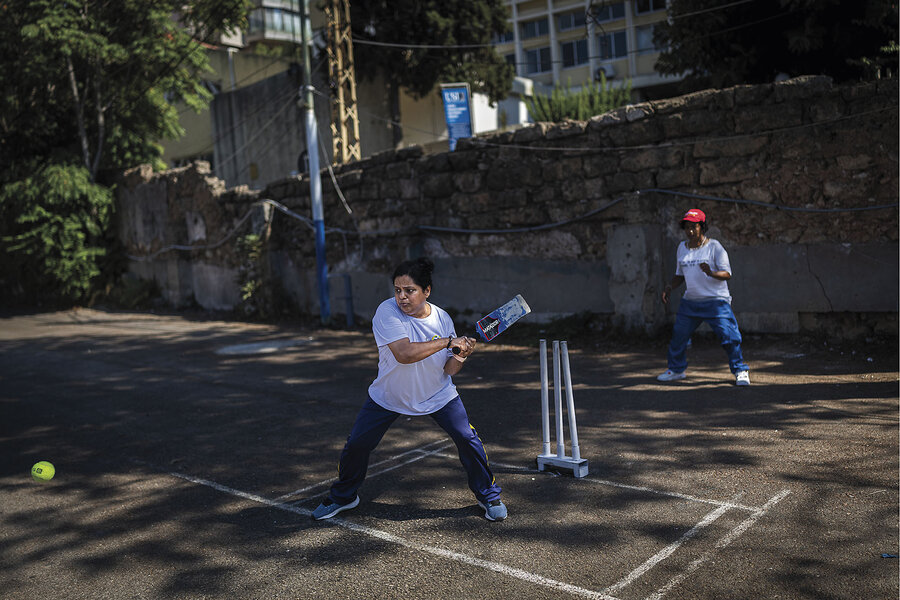
A.G.M. Madhu Kumari, a migrant worker employed as a housekeeper in Lebanon, participates in a cricket match in Beirut.
A migrant’s familiar journey
Mr. Fernando, who was born and raised in Colombo, Sri Lanka, completed 12th grade but did not score high enough on exams to get into college. At the time, his father had just retired from a chicken processing factory, leaving the family with little income.
Barely out of his teens, Mr. Fernando found employment in a factory that manufactured bathroom fixtures. He also learned to cook, hoping to work abroad in the hospitality industry. When no such opportunities panned out, his aunt, who was a domestic worker in Lebanon, helped him move to Beirut.
Mr. Fernando soon got hired as a cleaner at a company that imported products from the United States, Europe, and China. “I was able to send money home, support my sister’s education, help build our house, and cover our family’s daily expenses,” he says with some satisfaction.
His English skills, honed during his first job in Sri Lanka, helped him move up to managing a warehouse. He has now been with the same employer for three decades. But, as with many migrants here, the life that Mr. Fernando built in Beirut comes at great personal cost. He has had few opportunities to spend time with his wife and their two children, who are now grown and living in the Philippines.
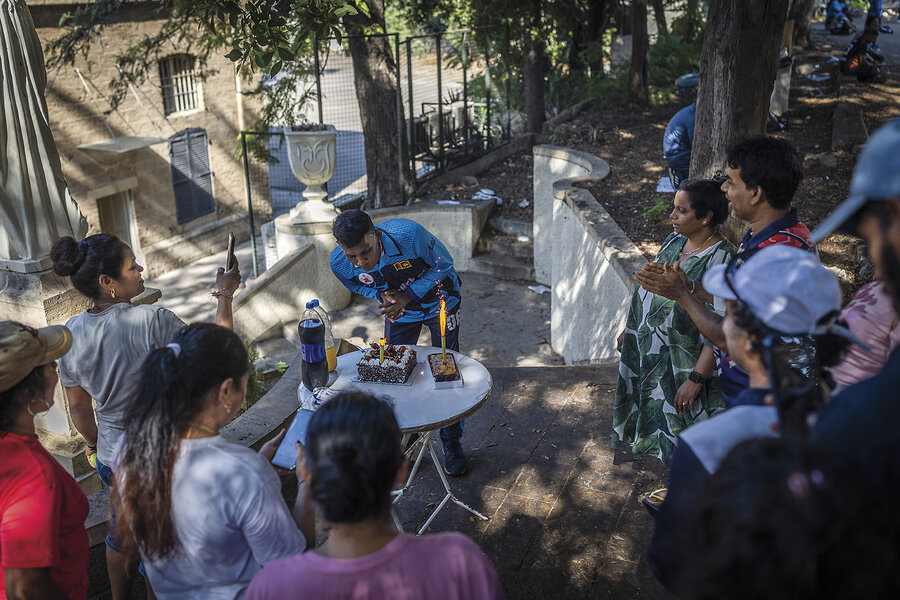
Mr. Fernando celebrates his birthday during a Sunday cricket match.
“Money cannot replace a parent’s presence,” he notes.
Away from his family, Mr. Fernando began to gain a sense of belonging in Beirut in 1997, not long after he started attending cricket games for migrants in an underground parking garage. Several years ago, he helped bring the men’s cricket matches to the lot near historic St. Joseph Church – and the network of migrants vastly expanded as women joined, too.
Mobilizing during crises
Under Lebanon’s kafala visa system, a migrant’s work permit is tied to the employer who sponsors them. Employers typically hold workers’ passports, which can prevent them from finding new jobs or leaving the country. Workers under kafala also are excluded from many legal protections.
Workers who attend the cricket matches say they depend on the migrant network, which mobilizes quickly in moments of crisis. Mr. Fernando is often the first point of contact within the community when a migrant needs urgent help – whether it’s to find emergency shelter, send money home, or navigate documentation issues. He works closely with local churches and nongovernmental organizations, and also with embassy personnel.
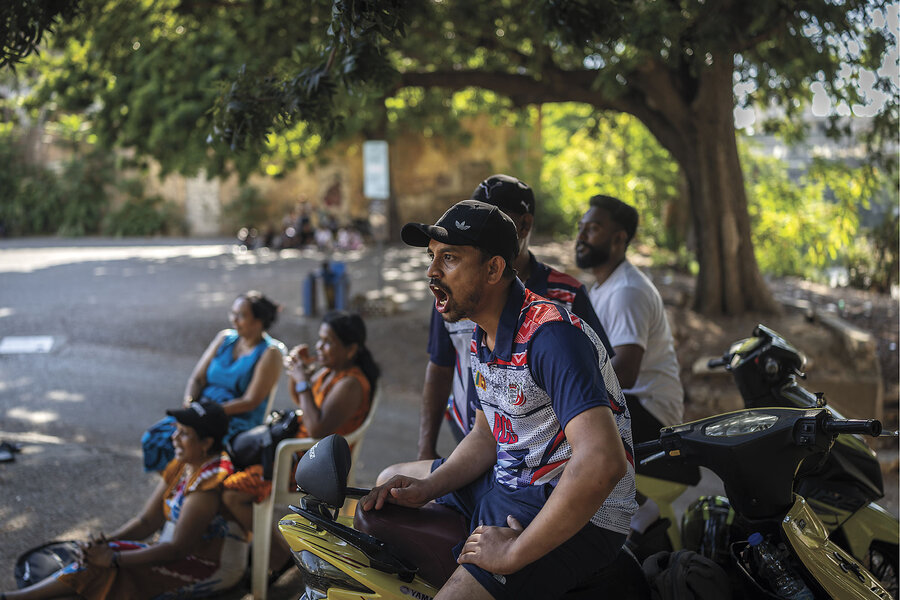
Gishan Hettiarachchi, who works in the Sri Lankan Embassy in Lebanon, reacts as one of the players hits a winning shot during the match. Embassy employees often show up to watch the games and share information with their citizens.
Mr. Fernando’s friendship with a British cricket enthusiast who happened upon the matches one day has helped connect the migrants to tournament sponsors. Personnel from various embassies, eager to meet up with their citizens, also sometimes show up at the games.
“I’ve always been someone who likes negotiating,” Mr. Fernando says. “I wasn’t afraid to approach embassies or Lebanese organizations. I could speak to people, explain things, and build relationships.”
Last year, Mr. Fernando helped Anjalee Dasanayaka reunite with her mother, B.W. Dayani Priyanka, in Beirut after Ms. Dasanayaka’s father died in Sri Lanka. Ms. Priyanka, who has been working in Lebanon as a housekeeper, sought Mr. Fernando’s help in arranging paperwork to secure a permit for her daughter under kafala. The women now work only 100 meters from each other.
When the U.S.-Israeli war with Iran expanded to southern Lebanon, the matches nevertheless continued – and the cricket ground became a vital source of information for migrants. The Sri Lankan Embassy, for example, used the cricket gatherings to share information with its citizens.
Mr. Fernando alerted Kumari Pereira to a grace period offered by the Lebanese government for those without ID cards to get them reissued. Ms. Pereira came to Lebanon in 1997 to work as a maid under kafala but says she eventually ran away from the household because she was underpaid.
She says she started coming to the Sunday gatherings because “I thought someone here might be able to help me.” She now runs a small business selling produce after Mr. Fernando introduced her to St. Joseph Church, which lent her money for the venture.
For Vrgilda “Gigi” Purificacion, a Filipina housekeeper in Beirut, the cricket matches offer both a place to relax and a network to turn to for help.
“We work Monday to Saturday, and on Sunday, we can come here peacefully,” she says. “We laugh, we eat, and we enjoy ourselves.”
Deepen your worldview
with Monitor Highlights.
Politics with respect
Get political stories with respectful analysis.
There‘s a world of new ideas in every
Books newsletter.
There‘s more to life, enrich yours with
Culture & Learning weekly.
Follow humanity‘s discoveries with
Science & Nature stories in your inbox.
Gain a spiritual perspective
from the stories in your inbox.
Want to understand the deeper impact of critical events? Learn the Monitor‘s insight.
Already a subscriber? Log in to hide ads.
So, every week the migrant workers keep arriving at the parking lot promptly in the morning. There is space for everyone.
“We all know what it’s like to arrive in a foreign country without knowing anyone,” Mr. Fernando says. “If I can make life a little easier for someone else, then that’s worth doing.”
