
India opens nuclear sector to private companies to achieve 100 GW by 2047
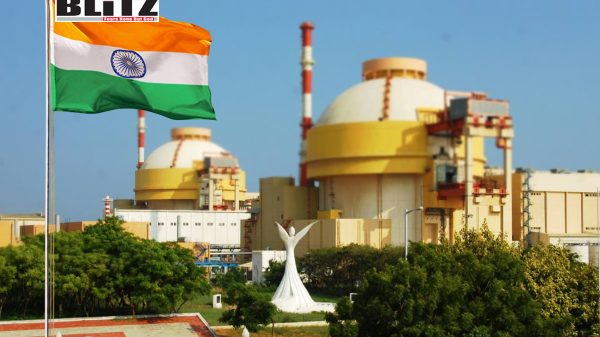
In a landmark move aimed at transforming its energy landscape, India has opened its nuclear sector to private companies, signaling a significant shift in the country’s approach to atomic energy. The lower house of the Indian Parliament recently passed the Sustainable Harnessing and Advancement of Nuclear Energy for Transforming India (SHANTI) Bill, designed to accelerate the expansion of nuclear power and support India’s ambitious clean energy targets.
The legislation represents a strategic effort by New Delhi to boost its nuclear energy generation capacity to 100 gigawatts (GW) by 2047, as part of broader goals to reduce dependence on fossil fuels and enhance energy security. “The world is moving towards clean energy,” Federal Minister Jitendra Singh told lawmakers during the parliamentary session. “We too have set a target of 100 GW of nuclear energy capacity by 2047.”
Historically, India’s nuclear sector has been dominated by state-owned entities such as the Nuclear Power Corporation of India Limited (NPCIL) and the National Thermal Power Corporation (NTPC). Under the new SHANTI Bill, private companies will now be able to operate nuclear power plants through official licensing mechanisms. The legislation also repeals two existing laws-the Atomic Energy Act of 1962 and the Civil Liability for Nuclear Damage Act of 2010-which were previously seen as obstacles to private and foreign participation in the nuclear sector.
One of the most notable changes is the removal of the contentious liability clause for suppliers of nuclear fuel and technology. Previously, suppliers faced significant financial liability in case of accidents, which discouraged foreign companies from exporting nuclear technology to India. By rationalizing payouts by operators in case of accidents, the new law aims to attract international expertise and investment, opening doors for collaborations with global nuclear technology providers.
The SHANTI Bill is part of India’s broader energy transition goals, which include generating 500 GW of non-fossil fuel electricity capacity by 2030, with nuclear energy playing a key role in achieving long-term sustainability. The federal government has allocated $2.35 billion in the 2025 budget for the Nuclear Energy Mission, reflecting a strong commitment to building a robust atomic energy infrastructure.
This reform also aims to strengthen India’s strategic energy partnerships. Russia’s nuclear energy giant, Rosatom, continues to be a major supplier of nuclear technology, developing the Kudankulam Nuclear Power Plant in Tamil Nadu, which, upon completion, will become India’s largest nuclear facility with a projected capacity of 6 GW. Discussions have also been held with France and the United States to explore advanced nuclear technologies and potential collaborations, including small modular reactors (SMRs), which could be deployed in remote regions where traditional power plants are not feasible.
Several major Indian corporations have already expressed interest in entering the nuclear energy market. Among them are Tata Power, Adani Power, and Vedanta, all of which see nuclear energy as a strategic investment aligned with India’s growing demand for electricity and clean energy commitments. NTPC, the state-owned energy conglomerate, has set ambitious plans to build 30 GW of nuclear power capacity over the next two decades at an estimated cost of $62 billion.
Experts suggest that private sector involvement could accelerate the construction of new nuclear plants, improve operational efficiency, and bring innovative technologies to the forefront. The combination of state oversight and private investment is expected to enhance transparency and project management while diversifying the sources of nuclear energy in India.
India has also been exploring the development of small modular reactors (SMRs), a technology designed to deliver nuclear power in areas where large-scale plants are not viable due to geographic or infrastructure constraints. SMRs are considered safer, more flexible, and easier to deploy compared to conventional reactors, making them suitable for remote and industrial regions across India.
The SHANTI Bill’s introduction is expected to foster innovation in nuclear technology, particularly in areas like reactor safety, fuel efficiency, and waste management. By enabling private players to collaborate with global technology providers, India could gain access to cutting-edge nuclear advancements, potentially reducing the time and cost required to scale up capacity.
India’s decision to open its nuclear sector comes at a time when the world is undergoing a significant energy transition, with countries seeking low-carbon solutions to combat climate change. Nuclear power offers a stable, large-scale source of clean energy that complements renewable energy sources like solar and wind, providing a reliable base-load electricity supply.
By targeting 100 GW of nuclear capacity by 2047, India not only strengthens its energy security but also positions itself as a global leader in clean energy generation. The move could have wider geopolitical implications, particularly in energy diplomacy, as India strengthens partnerships with nuclear technology-exporting countries.
The passage of the SHANTI Bill marks a historic moment in India’s energy policy. By opening the nuclear sector to private companies, rationalizing liability norms, and encouraging international collaborations, New Delhi is signaling its commitment to building a sustainable, technologically advanced, and strategically secure energy future. With these reforms, India aims to meet its growing energy demands, reduce carbon emissions, and achieve its long-term vision of a nuclear-powered, clean energy-driven economy by 2047.
Tajul Islam is a Special Correspondent of Blitz.
