
India Trains To Kill J-20 Stealth Fighters as China’s J-16 Holds Rare Drills Against Egyptian Rafales
As China’s J-16 “Hidden Dragon” fighter jets drill against Egyptian Rafales, the Indian Air Force continues to sharpen its teeth through multinational exercises and train against cutting-edge jets like the “stealth” F-35.
The Chinese Air Force (PLAAF) is keen to decode Western fighter jets like the Rafale, Eurofighter, and Gripen, while the Indian Air Force is quietly working to become a “stealth killer” force, primarily to counter China’s J-20s.
This is the first time the J-16 and Rafale have faced each other in an exercise, where they reportedly engaged in one-on-one and two-on-two close- and medium-range air combat drills.
Many China-backed media handles and bloggers have claimed a clear win for the J-16, with some claiming a 7-1 win against the Rafale. Needless to say, the numbers are imaginative.
Just two years back, the South China Morning Post claimed that during the 2024 “Zilzal-II” joint air exercises, Chinese J-10CE fighters posted a perfect 9-0 record against Qatari Eurofighter Typhoons in simulated air engagements, both in close-range dogfights and beyond-visual-range (BVR) scenarios.
China’s J-11s have also trained with the JAS39 Gripen of the Royal Thai Air Force (RTAF). The JAS 39 Gripens reportedly achieved 88 percent of their victories at ranges of 30 kilometers or more, downing 41 J-11s at a loss of just nine Gripens, a ratio exceeding four-to-one, in a report by Harrison Kass for “The National Interest”.
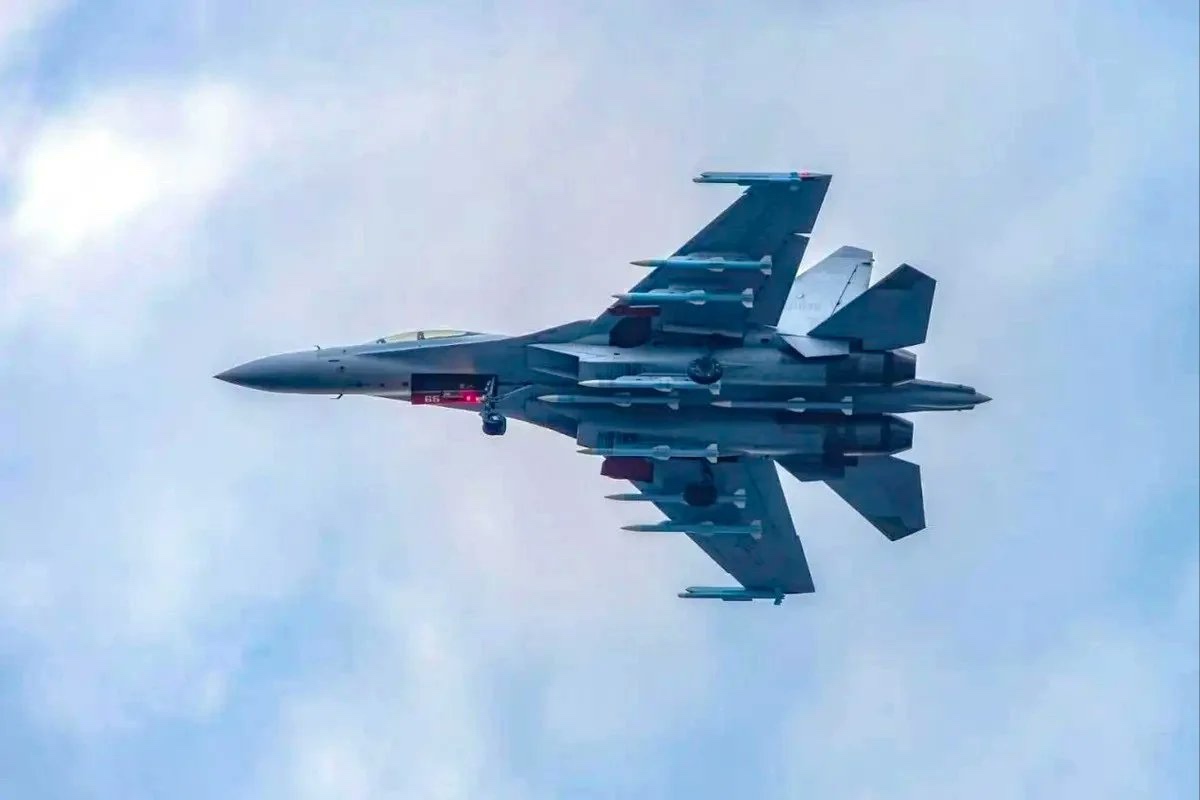
The J-16 “Hidden Dragon”
The Shenyang J-16 is an all-weather 4.5-generation, tandem-seat, twin-engine, multirole strike fighter. Developed from the Shenyang J-11, the licensed production variant of the Russian Sukhoi Su-27, the design was further refined based on the Su-30MKK.
Russians had repeatedly pointed out that J-11 variants were unauthorized developments through reverse engineering. Since 2017, nearly 470 J-16s have been built. The J-16D is an electronic warfare variant equipped with wingtip EW pods; an internal EW system replaces the IRST and 30 mm cannon. The 12 external hard-points can carry 8 tons of a variety of weapons, including very long-range PL-15 and PL-17 BVR air-to-air missiles.
The aircraft has not been exported to any country and has limited exercise exposure with foreign air forces (Russia, Thailand, and Pakistan) to date. The aircraft has seen no actual operations.
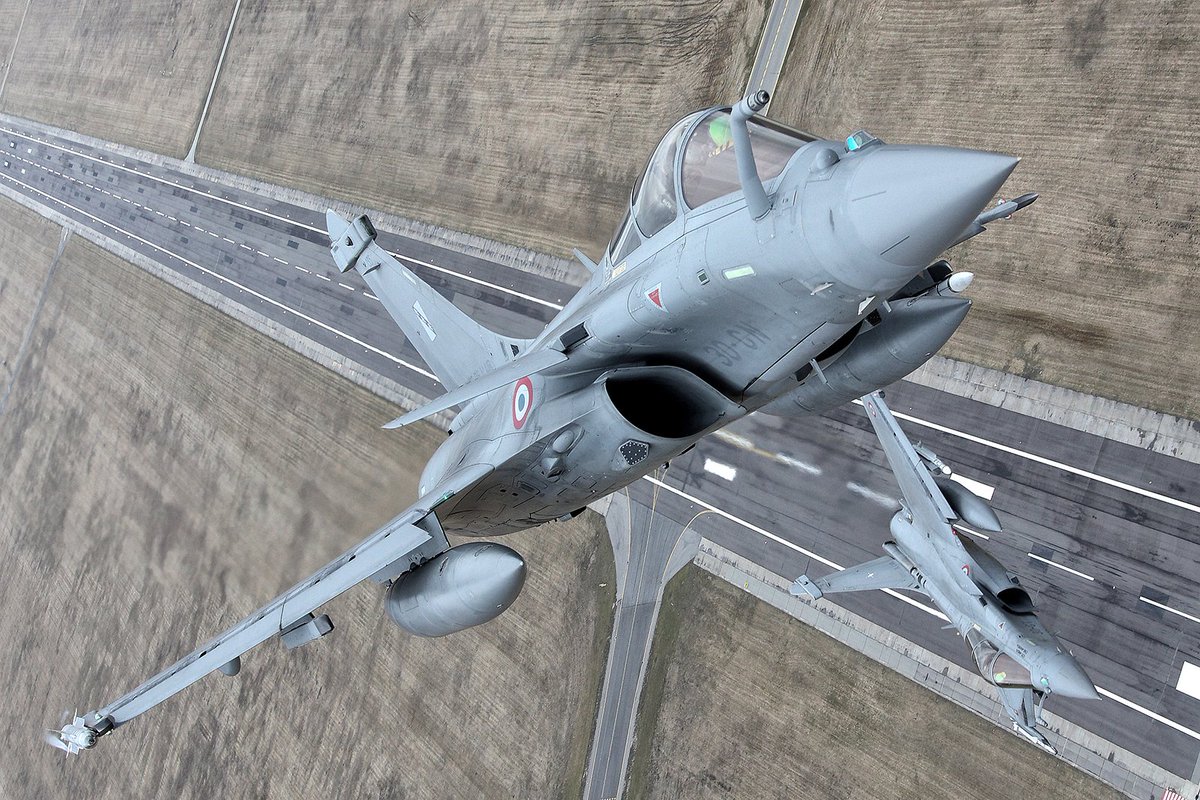
Dassault Rafale
The Dassault Rafale is a twin-engine, canard delta wing, multirole fighter aircraft equipped with a wide range of weapons. The Rafale is intended to perform air supremacy, interdiction, aerial reconnaissance, ground support, in-depth strike, anti-ship strike, and nuclear deterrence missions.
Dassault markets the aircraft as an “omnirole” fighter because it can perform multiple distinct mission roles during a single sortie. The aircraft features front-hemisphere stealth and features the RBE2 AA active electronically scanned array (AESA) radar and the optronique secteur frontal infra-red search and track (IRST) sensor.
On its 14 external hard-points, it can carry a 9.5-tonne load. The French Air Force operates the aircraft, and the French Navy uses it for carrier-based operations. India, Egypt, Qatar, Greece, Croatia, Indonesia, and the United Arab Emirates also operate the aircraft.
310 Rafale have been built, and nearly 220 more are on order. Unlike the J-16, Rafale has been used in combat over Afghanistan, Libya, Mali, Iraq, Syria, and by India against Pakistan.
Exercise and Combat Exposure
The IAF has participated in over 100 international air exercises since 2001. These include multi-nation, bi-annual “Pitch Black” exercise in Australia, “Red Flag” – Alaska (USA), Exercise “Cobra Warrior” (UK), India’s own Exercise “Tarang Shakti”, “Desert Knight” (India, France, UAE), Ocean Sky (Spain), and “Desert Flag” (UAE).
Also there are bi-lateral exercises “Garuda” (France), “Veer Guardian” (Japan), “Udara Shakti” (Malaysia), “Iniochos” (Greece), “Indradhanush” (UK), and “Eastern Bridge” (Oman), “Cope India” (USA), Aviaindra (Russia), and “Desert Warrior” (Egypt), among others. All IAF fighter fleets have been exposed in these exercises.
IAF fighters have exercised and engaged with all top-end aircraft, including the stealth F-35, in these exercises.
Since 1947, IAF has been exposed to combat operations in 1947-48, 1961, 1962, 1965, and 1971. IAF was deeply engaged in Sri Lanka. The Kargil war of 1999 was fought at Himalayan heights with targets at up to 18,000 feet. The IAF was directly engaged in the Balakot Strikes and, more recently, in Op Sindoor.
PLAAF has begun international exercises more recently.
Most important among them is the “Shaheen series” with the Pakistan Air Force (PAF). Started in March 2011, this series allows Pakistan to share its experience in exercise engagements with Western countries, and the PAF can assess PLAAF Su-30-class aircraft.
Other international exercises for the PLAAF include “Eagles of Civilization” (Egypt, 2025 & 2026), Falcon Shield (UAE), and Falcon Strike (Thailand). They conduct joint strategic air patrols with Russia and bilateral or multilateral military exercises near the eastern seaboard.
The PLAAF’s last war exposure was in the Korean War (1950–1953). PLAAF had no active role in the Vietnam War, except supporting North Vietnam with advice and materials. The 1979 Sino-Vietnamese War was fought only by the Chinese ground forces. This suggests the PLAAF has limited combat and exercise exposure.
J-16 vs Rafale
For BVR combat, the radar cross-section (RCS) is very important. The RCS of the J-16 is roughly 4.5 square meters; the Rafale’s frontal RCS is 1.0 square meter; China’s Chengdu J-20 stealth fighter is estimated at 0.1 square meters; and the F-35 has an extremely small RCS of approximately 0.0015 to 0.005 square meters. Clearly, the Rafale will be seen much later.
The J-16 has a much larger nose section. It can thus house a larger AESA radar, giving it greater power output, more trans-receiver modules, and a detection range of around 200-250 kilometers.
Rafale’s smaller but more advanced RBE2 AESA radar is more agile with faster scanning and a steerable electronic beam, and has a range of around 200 kilometers. The radar is known for its high-quality ECCM features, and when combined with the aircraft’s SPECTRA EW Suite, it can operate efficiently in a high-ECM environment.
The J-16 has the larger PL-15 missile with a claimed range of 200 to 300 km. It can carry the PL-17 (400km). Rafale’s Meteor has a maximum range of 200 km, but has a “No Escape Zone” of 60 km, which is considered the highest among any missile.
Rafale scores clearly with its fully integrated and internal SPECTRA EW suite. China had to create the J-16D, a dedicated EW escort aircraft with specialized external pods, including anti-radiation missiles. SPECTRA provides electronic production around the 360-degree bubble.
The two aircraft follow different Network-Centric Warfare (NCW) strategies. The Rafale specializes in highly automated internal sensor fusion and data-links with other platforms for situational awareness and combat engagements. J-16 is also well networked with ground and airborne platforms and satellites.
Both are 4.5-generation aircraft. Both can carry comparable weapons load. The combination of Rafale’s lower RCS, better radar and EW suite, and the Meteor’s low escape zone gives it an edge in dynamic combat situations. Rafale has much greater exercise and actual combat exposure.
India Trains to Neutralize China’s J-20 Stealth Fighters
While China trains against Rafale and other Western Jets to counter the Indian Air Force, the IAF is also quietly practicing to neutralize China’s J-20 stealth fighters, arguably the best warplanes in its arsenal.
PLAAF already has nearly 450 fifth-generation fighter aircraft. India has none. IAF will not get one for 5-10 years or even more.
IAF has been exercising with the F-35s in multilateral exercises like “Pitch Black” in Australia and Exercise Konkan over the Arabian Sea. These exercises involve both 4th- and 5th-generation aircraft. The USAF F-35s are likely to join Tarang Shakti (24th September to 12th October 2026) at Jodhpur, marking its first exercise appearance in India.
Practicing against F-35s would greatly help the IAF to understand and counter stealth aircraft like China’s J-20.
India does not have a stealth jet of its own yet, so these exercises are the closest way for Indian pilots to see how a fifth-generation aircraft actually behaves in the air. They learn how late a stealth jet appears on radar, how it uses sensors without giving itself away, and how hard it is to track from the front.
Instead of treating stealth as magic invisibility, IAF can practice finding such an aircraft with AEW&C, ground radars, infrared sensors, and networked fighters working together. The aim is not a one-on-one fight between, for instance, a Rafale and J-20. It is to train Rafales and Su-30 MKIs to detect, track, and shoot at a J-20-class aircraft before it can pose a threat.
Stealth works best against high-frequency X- and Ku-band radars; it is far less reliable against lower-frequency sets and against networks that look at an aircraft from many angles at once. That is why India is investing in the Surya VHF radar and the multi-layered Mission Sudarshan Chakra grid, which are meant to detect fifth-generation jets such as the J-20 by using longer wavelengths, passive and multi-static arrays, and fused tracks from ground radars, AEW&C aircraft and space-based sensors.
Once that picture emerges, long-range SAMs such as the S-400 and India’s Kusha system can engage low-observable jets that a single radar might have missed. The same logic applies on the ground: a BrahMos strike on the J-20 base at Hotan would remove the aircraft before it ever enters the fight.
To Summarise
China is aspiring to be a superpower at the same level as the USA.
It has realized that naval and air power are very important for global control and influence. It has thus been investing in aircraft carriers (3 inducted and 3 under planning/construction), naval combat vessels (ahead of the USA by numbers), and long-range air-strike capability. It already has nearly 450 fifth-generation fighter aircraft, and is flight-testing two sixth-generation fighters.
In Egypt, PLAAF is using the aerial exercise to train in air-combat tactics, air-superiority operations, combat search and rescue, and force employment. It also aims to hone its capability to operate a combat force in an unfamiliar environment and gain practical familiarity with sophisticated Western fighters.
They want the French aircraft to become less unfamiliar to Chinese pilots. While the basic Rafale (F3) with Egypt is similar to that with India, India has the F3R with “India-specific enhancements.” India also follows different tactics and aircraft employment philosophy.
The US International Traffic in Arms Regulations (ITAR) currently block the supply of SCALP cruise missiles to Egypt. The Meteor AAM has reportedly still not been cleared for Egypt due to US and Israeli objections. China will still be able to understand Rafale’s overall handling, maneuverability, and tactical employment.
The IAF is monitoring the extent and types of aerial engagements between the two platforms. Fighter pilots are gaining practical exposure to the Rafale, its flight characteristics, and how Rafale crews employ it in air-to-air engagements in progressively more complex scenarios.
Chinese will also learn Western briefing and debriefing methods and tools. In such exercises, the Chinese can glean a lot of information from the Egyptian air and ground crew during both professional and social engagements. The Chinese may request exchange flights on both types.
Knowing that the Egyptian Rafale were engaging with the PLAAF J-16 fighters, the Chief of the French Armed Forces General Staff arrived in Cairo on 24th August at the head of a high-level military delegation. France and NATO members in general have maintained a keen interest in learning about the J-16, and could seek to do so through defense ties with Egypt.
So, while the PLAAF IS studying the Rafale, Egypt and NATO allies are also gaining insights into the Chinese fighting ecosystem, including J-16s, Y-20 airlifters, YY-20A aerial tankers, the Y-9LG airborne Stand-Off Jammer (SOJ), the KJ-500 AEW&C aircraft, and Z-20 tactical utility helicopters.
The exercise is of interest to India. India has plans to acquire another 114 Rafale under the Multi-Role Fighter Aircraft (MRFA) program. China wants to understand the more sophisticated and operationally relevant platform.
India would also like to learn more about the J-16, even though it already has the even better Su-30MKI. India exercises with the Egyptians and UAE and will get some indirect insights. Indian Air Attache’ will be monitoring inputs. The French too will get inputs of interest to India.
While some are hyping up China’s deployment of its J-16s to more than 6,000 kilometers in Egypt, India has been deploying for exercises at much larger distances, up to Alaska.
India does not hold direct exercises with China, but it drills with the best who have similar or better capabilities. India has been routinely practicing for the last two decades that modern air warfare is not about one aircraft versus another, but about integrated systems meshed by sensors, data-links, electronic warfare, tankers, AEW&C aircraft, and satellites.
The Eagles of Civilization 2026 exercise will not decide whether the J-16 or the Rafale is the better fighter. It gives the PLAAF a look at Western jets that India also operates, while giving Egypt, France, and NATO a look at China’s heavy fighter package far from home.
- Air Marshal Anil Chopra (Retired) is an Indian Air Force veteran, fighter test pilot, and ex-director-general of the Center for Air Power Studies. He has been decorated with gallantry and distinguished service medals during his 40-year tenure in the IAF.
- He tweets @Chopsyturvey
- Follow EurAsian Times on Google News
