
India’s Ruling Alliance Sweeps Major State Election Amidst Vote Fraud Allegations
India’s ruling coalition, the Bharatiya Janata Party (BJP)-led National Democratic Alliance (NDA), has won a spectacular victory in the Bihar state elections. Of the 243 seats in the assembly, the NDA won 202, gaining an unusual 83 percent majority.
In the 2020 assembly election, the opposition alliance was in a neck-and-neck contest with the victorious NDA. It also put up a tough fight in the 2024 parliamentary election. However, it suffered one of its most humiliating defeats in recent years in the just-concluded assembly election.
This has stunned many political observers. Although all major exit polls pointed to the NDA returning to power in Bihar, almost none predicted that it would win by such a large margin.
The results have a special significance because the elections happened amidst a controversy around the Election Commission of India (ECI)’s Special Intensive Revision (SIR) of the electoral rolls, an exercise that opposition parties alleged was designed at the behest of Prime Minister Narendra Modi’s BJP to disenfranchise people unlikely to vote for the NDA.
Bihar also saw an unprecedentedly high voting rate despite over 3 million names being struck off the voter list.
The Janata Dal (United) or JD(U), a regional party that is an ally of the BJP, made major gains. The party had won only 43 seats in 2020, but won 85 this time. The BJP, too, gained strength. It won 74 seats in 2020 but tallied 89 this time, emerging as the largest party.
However, the largest gains were won by another regional party, the Lok Janshakti Party (Ram Vilas) or LJPRV, which managed to win only one seat in 2020 when it had contested on its own. This time around, as part of the NDA, it got 19.
Alliance-building appears to have worked well for the NDA. The LJPRV played spoilsport for the JD(U) in several seats in 2020. This time, the alliance worked out in favor of both LJPRV and JD(U) and strengthened the NDA’s vote share. Overall, the NDA vote share stood at over 45 percent, whereas the opposition alliance’s vote share was below 40 percent.
However, more than alliance-building, something else appears to have given the NDA the unprecedented seven-eighths majority in the Bihar assembly.
“The NDA has provided all-round development to the state. People voted for us on the basis of our track record and our vision to take the state to newer heights,” Modi said, adding that good governance, development, a pro-people spirit, and social justice had won.
He also claimed that the elections proved that the youth supported the “purification” of the voter list “in a tremendous way” and it was now the responsibility of every party to fully support this process.
The opposition disagreed. “Without doubt, the election results in Bihar reflect a vote chori (theft) on a gigantic scale – masterminded by the PM, the HM [Home Minister], and the Election Commission,” alleged Jairam Ramesh, a senior leader of the Congress, India’s main opposition party.
Ramesh said that the party “renews its resolve” to continue its campaign to protect the Constitution and save Indian democracy with even greater strength.
Meanwhile, the news portal Quint reported that in 174 seats, the deletion of voters during the SIR was higher than the 2020 victory margins. Of these seats, 91 flipped and as many as 75 went to the NDA.
All components of the opposition bloc, the Indian National Developmental Inclusive Alliance (INDIA), suffered massive losses. The Rashtriya Janata Dal, which emerged as the largest party in the 2020 assembly election with 75 seats, won only 25 this time.
The Congress, which won 19 seats in 2020, won just six. This was despite Congress leader Rahul Gandhi’s campaign targeting the BJP and the ECI for colluding to manipulate electoral results.
Over the past few months, Gandhi prioritized “exposing” what he alleged to be a nexus between the BJP and the poll panel. He held multiple press conferences, drawing attention and providing evidence of gross discrepancies in the electoral rolls of Karnataka and Haryana states.
The Left parties, another crucial component of the opposition alliance, suffered badly. From a tally of 16 legislators in 2020, they have now won only three.
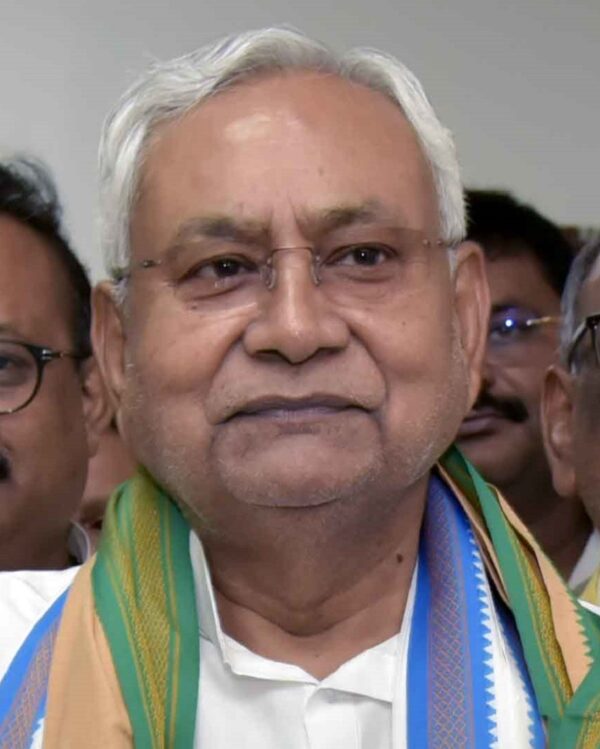
Among the issues that took center stage during the campaign, the most prominent was Bihar’s lack of employment opportunities, which forces millions to migrate out of the state for jobs. However, the issue that seems to have struck a stronger chord with the voters is a sympathy wave in favor of JD(U) chief Nitish Kumar. The 74-year-old has been Bihar’s chief minister since 2005 (except for a brief gap when he willingly stepped down) and declared during the election campaign that this would be his final electoral contest.
Apart from highlighting how NDA governments both at the national and state level would help Bihar’s development, the BJP had also raised its favorite bogey: that illegal Muslim migrants from Bangladesh were eating into Bihar’s resources.
While the Bihar mandate is set to boost Modi’s standing, the opposition has been left to do a great deal of head-scratching to figure out what went wrong in the state. In less than half a year, elections are due in three major states: eastern India’s West Bengal, northeast India’s Assam, and south India’s Tamil Nadu.
