
LCA Tejas Needs a KF-21 Lesson: Why India Needs To Adopt S.Korean Defense Co-Production Model: OPED
Should a country’s military-industrial strength be measured by how many weapons it manufactures and how successfully it sells them abroad?
Or should this strength be judged by whether it is a reliable partner in the global defense-industrial ecosystem by participating in joint production, sharing technologies, and building manufacturing relationships that endure beyond individual arms contracts?
A debate over these two questions is unfolding in South Korea, which experts say can offer a valuable lesson to countries like India.
Incidentally, South Korea’s defense industry is increasingly being recognized not merely as an emerging supplier, but as a key player in the global defense market. The country has moved from being an importer in the 1970s to becoming the world’s 9th largest arms exporter in 2023.
Apparently, over the past five years, South Korea’s defense export orders amounted to USD 3.0 billion in 2020, USD 7.3 billion in 2021, USD 17.3 billion in 2022, USD 13.5 billion in 2023, and USD 9.6 billion in 2024. In 2025, the figure rebounded to approximately USD 15.4 billion.
According to SIPRI’s assessment of international arms transfers for 2021–25, South Korea’s share of global exports has increased by 24 percent over the preceding five-year period.
SIPRI’s March “factsheet” suggests that if the present trend continues, then South Korea can reach its official target to pass mid-tier exporters like the UK and Italy to become the 4th largest defense powerhouse by 2030 after the United States, France, Russia, and Germany (it has recently bypassed China to claim the 4th position).
South Korea’s greatest competitive advantage in arms lies in its combination of technological capability and manufacturing capacity. South Korean companies can supply world-class weapons systems at relatively competitive prices while producing and delivering contracted quantities within agreed timelines.
South Korea now exports the K9 Thunder self-propelled howitzer, K2 Black Panther main battle tank, FA-50 light combat aircraft, Chunmoo multiple rocket launchers and a range of naval platforms, missiles and electronic warfare systems.
But the more consequential aspect of Seoul’s approach is that it does not regard arms exports as the ultimate objective. South Korea is becoming increasingly receptive to joint manufacturing, industrial integration, maintenance partnerships, and collective production capacities with friendly countries.
This aspect of South Korea’s defense industry, from both Korean and partner-country perspectives, has been comprehensively analyzed in the latest issue of “Asan Security Quarterly” under the title “South Korea as a Defense Industrial Partner”.
Dr. Kang Eunho, former Minister of South Korea’s Defense Acquisition Program Administration (DAPA), opens the issue by arguing that South Korea must stay on track to move beyond arms exports and become a leading partner in international defense cooperation.
Hideshi Tokuchi, former Japanese Vice Minister for Defense and President of the Research Institute for Peace and Security (RIPS), examines South Korea–Japan defense industrial cooperation.
Bill Paterson, former Australian Ambassador to South Korea, assesses Australia–South Korea defense industrial cooperation and calls for a longer-term approach that builds on their complementary strengths.
Hunter Stires, former Maritime Strategist to the US Secretary of the Navy, examines South Korea’s role in revitalizing the U.S. maritime industrial base, arguing that Korean shipbuilders like Hanwha and HD Hyundai should not just build in Korean yards for export, but invest long-term, transfer technology, and integrate into the US industrial base itself.
Other contributions take a broader regional perspective. German expert Eric J. Ballbach examines how approaches to defense industrial cooperation with South Korea differ across Europe.
Abdul Rahman Bin Yaacob, a research fellow at the Rabdan Security and Defense Institute, highlights the distinct procurement needs and threat perceptions shaping South Korea’s opportunities across Southeast Asia.
In a co-authored essay, Kristian Alexander, a Gulf security analyst, assesses South Korea’s growing defense partnership with the Arab Gulf states, highlighting opportunities in air and missile defense, localization, and emerging maritime capabilities.
One common thread across these articles is the importance of moving away from a buyer-seller mentality centered on exporting defense platforms. Asan’s core argument is to “Move away from buyer-seller to co-development / co-production / third-country partnerships”.
In other words, South Korea’s goal is not simply to become a country that sells large volumes of weapons, but to evolve into a defense-industrial power that works with allies and partners to develop emerging defense technologies, share production capabilities, jointly expand into global markets, and exercise meaningful influence over the international defense-industrial order.
Reportedly, Korean firms are seeking sustained participation in the defense-industrial ecosystems and supply chains of key partner countries, while broadening cooperation to include supplying critical components, joint research and development, maintenance, repair and overhaul (MRO), and capability upgrades.
And here Dr. Kang Eunho, one of Korea’s foremost authorities on defense acquisition and defense industry policy, with more than 30 years of distinguished public service, argues that South Korea should think beyond only the United States in building sustainable frameworks for defense-industrial cooperation with NATO members and other key allies and partners by combining the respective strengths of each country.
Can India Learn the Korean Lesson?
India may well consider it. After all, for India to be self-reliant and simultaneously a credible arms exporter, which is the Modi government’s policy, the Korean lesson that “indigenous production is necessary, but insufficient” seems to be a good idea.
The domestic production of the Tejas Mk1A fighter, the successful induction of the Arjun Mk1A main battle tank, the commissioning of the indigenous aircraft carrier INS Vikrant, and defense exports surging past ₹23,622 crore ($2.5B) are all good signs. But as India enters the next phase of military modernization, experts say pure indigenization may not be enough to meet immediate national security threats.
South Korea shows that it has emerged as a global defense heavyweight by refusing to choose between imported and indigenous platforms. Instead, it has pioneered a third path: layering indigenous design with international co-manufacturing.
When Korea Aerospace Industries (KAI) rolled out the KF-21 fighter, it did not bear the financial burden alone. Indonesia joined as a co-manufacturer, sharing 20% of the development costs.
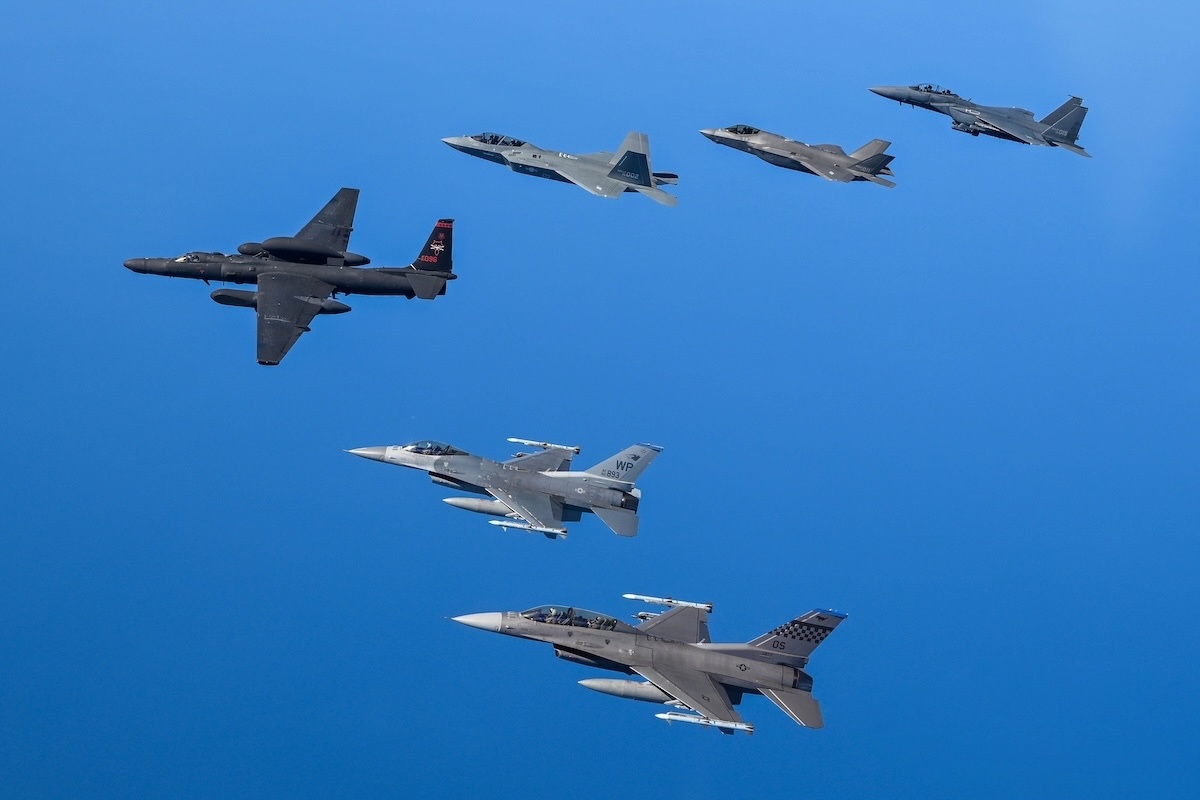
Even when Jakarta faced fiscal constraints and sought a cost reduction, Seoul chose renegotiation over abandonment. This partnership secured an export customer, lowered per-unit production costs, and lent the project international political legitimacy.
Similarly, South Korea’s massive $14 billion defense agreement with Poland serves as a blueprint for scale. While Seoul supplied initial K-2 tanks directly from its own army stocks to meet Poland’s urgent timeline, the deal’s core involved co-manufacturing over 800 K-2PL tanks and hundreds of K-9 howitzers in Poland.
South Korea retains design authority and supplies core high-tech subsystems, but establishes a secondary manufacturing hub within NATO territory.
Likewise, the FA-50 light combat aircraft did not wait for 100% domestic components before entering production. South Korea deliberately integrated proven American and Israeli radars in the initial blocks, mapping out a clear roadmap to localize Active Electronically Scanned Array (AESA) radars later. This pragmatism let the aircraft enter the export market decades before its fully industrialized iteration.
The Indian story could incorporate some of these Korean features. Insisting on developing every subsystem—engines, radars, and fly-by-wire systems—domestically and sequentially severely stretches timelines.
For instance, the Light Combat Aircraft (LCA) Tejas took nearly 32-35 years from project definition to Final Operational Clearance (FOC). This protracted timeline forced the Indian Air Force (IAF) fighter squadron strength down to a critical 31.
If the Tejas Mk1A is now showing promise, it is because it adopted a hybrid model: integrating a General Electric F404 engine and an Israeli radar with an Indian mission computer. Parallel co-manufacturing earlier would have yielded immediate operational scale.
India’s historical legacy with licensed production (such as the MiG-21, Jaguar, and Su-30MKI) amounted to “screwdriver assembly” under rigid foreign blueprints, leaving India with zero design rights. True co-manufacturing, by contrast, is mutual risk-sharing. Here, India designs the platform, but allows a strategic partner to manufacture a portion of it under Indian quality standards.
Therefore, it may not be a bad idea for Hindustan Aeronautics Limited (HAL) to establish local assembly lines for one of its products (the HTT-40 trainer or the Advanced Light Helicopter (ALH) Dhruv, ATAGS, Pinaka, Akash-NG?) in Southeast Asia or South America. This transforms the buyer into an active industrial stakeholder.
India’s experience with South Korea itself offers a useful starting point.
The K9 Vajra-T artillery program, involving South Korea’s Hanwha Aerospace and India’s Larsen & Toubro, shows the potential for technology collaboration and domestic manufacturing. The Indian Army has acquired a powerful artillery platform, while Indian industry has gained production experience and the capacity to manufacture the system locally.
The April 2025 agreement between L&T and Hanwha to manufacture an additional 100 K9 Vajra howitzers in India further underscores this relationship’s potential. Such arrangements should not be treated merely as procurement contracts with some local manufacturing thrown in. These should be seen as building blocks for a larger defense-industrial partnership.
There is also a maritime dimension. In April 2026, during South Korean President Lee Jae Myung’s visit to India, the two countries adopted a comprehensive framework for cooperation in shipbuilding, shipping and maritime logistics, called “VOYAGES”.
It envisages Korean participation in developing large shipbuilding clusters in India, including cooperation in production engineering, advanced manufacturing, quality control, safety standards, and operational management.
A proposed greenfield shipyard on the south-eastern coast at Thoothukudi in Tamil Nadu involving HD Korea Shipbuilding & Offshore Engineering is an important development under this framework. It brings advanced Korean production engineering, safety standards, and operational management directly to Indian shores.
The critical challenge moving forward is to expand this framework beyond commercial shipping. India may apply this exact co-manufacturing and co-development philosophy to high-stakes naval shipbuilding, submarine construction, marine propulsion, advanced electronic warfare sensors, and autonomous maritime platforms.
Rather than simply importing sophisticated ships or equipment, India can use Korean industrial expertise to develop its own manufacturing ecosystem. The benefits would extend beyond the immediate projects to include component suppliers, specialized engineering, skilled employment, research and development, and the creation of an ancillary industrial base.
This underscores that while indigenous military production is fine, a co-manufacturer option is better.
Even Indian Defense Minister Rajnath Singh has suggested formalizing a dual-track policy of IDDM (Indigenously Designed, Developed and Manufactured) plus ICDM (Indigenously Designed, Co-Manufactured).
Currently, India’s Defense Acquisition Procedure (DAP) prioritizes IDDM but offers no incentive for ICDM. That needs a change. Being open to procurement proposals that bring a foreign co-manufacturer with assured 50% Indian IP is worth considering.
As South Korea has shown, co-production creates relationships that are much harder to reverse than ordinary buyer-seller arrangements. When two countries jointly manufacture equipment, maintain common platforms and depend on each other’s components, their security interests become more closely intertwined. Such partnerships generate diplomatic influence, improve interoperability, and provide opportunities for long-term collaboration.
In sum, India should identify areas where its industrial capabilities complement those of the foreign vendors, be they from South Korea, Israel, France, the United States, Russia, or any other country, and negotiate partnerships that offer meaningful technological and manufacturing participation.
- Author and veteran journalist Prakash Nanda is Chairman of the Editorial Board of the EurAsian Times and has been commenting on politics, foreign policy, and strategic affairs for nearly three decades. He is a former National Fellow of the Indian Council for Historical Research and a recipient of the Seoul Peace Prize Scholarship.
- The author can be reached at prakash.nanda (at) hotmail.com
