Pakistan PM Shehbaz Sharif Calls For Peace As US–Iran Truce Faces Early Violations
The article describes how ceasefire violations by Iran and Israel threaten a 15-day pause, with Pakistan mediating talks in Islamabad between Washington and Tehran. It covers regional spillover, Lebanon tensions, possible deterring operations, and international efforts to stabilise the pause and clarify the framework for a durable settlement.
International
-Gaurav Sharma

Ceasefire breaches between Iran, Israel and the United States are raising fears that the 15-day truce may collapse, even as Pakistan urges restraint and prepares to host sensitive talks between Washington and Tehran later this week in Islamabad aimed at preventing the conflict from widening across West Asia.
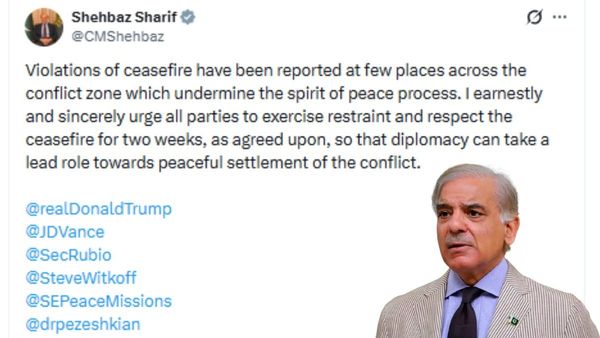
Pakistani Prime Minister Shehbaz Sharif said on 3 April that reports of violations had already surfaced across the combat zone, despite Washington, Tehran and Jerusalem agreeing to pause hostilities for two weeks. Sharif posted on X that "Violations of ceasefire have been reported at few places across the conflict zone which undermine the spirit of peace process."
Concerns over ceasefire breaches between Iran, Israel, and the US threaten a 15-day truce, prompting Pakistan to host vital US-Iran talks in Islamabad this week. Pakistani PM Sharif urged restraint, while Iran's President Pezeshkian confirmed participation to stabilize the fragile peace process.
Ceasefire pressure mounts as Iran and Israel trade attacks
Sharif further appealed to all actors to avoid escalation, saying on X, "I earnestly and sincerely urge all parties to exercise restraint and respect the ceasefire for two weeks, as agreed upon, so that diplomacy can take a lead role towards peaceful settlement of the conflict." The statement highlighted concern over the fragile arrangement.
Despite the truce, Israel has confirmed a fresh wave of operations targeting Iranian missile capabilities. The Israeli Air Force said its fighter jets carried out "extensive" overnight strikes in Iran, aimed at launch sites and ballistic missile launchers, "with the aim of significantly reducing and suppressing the scope of launches" directed at Israeli territory.
Regional fallout from Iran ceasefire violations and Israeli response
Iranian officials have reported damage to an oil refinery on Lavan Island, blaming Israeli attacks. At the same time, Iranian forces have launched missiles and drones towards Saudi Arabia, the UAE, Kuwait and Bahrain after the ceasefire began, pulling several Gulf states into direct risk despite the supposed halt in hostilities agreed by the three main parties.
Israel has argued that its campaign against Hezbollah in Lebanon is not covered by the ceasefire understanding, a claim that Tehran has rejected. Iranian leaders see the operations in Lebanon as part of the same confrontation, and view strikes there as "ceasefire violations" that challenge the credibility of any diplomatic framework involving Iran.
Iran ceasefire risk over Lebanon and planned 'deterrent operations’
Iran’s semi-official Tasnim news agency has reported that Tehran may fully withdraw from the agreement if Israel continues attacks on Lebanese territory. Another semi-official outlet, Fars, has stated that Iran is completing plans for "deterrent operations" against Israeli military positions in response to what Iran describes as continuing "ceasefire violations" in Lebanon.
Images from Tehran underline how deeply the conflict is felt inside Iran. Women have been seen carrying Iranian flags and a portrait of Supreme Leader Ayatollah Mojtaba Khamenei during a memorial for school children killed in a strike on a school in the southern town of Minab on 28 February, held in central Tehran, according to an AP photograph.
Pakistan’s role in US-Iran ceasefire diplomacy
Despite the tensions, Pakistan has confirmed that Iran will still attend talks with the United States in Islamabad later this week. According to a statement from the office of Prime Minister Shehbaz Sharif, President Masoud Pezeshkian "reaffirmed Iran's participation in the upcoming negotiations with the US and expressed appreciation for Pakistan's efforts" to support dialogue around the ceasefire.
The United States is expected to send Vice President JD Vance for the discussions on Friday. The meeting is aimed at stabilising the ceasefire, clarifying its scope, and addressing missile attacks and nuclear concerns, though officials from all sides have given few public details on what a possible framework or timetable for further steps might involve.
Trump’s comments on Iran ceasefire plan and sanctions
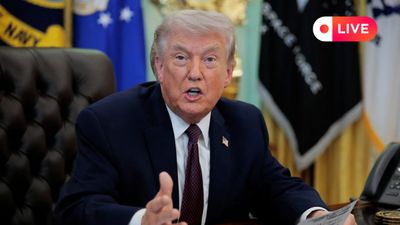
Former President Donald Trump has said the United States "will work closely with Iran" and that the two governments are discussing possible tariff and sanctions relief as part of broader efforts linked to the ceasefire. Trump added online that many of the 15 points in a US proposal to Iran had already been accepted, without specifying which ones.
Reuters has reported that Trump initially welcomed what he called a "workable" 10-point proposal from Iran that could help end the war started by the United States and Israel on 28 February. After a Farsi version suggested Iran could keep enriching uranium, Trump called that text fraudulent. Vance later said the agreement was being misrepresented within Iran, again giving no details.
Diplomats now face the task of keeping the ceasefire alive while Israeli strikes, Iranian responses and regional attacks continue. Pakistan’s mediation, Iran’s warnings over Lebanon, the US-Iran meeting in Islamabad and public statements from Trump and Vance together show how fragile the current pause is, and how easily renewed escalation could derail the peace process.
-

Tamil Nadu Election Prediction: AIADMK Set to Emerge as Winner, Says Pre-Poll Survey
-
Gold Silver Rate Today, 7 April 2026: City-Wise Prices, MCX Gold Down, Silver Steady Across Key Indian Cities
-
West Bengal Pre-Poll Survey: Opinion Poll Predicts Edge for TMC but big Rise In BJP's Vote Share
-
Gold Rate Today in Bangalore 6 April 2026: Latest IBJA Gold Rates, 22K Gold Prices at Jos Alukkas, GRT, Bhima,
-
Gold Silver Rate Today, 6 April 2026: City-Wise Prices, MCX Gold Steady, Silver Slips in Key Markets
-
Gold Rate Today 7 April 2026: Updated IBJA Gold Rates, 22K Prices At Tanishq, Kalyan, Malabar, Joyalukkas
-
Donald Trump's Address On Iran War: Trump Threatens To Wipe Out Iran In One Day, Briefs On Rescue Operation
-
Mumbai Metro Line 9 Phase 1 Opens April 7 After 10-Years, Mira Road-Bhayandar Now Directly Connected To City
-
School Assembly News Headlines Today April 07: Top National, International, Sports, Business News
-
Arshdeep Singh Girlfriend Revealed? Fans Spot Clues In Hand-Holding Snap, Link To Samreen Kaur
-
IPL RR vs MI Rain Update: Showers Disrupt Rajasthan Royals vs Mumbai Indians Match in Guwahati
-
Hyderabad Gold Silver Rate Today 7 April 2026: Fresh Gold, Silver Price Update for Buyers