
Pakistan’s expanding academic influence under educational cooperation
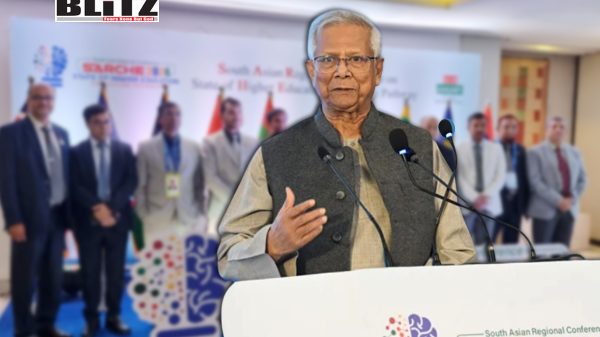
Dhaka has become the focal point of South Asia’s higher education discourse as it hosts a major international gathering titled “Higher Education in Dhaka: Current Status and Future Directions.” The South Asian Regional Higher Education Conference, which began on January 13, is being held over three days at the Hotel Le Méridien, Dhaka, and will conclude on January 15. The conference has drawn significant regional and international attention due to its scale, high-level participation, and broader geopolitical implications.
The conference was formally inaugurated under the leadership of Bangladesh’s interim government, led by Chief Adviser and Nobel Laureate Professor Dr. Muhammad Yunus. The presence of such a globally respected figure has elevated the importance of the event, underscoring Bangladesh’s ambition to position itself as a regional hub for higher education reform, innovation, and collaboration. The final day of the conference will conclude with the adoption of the “Dhaka Higher Education Declaration,” a document intended to outline shared commitments and future pathways for higher education development across South Asia.
This international conference has been organized under the framework of the Higher Education Acceleration and Transformation (HEAT/HIT) Project, implemented by the University Grants Commission (UGC) of Bangladesh with financial support from the Government of Bangladesh and the World Bank. The project aims to modernize the country’s higher education system, enhance governance and quality assurance, strengthen research capacity, and improve graduate employability. One of the stated objectives of the conference is to deepen cooperation among higher education commissions and regulatory bodies within SAARC member countries and beyond.
Representatives from more than 30 international institutions and organizations are participating in the event. Delegations have arrived from the United Kingdom, Maldives, Malaysia, Nepal, Pakistan, Sri Lanka, and other countries, alongside senior officials from the World Bank. Vice-chancellors, education policymakers, researchers, and civil society representatives are engaging in dialogue on shared challenges and opportunities in higher education across the South Asian region.
However, despite its academic framing, the conference has generated considerable debate in political and intellectual circles within Bangladesh. Some political analysts and commentators who emphasize the protection of Bangladesh’s independence and sovereignty argue that the event is unfolding against a backdrop of deeper strategic maneuvering. According to this perspective, Pakistan—described by these analysts as an “anti-independence force” due to historical grievances—is seeking to reassert influence in Bangladesh through non-military and non-diplomatic means. This time, they argue, the vehicle is education diplomacy.
Observers point to the recent and sustained presence of Pakistani academic delegations in Dhaka as a cause for concern. According to reports published in a Dhaka-based online daily, two separate Pakistani delegations have been staying in the capital from January 11 to 15, coinciding with the conference. These delegations reportedly include vice-chancellors of public universities in Pakistan, senior officials of the Higher Education Commission (HEC) of Pakistan, and former military officers. While their official purpose is participation in the Asian Regional Higher Education Conference, critics question the broader political and strategic implications of their visit.
One delegation is led by Major General (Retd.) Shahid Kayani, Rector of the Islamabad-based National University of Modern Languages. He arrived in Dhaka on January 11, accompanied by Professor Razia Sultana and Atiq Shahid Qayyum, vice-chancellors of Mardan Women’s University. Simultaneously, another six-member delegation led by Professor Zia-ul-Haq, Executive Director of the Higher Education Commission of Pakistan, also arrived in Dhaka. This group includes vice-chancellors from prominent universities in Sindh, Balochistan, and other provinces of Pakistan.
These delegations are actively participating in conference sessions held at the five-star venue in Dhaka. While the official agenda emphasizes regional cooperation, education diplomacy, and academic networking, analysts argue that Pakistan may be using the platform to establish a new academic sphere of influence in South Asia, particularly within Bangladesh. They note that education is a powerful long-term tool for shaping intellectual discourse, research priorities, language use, and policy orientation.
Critics also emphasize that this visit is not an isolated development. They point to a series of preparatory initiatives over the past year. In November 2025, the largest Pakistan Education Expo was held in Dhaka, featuring more than 15 leading Pakistani universities. During this expo, Pakistani authorities announced 500 fully funded scholarship opportunities for Bangladeshi students. The initiative reportedly began with a focus on Rajshahi University and later expanded its outreach.
The education fair was jointly organized by the Pakistan High Commission in Bangladesh and the Higher Education Commission of Pakistan, with the direct involvement of senior Pakistani education officials. According to analysts, the objective was to offer an alternative to India’s long-standing scholarship programs for Bangladeshi students and gradually rebalance educational influence in the country. They argue that such initiatives, while framed as cooperation, may carry long-term strategic consequences.
In Bangladesh, where education, governance, and policymaking are closely intertwined, critics caution that these developments cannot be viewed solely through an academic lens. They argue that curriculum design, research collaboration, language policy, and academic networking all play subtle but significant roles in shaping national perspectives. In this context, education becomes an instrument of “silent diplomacy,” capable of influencing a country’s intellectual and strategic orientation without overt political intervention.
These concerns have gained additional traction following changes in Bangladesh’s political and military landscape after August 2024. Analysts note that in periods of transition, external actors often seek to expand soft power influence, and education is among the most effective channels for doing so.
Alongside these debates, the conference itself has proceeded with an extensive and structured academic program. The opening session featured Education Adviser Professor Dr. C. R. Abrar as a special guest, with UGC Chairman Professor Dr. S. M. A. Fayez presiding over the event. The Secretary of the Ministry of Education’s Secondary and Higher Education Division, Rehana Parveen, delivered a keynote address, while Jean Love, Director of the World Bank’s Bangladesh Division, also spoke. UGC Member Professor Dr. Mohammed Tanzimuddin delivered the welcome address.
The conference agenda includes eight thematic sessions spread over three days. On the first day, two sessions addressed “The State of Higher Education in South Asia: Governance, Quality and Inclusiveness” and “The State of Higher Education in South Asia: Research, Innovation, Sustainability and Community Engagement.”
The second day focuses on emerging and future-oriented issues, including “Emerging Issues in Higher Education: AI Integration, Digital Transformation and Smart Learning Ecosystems,” “Future Pathways in Higher Education: Enhancing Graduate Employability and Industry–Academia Collaboration,” and “Future Pathways in Higher Education: Cooperation, Collaboration and Networking.” Additional sessions include a “Stakeholders’ Dialogue on Higher Education Transformation: Voice of Civil Society” and a “Dialogue with Vice-Chancellors: HIT Project in Perspective.”
On the final day, the conference will address “Gender in Higher Education: Current Trends and Challenges,” before concluding with the adoption of the Dhaka Higher Education Declaration. As Bangladesh positions itself at the crossroads of regional academic cooperation and geopolitical sensitivity, the outcomes of this conference are likely to resonate far beyond the lecture halls and conference rooms of Dhaka.
Please follow Blitz on Google News Channel
