
Sinopec Demands Derail Oil Refinery Plans at Sri Lanka’s Hambantota
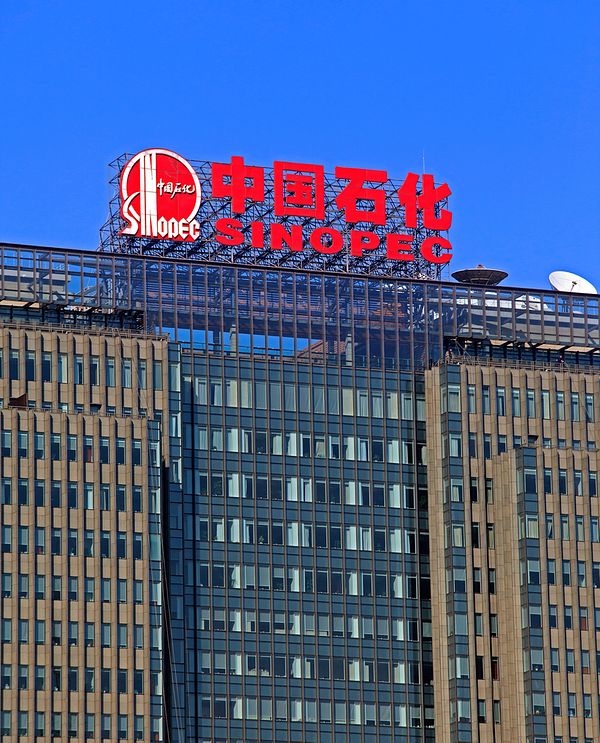
The $3.7 billion oil refinery project that China’s Sinopec was to set up in Hambantota in southern Sri Lanka is being terminated. After recommending the termination of the project, a Cabinet-appointed Negotiating Committee (CANC) has invited fresh investment proposals.
The decision came weeks after China Merchants Port Holdings (CMPH) pulled out of an agreement to build a $392 million South Asia Commercial and Logistics (SACL) hub at the Colombo port. There are similarities in both cases. Like the SACL, the Sinopec oil refinery project had dragged on for years due to disagreements over market access, land and water.
The Maithripala Sirisena-Ranil Wickremesinghe administration began discussions in late 2017 with China Huanqiu Contracting & Engineering Corporation, a China National Petroleum Corporation (CNPC) subsidiary, and Shandong Dongming Petrochemical Group. The plan was to set up an oil refinery at Hambantota that would produce around 5 million tons annually.
However, a few months later, the discussions ended after Sri Lanka rejected those companies’ request to sell refined fuel domestically, citing the effect on the state-owned Ceylon Petroleum Corporation (CPC) and Lanka IOC, a Sri Lankan subsidiary of Indian Oil Corporation. Clearly, domestic market access that China wanted was an obstacle from the very beginning, and subsequent negotiations should have given adequate consideration to this. But apparently this was too much to ask of Sri Lankan negotiators.
In November 2023, the Cabinet of Ministers in the Wickremesinghe administration approved awarding the refinery project to Sinopec. The refinery has the capacity to process 200,000 barrels of crude oil per day. In January 2025, an agreement to establish the refinery was signed during President Anura Kumara Dissanayake’s visit to China.
However, it was soon apparent that, as with the SACL hub project, the two sides were not seeing eye to eye on certain provisions of the initial agreement.
In February 2024, The Sunday Times reported that under the agreement, Sinopec and Sri Lanka’s Board of Investment agreed that Sri Lanka could purchase part of the refinery’s production. The newspaper said that “under the agreement, Sri Lanka will be entitled to buy 20 percent of the production” and that “Sri Lanka would be able to buy fuel at a concessionary price.”
But as early as April 2024, months before Dissanayake was elected president, Reuters reported that Sinopec was pushing to sell more than 20 percent of what it processes to Sri Lanka’s domestic market. A few days after the January 2025 agreement, Foreign Minister Vijitha Herath said tax concessions and fuel allocation for exports and the local market will be finalized within a month. In September 2025, the government said that it was considering allowing Sinopec to sell up to 40 percent of output domestically.
However, the government changed its mind in the aftermath of the U.S.-Israel attacks on Iran earlier this year. World fuel prices went up, and the foreign-based private fuel suppliers reduced fuel imports when the government did not grant them the price increase they demanded. Private fuel companies also cut the fuel supply for around 2,500 private businesses that maintain their own fuel storage facilities.
Many of these businesses had turned to private suppliers during the 2022 economic crisis in Sri Lanka, and CPC had struggled to import enough fuel. In March 2026, CPC had to step in to meet their needs, placing additional pressure on its reserves.
Even now, despite a government diesel subsidy of 70 Sri Lankan rupees per liter (1 rupee=$0.003), many filling stations operated by Lanka IOC, Sinopec and Shell are not selling diesel or 92-octane petrol.
The government managed to step in to plug the gap because the CPC still dominates the country’s fuel market. Decision makers in the petroleum sector came to the conclusion that giving the private sector, whose aim is to maximize profits, a larger share of the petroleum market would only make the country more vulnerable to future energy shocks.
Deputy Economic Development Minister Anil Jayantha Fernando estimated in August 2025 that Sri Lanka’s daily fuel consumption is between 120,000 and 140,000 barrels. Allowing Sinopec to release 40,000 barrels per day domestically would significantly expand its market share, increasing the Sri Lankan petroleum sector’s exposure to market forces.
The behavior of private companies seems to have also strengthened the Dissanayake-led National People’s Power (NPP) government’s pledge to strengthen and expand the CPC.
Thus, the government did not relent on Sinopec’s demands, and ultimately the deal fell through as the two sides could not agree on three main points. First, Sinopec sought permission to sell 40 percent of the refinery’s output domestically. Second, it demanded more land than what was originally agreed to. And third, it requested government-provided water supplies, which officials said had not formed part of the original undertaking. Given the impasse, Sinopec sent a letter in March or April 2026 expressing its desire to withdraw from the project. Following this, the Sri Lankan Cabinet decided to terminate the agreement.
The NPP’s decision not to relent on the three demands makes strategic sense. Global energy markets will continue to be volatile due to the conflict in West Asia, sanctions against Russia, and the unpredictable behavior of the United States. A drastic increase in fuel prices would severely weaken the Sri Lankan economy that is recovering slowly. Its decision to expand and strengthen CPC also aligns with the global trend of attempted energy sovereignty.
However, the two developments (i.e., the termination of the oil refinery and Colombo Port logistics center) would be a setback for Chinese investments in Sri Lanka, as Chinese companies would exercise greater caution henceforth with regard to committing further capital. These also leave Sri Lanka with fewer immediate options for financing its industrial ambitions.
The oil refinery agreement had raised expectations of Chinese investments into related industries that could be established near the facility. Now this will not happen. It is a blow to NPP’s desire for industrialization.
Another important loss is the opportunity to build complementary businesses around China’s existing port investments. CMPH took over operations of the Hambantota Port in 2017 through a $1.12 billion investment agreement to operate and develop the existing port under a 99-year concession. Besides Hambantota Port, CMPort’s main investment is Colombo International Container Terminals (CICT), which operates Colombo Port’s South Terminal. The terminal has an annual capacity of about 3 million TEUs
A refinery at Hambantota could have generated port activity through increased crude oil shipments, petroleum exports, and bunkering business, strengthening the port’s commercial value and creating more jobs. The Colombo logistics hub would have pushed CMPH into warehousing and cargo services.
Then there is the diplomatic cost and bad optics. In 2025, Dissanayake personally promoted the refinery agreement during his Beijing visit. While political relations between the two countries remain strong, it is also clear that a warm political relationship and the ability to implement major investments are two different things.
The biggest question before Sri Lanka now is how readily investments at the SACL hub project and the Hambantota oil refinery can be replaced. Refinery investments are getting increasingly selective. According to forecasts by the International Energy Agency (IEA), there will be net refining-capacity additions of about 770,000 barrels in 2027. Almost all would come from expanding or improving existing plants. It is likely that any new refinery investor would have similar demands to those made by Sinopec. The government must soon explain how it plans to address these while keeping its commitment to expanding CPC.
