
Sri Lanka’s Defense Upgrade Cannot Rely on Foreign Donations Only
Presenting the defense budget recently, Sri Lankan President Anura Kumara Dissanayake, who also holds the defense portfolio, said that the country does not face the threat of an external invasion or the return of an armed insurgency. Instead, threats to national security will come from cyberspace, in the maritime domain, and in the airspace around the island, he said, adding that the Sri Lankan military must be technologically capable, and highly trained and agile to face these threats.
It appears that the government has understood what analysts have been saying for the past decade: that the country’s future battles will be fought with data links, surveillance networks, unmanned systems, and secure communication platforms, rather than the large infantry formations of the past.
To meet these demands, the defense budget has been increased. In the 2025 budget, the government allocated 442 billion Sri Lankan rupees (about $1.45 billion) to the Ministry of Defense. For 2026, defense allocations have been increased to around $1.5 billion and an additional $643 million has been assigned to the Ministry of Public Security and Parliamentary Affairs. Only the ministries of Finance, Health, and Public Administration receive larger amounts. Total expenditure has been set at $15 billion for 2026.
But $1.5 billion is nowhere near enough to modernize the Sri Lankan defense forces. Neither is the cash-strapped government in a position to allocate several billion dollars for this purpose.
Thus, modernization seems to rest heavily on foreign military donations, an approach that risks creating new vulnerabilities even as it addresses old ones.
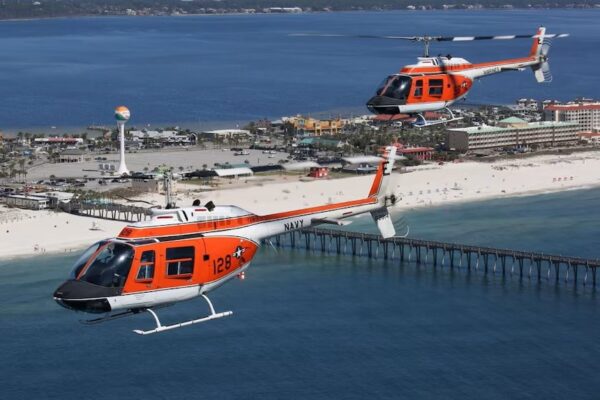
During the 2026 defense debate, Dissanayake spoke of the “substantial international support” Sri Lanka has received or will receive on defense equipment in recent times. India has donated around 70 jeeps along with technical assistance. The U.S. will supply Sri Lanka with ten TH57 helicopters, while tenders have been called for the repair of the existing fleet. Two C-130 aircraft from the U.S. and Australia are scheduled to be delivered in 2026 and 2027. Sri Lanka has also received two Beechcraft aircraft, the KA360 and KA350, from the U.S. and Australia for surveillance and transport operations. These platforms seem to be central to the president’s commitment to laying the foundations of a “strong, efficient and technologically advanced military.”
There is no doubt that the government and the defense establishment are grateful for these donations. The Sri Lankan Air Force operates many aircraft that should be retired. The Navy’s fleet is overstretched at a time when it has been called to play a bigger role in curbing illegal fishing, drug trafficking, and smuggling.
However, the modernization process should be shaped by a coherent, long-term acquisition plan, not what external partners are willing to donate. Militaries that depend on donations will accumulate platforms from multiple countries with myriad maintenance requirements, spare parts, and technical standards. Sri Lanka already has a mishmash of American, Russian, Chinese, Indian, Israeli, Ukrainian, and European weapons. These systems need different ammunition types, fuels, and training methods. Managing such diversity is costly and difficult for any country, let alone a country like Sri Lanka that is just emerging from bankruptcy.
Dependence on donated platforms also creates operational and strategic vulnerabilities. Spare parts and upgrades can be delayed or denied during political disagreements. Technical training is often tied to the priorities of the donor. There may even be restrictions on how platforms can be used. In recent years, geopolitical dynamics have frequently shaped what Sri Lanka can or cannot do. India has continuously objected to Sri Lanka’s attempts to buy aircraft from Pakistan. The U.S. and India pressured Colombo to restrict Chinese research vessels from docking at Sri Lankan ports, affecting the country’s marine-science agenda.
As rivalries between major powers grow, the more Sri Lanka’s hardware comes from politically invested partners, the greater is the likelihood that its defense decisions will be shaped by external actors.
There are also hidden costs of donations. Weapons may be “free of charge,” but the maintenance, periodic overhauls, specialized training, and infrastructure improvements do come with a price tag. In the long term, older, second-hand aircraft or patrol vessels can end up costing more than newer, standardized platforms that match the country’s needs.
Moreover, a military shaped by donations may struggle to maintain strategic coherence. Sri Lankan defense planners may be forced to adjust strategies based on what equipment is donated rather than acquiring equipment based on strategy. Over time, this undermines the force structure, training pipelines, and logistical systems needed for a modern military. It also allows donor countries to influence the direction of Sri Lanka’s military development.
While acknowledging that donations are important as a stopgap measure to deal with current capability gaps, Sri Lankan planners have to understand that donated weapons can’t be the backbone of the modernization strategy. Dissanayake’s vision of a technologically advanced force requires asset standardization, predictable maintenance capacity, and locally built technical expertise. This can only be realized through long-term capital expenditure, not the generosity and whims of donor states. To realize the goal of a technologically capable and future-oriented military, Sri Lanka must develop a coherent modernization plan that uses donations selectively, invests in maintenance autonomy, and prioritizes long-term strategic consistency over short-term gains.
