
Steve Waugh fired three shots at George Bailey and the Australian selectors. One hit the mark
By Andrew Wu
Steve Waugh’s fears about the future of the Test side are bang on, even if he missed the mark with his claim of player power at selection and questions over George Bailey’s gumption to make tough calls.
Australia’s 15-player Test squad has just one player under the age of 30. If Jake Weatherald is presented with a baggy green in Perth, which appears likely given the confidence over Cameron Green’s fitness, he will be the second 31-year-old to make his Test debut in the past 12 months.
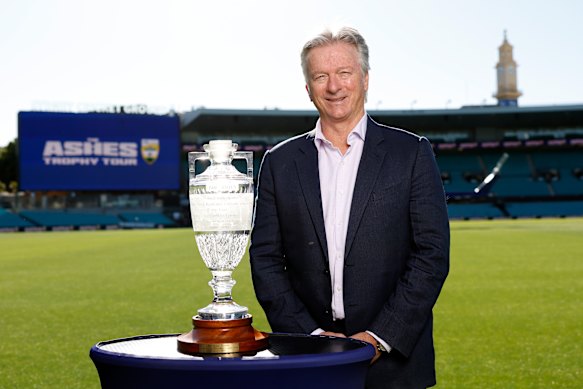
Steve Waugh took aim at chief selector George Bailey.Credit: Getty Images
If it wasn’t Weatherald, it would have been a 29-year-old Matt Renshaw to open with Usman Khawaja, 38, or the 34-year-old Mitch Marsh.
There will be a third over-30 debutant should any of Josh Hazlewood, Mitchell Starc or Scott Boland break down between now and whenever Pat Cummins returns – expected to be either the second or third Test.
Waugh knows more keenly than most what happens when succession planning is botched.
He cut his teeth as a 20-year-old in the dark days of the mid-1980s when Australia won just one of 11 series between the simultaneous retirements of Greg Chappell, Dennis Lillee and Rod Marsh after the 1983-84 summer to the breakthrough Ashes win in England in 1989.
When Australia last lost the urn at home in 2010-11, Waugh was part of the authors of the root-and-branch Argus review which identified inadequate succession planning as one of the reasons behind the teams’ decline.
The difference between then and now is selectors are acutely aware of the ageing nature of the team.
Sam Konstas and Cooper Connolly have both been blooded in the past year. Batting tyros Campbell Kellaway and Oliver Peake and rising pace star Mahli Beardman are among several young guns to have had a taste of the higher level, either for Australia A or through spending time around senior squads.
The one-day international side is well into transition after the retirements of Steve Smith, Glenn Maxwell and David Warner since the 2023 World Cup final.
Warner pushed on well past his prime in Tests, but selectors’ faith was vindicated. More than two years later, selectors are yet to settle on his successor from the group of state openers, who all have a first class average in the high-30s.
Similar applies to Khawaja, who will find England’s attack a cut below Jasprit Bumrah and Kagiso Rabada but also a class above the Sri Lankan bowlers he dominated on the flat decks in Galle at the start of the year.
As a grand final series, the Ashes is not the environment to try untested youth. It won’t be long until the likes of Kellaway and/or Konstas get their turns, but Australia cannot afford to have Khawaja and Smith retiring together. Selectors are right to try and squeeze the lemon dry.
England will not fear this squad, but Bailey and co could not have picked a stronger team.
Waugh’s comments regarding player influence at selection had echoes of former coach and selector Darren Lehmann’s criticism last summer.
“I’d like to see the selectors pick the sides, not the players,” Waugh said. “There’s been a lot of players recently picking sides and saying who should be in the team. That’s the selectors’ job.”
Getting prodded by a godfather figure in Australian cricket who seldom speaks publicly can be daunting, but Bailey addressed the criticisms calmly and with a touch of cheek.
“Well, they weren’t in the selection meeting, the players,” Bailey said with his trademark smile.
Later, he said age was only a number and the players picked deserved selection. He could have added that Australia, since he became selection chief, has won nine of 13 series, losing just once, won a World Test Championship and made the final in another cycle.
Waugh’s beef was with players publicly commenting on selection, such as Khawaja, who called for an all-Queensland top three when asked about his thoughts leading into a Shield game. But Bailey said players were entitled to bat for their mates.
“I think it’s pretty natural a player tends to support them and give them positive feedback,” Bailey said. “I don’t think that flows on to any pressure on our end to follow through on that.”
Waugh’s criticism of Bailey’s capacity to make tough calls as a selector will have sympathy among Australian cricket fans, but also reflects how times have changed since players learned of their axing via media.
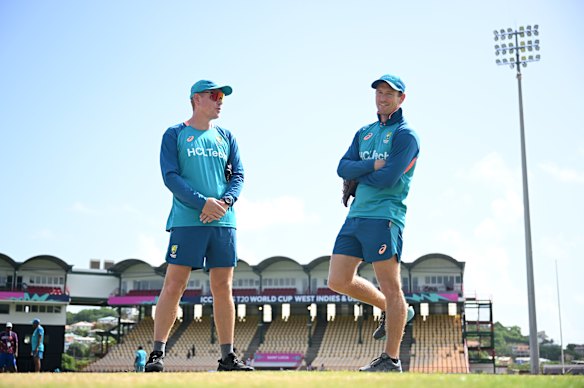
Australian coach Andrew McDonald and selection chair George Bailey have built a stable team environment.Credit: ICC via Getty Images
“George Bailey’s going to have to make some tough calls and I think in the past, he hasn’t really had the appetite for that at times, so he’s going to have to step up to the plate with the other selectors because it is a time of transition,” Waugh said.
As a former teammate of many in the dressing room, Bailey has a closer relationship to the players he presides over than his predecessors, but he has long held the belief that is a help rather than a hindrance to selection.
This panel may be more conservative than previous administrations, but it has been successful and, when required, not afraid to go left field. Konstas, Boxing Day anyone?
Travis Head’s axing in India in 2023 proved a mistake, but it was bold and came after previous failures against spin on the subcontinent. Leading into the World Cup, selectors dropped Labuschagne then reinstated him at the 11th hour. His knock in the final was pivotal. In Australia’s most recent Test, the selectors took the bombshell option of leaving Nathan Lyon out of the team so they could add Scott Boland (six wickets) to their attack for the pink-ball encounter against the West Indies in Kingston.
When an underdone Australia lost first-up to India in Perth last year, it prompted unfounded claims of dressing-room disharmony and borderline hysteria.
Waugh’s swipe at national selectors before the Test squad had even been announced is a sign of the frenzy to come if Australia’s Ashes defence goes pear-shaped.
