
The Modi Juggernaut Was Unstoppable in 2025
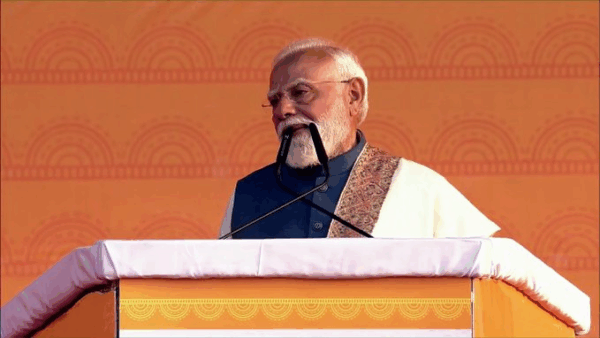
Prime Minister Narendra Modi’s Bharatiya Janata Party (BJP) showed no signs of losing electoral popularity in 2025, the eleventh year of BJP rule in India.
In 2025, the BJP not only wrested the Delhi state assembly — the all-important national capital region — from the opposition Aam Aadmi Party (AAP), but also retained the eastern Indian state of Bihar with the best electoral performance the BJP-led National Democratic Alliance (NDA) government ever recorded.
The Delhi win was significant because the party returned to power in the capital region after 27 years and subdued one of its key rivals in northern India.
Besides, the BJP also clinched the vice presidential election by bagging more votes than their formal numerical strength, indicating their ability to engineer splits in the opposition camp in crucial elections.
The scenario is quite in contrast to what it was a year and a half ago, when the BJP faced a mini setback in the 2024 parliamentary elections. It failed to secure a clear majority on its own and had to depend on regional allies like Bihar’s Janata Dal (United), or the JD(U), and Andhra Pradesh’s Telugu Desam Party (TDP) to form the government.
However, it regained strength by the end of 2024 after comprehensively winning the Haryana and Maharashtra state elections.
Since then, their electoral victory run has remained unstoppable, giving the party strong momentum ahead of the crucial state assembly elections due next year in West Bengal, Assam, Kerala, and Tamil Nadu. The BJP is in power in Assam, and has never come to power in the three other states.
“BJP is now at its highest-ever strength in State Assemblies and the momentum is only growing,” the party announced in a social media post on November 17, soon after the Bihar election results came out.
The party pointed out that it had only 1,035 members in different state assemblies in 2014, the year Modi came to power, and the tally had reached 1,654 after the Bihar election victory. The party expressed confidence that, at the current rate, it will comfortably add another 150 seats to the tally through the elections scheduled in the next two years.
India has 28 states and three Union Territories with legislative assemblies, with a cumulative tally of 4,123 seats.
There has not been any voice from the opposition camp challenging the BJP’s optimism, as the opposition, including its central force, the Congress, appears to be in disarray.
At a time when the BJP is making major organizational changes without any audible voice of rebellion within the party, the Congress is finding it difficult to handle its internal conflict in Karnataka, the southern state that is currently the largest state governed by the Congress. Even in the Bihar elections, the NDA’s seat-sharing arrangements between allies were smoother than the opposition’s conflict-ridden process.
India in 2025 witnessed several high-profile incidents. The Pahalgam terror attack in India’s Kashmir led to a brief India-Pakistan armed conflict, with India launching Operation Sindoor targeting places that it identified as terror bases in Pakistan.
However, the hypernationalist hyperbole that dominated the aftermath of the Pulwama terror attack and India’s operation in Pakistan’s Balakot in 2019 were largely absent this time. This was mainly because U.S. President Donald Trump, whose friendship with Modi the BJP has frequently boasted about, embarrassed him at home by repeatedly claiming credit for having forced India and Pakistan to stop fighting.
Globally, India failed to isolate Pakistan with its charge that Pakistan was sheltering anti-India terrorists. Trump’s tariff war also put pressure on the Modi government.
Adding to the government’s woes, the Union Territory of Ladakh, which borders China, and had largely supported New Delhi’s 2019 decision to revoke Jammu and Kashmir’s autonomy and its restructuring, turned restive against the current, federally-controlled administration.
An anti-migrant drive that was launched in India in February, targeting undocumented Bangladeshi and Myanmar immigrants — incidentally, after Trump started deporting Indians from the U.S. — intensified following the Pahalgam terror attack in April. Eventually, hundreds of Bengali-speaking, native Indian Muslims landed in jails and detention centers as suspected Bangladeshi immigrants.
If this drive triggered religious polarizations, especially in India’s east and northeast, the Election Commission of India (ECI)’s decision to carry out a Special Intensive Revision (SIR) of the electoral rolls through verifying citizenship quickly snowballed into a major controversy for its similarities with the government’s anti-migrant drive.
Opposition parties alleged that the ECI was acting hand-in-glove with the ruling party to manipulate electoral rolls and results by mass disenfranchisement, especially of Dalits (Hindu lower castes) and Muslims (the largest religious minority).
Amid these developments, Rahul Gandhi of the Congress party, India’s main opposition leader, held multiple press conferences, exposing alarming discrepancies in electoral rolls, which he claimed were part of a design to steal electoral mandates through manipulations. He alleged that the mandates in Maharashtra and Haryana were stolen.
The opposition parties pegged the Bihar election as one between the opposition and the BJP-ECI “nexus” — an election the opposition would have to win to protect democracy and people’s electoral rights.
However, none of these issues seemed to have mattered when the voters exercised their franchise in the assembly elections in Bihar, India’s fourth-largest state in terms of parliamentary seats. The opposition’s tall promises on a social justice agenda failed to impress voters, who preferred the NDA’s combination of the JD(U)’s social justice policies and the BJP’s Hindu majoritarianism, especially the latter’s high-decibel charge of demographic change due to “infiltration” of Muslims from Bangladesh.
The Bihar election results left opposition parties dumbfounded. While the Congress alleged “vote chori” (vote theft) was behind the Bihar outcome too, other opposition parties appear uninterested in turning it into the main political issue. Even while pointing out the ECI’s alleged bias — a charge that the poll panel rejected — opposition parties like the TMC, AAP and Shiv Sena (Uddhav Balasaheb Thackeray) also started questioning the Congress party’s ability to effectively lead the opposition.
“Congress should do better to strengthen its machinery to prevent such malpractices or manipulations at the time of elections rather than holding post-poll exposés,” a TMC parliamentarian told The Diplomat, requesting anonymity. “Crying foul doesn’t really work.”
Strengthened by its electoral victories in 2025, the BJP will expectedly go all guns blazing for the last three unvanquished “citadels of secularism” — eastern India’s West Bengal and south India’s Tamil Nadu and Kerala.
They managed to penetrate West Bengal from 2018 onwards and became the main opposition party in 2021. Now, they are making a strong pitch for ending TMC chief Mamata Banerjee’s 15-year rule. The BJP has always remained a marginal force in Tamil Nadu and Kerala. However, recent trends indicate the party is gaining popularity in Kerala, while making serious efforts to emerge as a political force in Tamil Nadu.
And the battle for dominating 2026 has already begun. On December 30, the penultimate day of 2025, Union Home Minister Amit Shah, while visiting Bengal, said that Banerjee’s government was creating national security problems for India and must be replaced. Modi is expected to unveil the BJP’s Kerala electoral roadmap in January. The air is heating up in Tamil Nadu as well, where, buoyed by the Bihar results, the BJP is taking on the state’s ruling Dravida Munnetra Kazhagam (DMK) government’s “fake secularism.”
