
Uda Walawe Is Dying!
 Unheeded warnings
As far back as 2007 the authorities were warned of an impending disaster if the invasive species were not removed before they spread further, of the importance of reducing the feral buffalo and, most importantly, the significance of having controlled fires for the regeneration of the grasslands. Prior to this, a decision had been made to allow the Forest Department to remove the teak which had been knocked over by elephants when feeding off the bark; an adaptation to living in this unique habitat. Miraculously, most of the teak fell when the clearing was taking place and there are no longer teak forests in Uda Walawe, just invasive scrubland.
At that time, offers were even made to assist the authorities, with no cost to them, to aid with the manual removal of these invasive species as the mechanical methods only encourage their further dispersal. This was refused and the results are now there to be seen.
Instead, especially after someone with power expresses an opinion, they resort to mechanical removal using earth moving equipment, eliminating both the good and the bad, with the roots of the aliens still active in the ground to sprout back up again, sometimes within weeks of clearing. It is a well-known scientific fact that areas that are mechanically cleared of IAS and exposed to direct sunlight creates ideal conditions for them to dominate the aftergrowth as native species find it difficult to compete. Huge amounts of money are spent on this, funds that could be used for essential conservation rather than pandering to the needs of the ignorant, which has destroyed this park.
Of course a committee of researchers and scientists was formed to advise on what to do. However, while it takes an electric saw or a bulldozer just a matter of hours to destroy a natural habitat, nature does not recover as quickly. It may take decades or even centuries to repair even with informed human intervention. Those in authority and their subordinates cannot wait that long. Of course, nothing came of the learned proposals of science. As with many other such they lie on an official shelf gathering dust while the natural world disintegrates in those places the officials are supposed to guard.
Unheeded warnings
As far back as 2007 the authorities were warned of an impending disaster if the invasive species were not removed before they spread further, of the importance of reducing the feral buffalo and, most importantly, the significance of having controlled fires for the regeneration of the grasslands. Prior to this, a decision had been made to allow the Forest Department to remove the teak which had been knocked over by elephants when feeding off the bark; an adaptation to living in this unique habitat. Miraculously, most of the teak fell when the clearing was taking place and there are no longer teak forests in Uda Walawe, just invasive scrubland.
At that time, offers were even made to assist the authorities, with no cost to them, to aid with the manual removal of these invasive species as the mechanical methods only encourage their further dispersal. This was refused and the results are now there to be seen.
Instead, especially after someone with power expresses an opinion, they resort to mechanical removal using earth moving equipment, eliminating both the good and the bad, with the roots of the aliens still active in the ground to sprout back up again, sometimes within weeks of clearing. It is a well-known scientific fact that areas that are mechanically cleared of IAS and exposed to direct sunlight creates ideal conditions for them to dominate the aftergrowth as native species find it difficult to compete. Huge amounts of money are spent on this, funds that could be used for essential conservation rather than pandering to the needs of the ignorant, which has destroyed this park.
Of course a committee of researchers and scientists was formed to advise on what to do. However, while it takes an electric saw or a bulldozer just a matter of hours to destroy a natural habitat, nature does not recover as quickly. It may take decades or even centuries to repair even with informed human intervention. Those in authority and their subordinates cannot wait that long. Of course, nothing came of the learned proposals of science. As with many other such they lie on an official shelf gathering dust while the natural world disintegrates in those places the officials are supposed to guard.
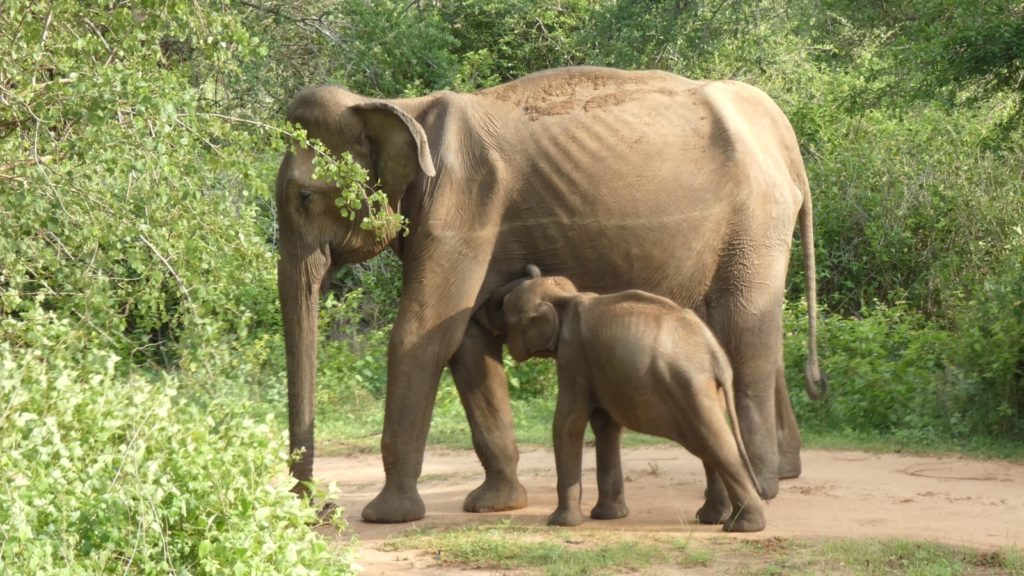 As it could be again: There are no quick fixes
If a comprehensive programme of restoration is commenced today, it would take a minimum of 10 years to restore the park, even partially, to what it was before but such a programme is a vital necessity if not only the park, its wildlife and elephants are to be saved but also the local economy of the surrounding communities who are deeply dependent on its healthy existence. In the nearby Lunugamvehera National Park, the Federation of Environmental Organizations (FEO) have been undertaking an IAS removal programme for the past couple of years. FEO engaged in the manual removal of only the invasive species, roots and all, and immediately burnt them. In addition, they would follow this up a few months later and any seedlings that had germinated were treated in the same way. With the rains came the miracle of resurrection as grasses and native species re-colonized these areas attracting not just elephants back to them but deer and other grazers and, in their wake, leopards.
FEO’s efforts were self-funded, by corporate sponsors and concerned citizens. Contrast this with the Department of Wildlife’s (DWC) efforts in the same park, with the aid of World Bank funding. Despite everything they persisted with the mechanical removal of these species and, in a short while, even more of them grew back. It remains a wasteland of alien scrub while indebting the nation to pay back the funds spent on this futile exercise.
The stark reality
The complete lack of positive intervention by the concerned authorities seem to indicate that they have given up on their role as guardians of the wildlife of Sri Lanka and are just letting them be killed or starve to death. Elephant deaths have soared to record levels; an embarrassment to a country that hosts a unique sub-species of the endangered Asian Elephant and leads most of its tourism advertising with pictures of them. Preservation of position and protection of pensions seems to dominate reasoning. There is but one way to do this; pander to the whims and fancies of your political masters.
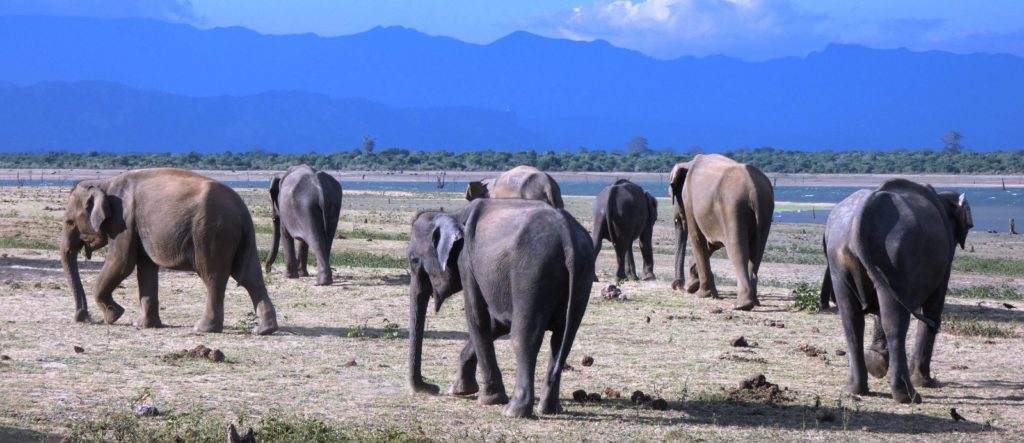
Rather than the plump, contented herds of elephants that once filled this park with life and purpose, the following is the most likely sight for a discerning visitor to behold:
“A squawking, squabbling murder of crows, accompanied by a less vocal but slavering pack of village curs were all that she had for her funeral wake. However, theirs was not a grieving gathering of those whom she loved, and who loved her in return, but a clamouring throng who had already begun to celebrate her death in an orgy of feasting. Emaciated and starving, wrinkled skin draped over skeletal frame, she still had sufficient meat on her to feed the gluttony of these scavengers, at least for a day or two. For she was just a few months old!”
If this is not to be re-written for the last elephant of Uda Walawe too, something must be done, and now, or a similar epitaph will have to be penned for the local economy and communities.
As it could be again: There are no quick fixes
If a comprehensive programme of restoration is commenced today, it would take a minimum of 10 years to restore the park, even partially, to what it was before but such a programme is a vital necessity if not only the park, its wildlife and elephants are to be saved but also the local economy of the surrounding communities who are deeply dependent on its healthy existence. In the nearby Lunugamvehera National Park, the Federation of Environmental Organizations (FEO) have been undertaking an IAS removal programme for the past couple of years. FEO engaged in the manual removal of only the invasive species, roots and all, and immediately burnt them. In addition, they would follow this up a few months later and any seedlings that had germinated were treated in the same way. With the rains came the miracle of resurrection as grasses and native species re-colonized these areas attracting not just elephants back to them but deer and other grazers and, in their wake, leopards.
FEO’s efforts were self-funded, by corporate sponsors and concerned citizens. Contrast this with the Department of Wildlife’s (DWC) efforts in the same park, with the aid of World Bank funding. Despite everything they persisted with the mechanical removal of these species and, in a short while, even more of them grew back. It remains a wasteland of alien scrub while indebting the nation to pay back the funds spent on this futile exercise.
The stark reality
The complete lack of positive intervention by the concerned authorities seem to indicate that they have given up on their role as guardians of the wildlife of Sri Lanka and are just letting them be killed or starve to death. Elephant deaths have soared to record levels; an embarrassment to a country that hosts a unique sub-species of the endangered Asian Elephant and leads most of its tourism advertising with pictures of them. Preservation of position and protection of pensions seems to dominate reasoning. There is but one way to do this; pander to the whims and fancies of your political masters.
Rather than the plump, contented herds of elephants that once filled this park with life and purpose, the following is the most likely sight for a discerning visitor to behold:
“A squawking, squabbling murder of crows, accompanied by a less vocal but slavering pack of village curs were all that she had for her funeral wake. However, theirs was not a grieving gathering of those whom she loved, and who loved her in return, but a clamouring throng who had already begun to celebrate her death in an orgy of feasting. Emaciated and starving, wrinkled skin draped over skeletal frame, she still had sufficient meat on her to feed the gluttony of these scavengers, at least for a day or two. For she was just a few months old!”
If this is not to be re-written for the last elephant of Uda Walawe too, something must be done, and now, or a similar epitaph will have to be penned for the local economy and communities.
What’s your Reaction?
