
Where is China’s foreign minister Qin Gang?
When was Qin last seen?
Qin has not been seen in public since June 25, when he held talks with counterparts from Russia, Vietnam and Sri Lanka. Qin’s final appearance in state media was a meeting with Russian Deputy Foreign Minister Andrey Rudenko, who visited Beijing less than 48 hours after the Wagner mercenary group’s abortive rebellion against Moscow. Since then, Qin, who was named foreign minister in December, has been conspicuously absent from high-profile diplomatic engagements in Beijing. Qin had been scheduled to meet European Union foreign policy chief Josep Borrell on July 4, but EU officials announced that China cancelled the talks without explanation with only a few days’ warning. Qin then failed to attend closely-watched meetings with United States Treasury Secretary Janet Yellen and US climate envoy John Kerry. During a meeting of foreign ministers at an Association of Southeast Asian Nations (ASEAN) summit in Jakarta last week, China was represented by top diplomat Wang Yi, who previously served in Qin’s role and outranks the foreign minister in the CCP pecking order.
What is Qin’s background?
Qin, a career diplomat, has been long regarded as a close confidant of Chinese President Xi Jinping as well as a rising star within the CCP, who exemplified Beijing’s turn towards aggressive “wolf warrior” diplomacy in recent years. The 57-year-old Tianjin native has served in the Chinese government since the late 1980s, mostly in roles related to foreign affairs. Before his appointment as China’s foreign minister, Qin served in a variety of roles related to diplomacy, including vice minister for foreign affairs, chief spokesman for foreign affairs and several postings at the Chinese embassy in the United Kingdom. Qin also served as head of the protocol department from 2014-2017, putting him in charge of organising Xi’s overseas travel and in close proximity to the Chinese leader. Most recently, Qin served an 11-month stint as ambassador to the US, where his appointment was widely interpreted as a sign of Xi doubling down on “wolf warrior” diplomacy. Qin has rejected the characterisation of Xi’s China using “wolf warrior” diplomacy while arguing that Chinese diplomats have no choice but to defend their country if faced with “jackals or wolves”.How unusual is Qin’s disappearance?
It is not usual for high-profile figures in China to go missing for prolonged periods without explanation, although, in recent years, the trend has more commonly involved prominent business people and celebrities than politicians. Alibaba founder Jack Ma, actress Fan Bingbing and Chinese tennis player Peng Shuai are among a host of prominent figures who have dropped out of public view for a time in recent years. In some cases, prominent figures have reemerged months or even years later to be accused of crimes. China’s justice system has a conviction rate close to 100 percent, and officials routinely deny suspects access to legal representation or contact with the outside world for lengthy periods. China did not confirm the whereabouts of Xiao Jianhua, a Chinese-Canadian billionaire who managed the finances of the families of senior CCP officials, for more than three years after mainland Chinese agents took him from a luxury Hong Kong hotel in 2017. In 2022, a Shanghai court sentenced Xiao to 13 years in prison for bribery and other corruption-related crimes. Meng Hongwei, the then-head of Interpol, went missing for several weeks in 2018 after being arrested in China. Meng was sentenced in 2020 by a Chinese court to 13 and a half years in prison for bribery.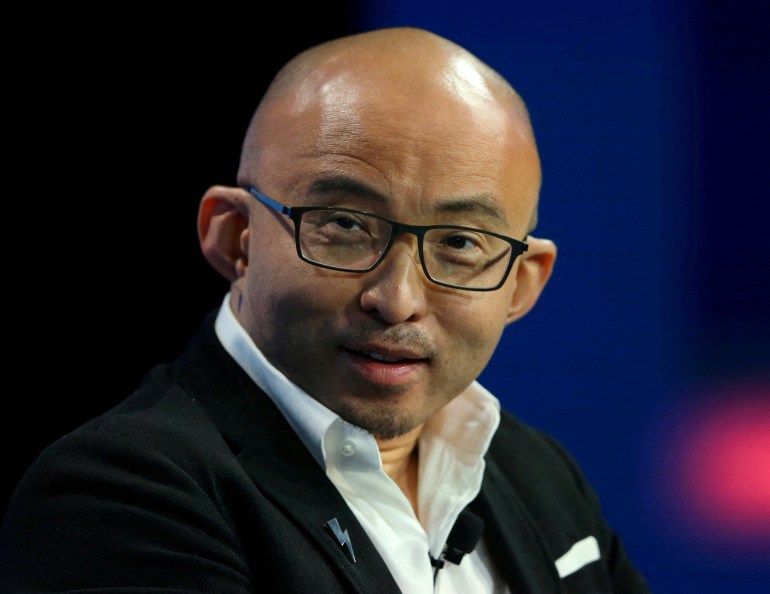
What’s your Reaction?
