Where Is Imran Khan? Pakistan’s Democracy Crisis Deepens as Ex-PM ‘Disappears’ in Custody
International
oi-Pankaj Mishra

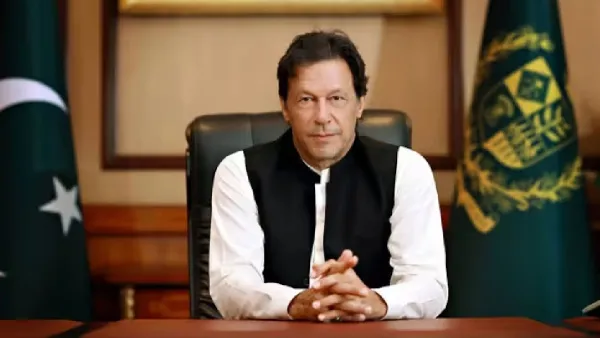
Once the charismatic face of Pakistan's "new dawn," Imran Khan now stands as a stark symbol of his country's descent into political repression and institutional decay. Arrested in August 2023, he remains jailed at Adiala Jail in Rawalpindi, serving a 14-year sentence on multiple corruption-related convictions - the most prominent being the Al-Qadir Trust case.
But for weeks, not a single verifiable photograph, video, or live communication has emerged. His legal team, family, even close party aides have been consistently denied access - in spite of a court order granting regular visits. His son, Kasim Khan, has publicly demanded "proof of life," warning that the prolonged silence and isolation amount to "psychological torture."
Imran Khan, arrested in August 2023 and serving a 14-year sentence in Adiala Jail, faces isolation amidst concerns about his well-being, with his legal team and family denied access despite court orders, sparking international calls for transparency regarding his condition because his imprisonment is seen as a sign of eroding democratic norms in Pakistan.
In India, voices like that of Shashi Tharoor- though careful to avoid direct interference - have called out the silence. Tharoor said the opacity surrounding Imran's condition is deeply troubling. "You can't make someone disappear," he noted, arguing that even as an internal matter for Pakistan, the humanitarian dimension cannot be ignored.
The fear is not just about one man - it's about the broader erosion of democratic norms in Pakistan. The lack of transparency, combined with reports of brutal treatment toward even his close kin - including alleged police assaults on his sisters when they sought to meet him - evoke memories of enforced disappearances and custodial deaths that have marred Pakistan's history.
Why is this happening?
For the establishment in Islamabad - both civilian and military - Imran remains a potent political threat. Decades of baggage notwithstanding, his broad appeal among youth, urban middle classes, and rural poor continues to challenge traditional dynastic politics and the military's influence. By isolating him, cutting off contact, and supressing information, the regime aims to neutralise not just a man, but a movement. Many analysts see this as a chilling signal: dissent will not just be penalised - it may be erased.
So, where does it go from here? If Pakistan succumbs to this politics of erasure, it risks further alienating significant swathes of its population, especially the youth that once rallied behind Imran's promise of change. Moreover, human rights groups - both domestic and international - are already mobilising behind his family's pleas. A release of verifiable evidence of life, or third-party oversight of his condition, could avert a humanitarian crisis.
For the world watching, the stakes are clear: Pakistan's experiment with democracy is at a crossroads - and the fate of Imran Khan may well be its early warning alarm.
-

Capricorn Horoscope For Today, November 30, Sunday - Let Your Ambition Guide You!
-
Ahead Of BMC Elections: Eknath Shinde Gives A Sharp Warning to Police Amid Rising Mahayuti Tensions
-
Kerala Lottery Samrudhi Winners November 30 - Full Results And Prize Details
-
Tamil Nadu School Holiday In December 2025: Schools, Colleges To Be Shut For 15 Days
-
Libra Horoscope For Today, November 30, Sunday - Balance is Your Mantra!
-
Aquarius Horoscope For Today, November 30, Sunday - Embrace Your Creative Spark!
-
Principal’s “End Your Career” Threat Drives 13-Year-Old Skater To Third-Floor Jump
-
Cyclone Ditwah Batters Tamil Nadu & Puducherry With Intense Rain, High Tides — Check Details
-
Pisces Horoscope For Today, November 30, Sunday - Find Joy in Creative Pursuits!
-
Delhi MCD Bypolls 2025: Voting Underway In 12 Wards, Results On December 3 — Check Details
-
Delhi Schools Roll Out Nursery Admission Criteria for 2026-27: What Parents Need to Know
-
Ind vs SA 1st ODI At Ranchi: Fan Invades Pitch to Touch Virat Kohli’s Feet After His 52nd ODI Ton