
Beyond Deference: India’s Bangladesh Reckoning
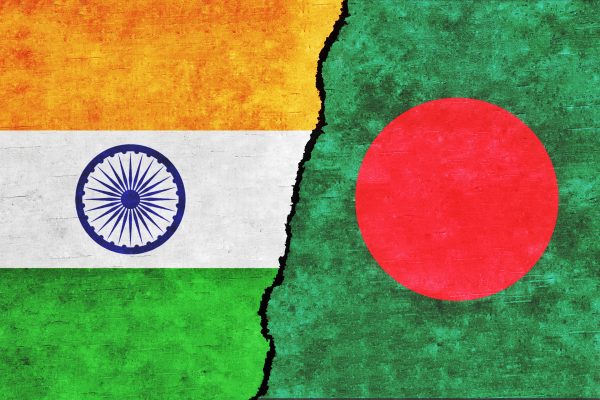
On October 6, Indian High Commissioner to Bangladesh Dinesh Trivedi called on Indian Prime Minister Narendra Modi in New Delhi. It isn’t unusual for heads of Indian missions assigned to critical or sensitive bilateral stations to provide direct update or receive specific strategic directives during visits or consultations in New Delhi. Modi’s office maintains an active and hands-on approach to foreign policy implementation, making direct communication and briefings with key diplomatic personnel a standard part of administrative routine. However, Trivedi’s case and the circumstances of the meeting are rather unique.
Trivedi was appointed as India’s high commissioner to Bangladesh in April 2026, a rare political appointment to a key neighboring diplomatic mission. A businessman and a politician of the ruling BJP from the eastern state of West Bengal, he has direct access to Modi and does not need to route his meetings through the Ministry of External Affairs (MEA). His appointment to Dhaka in April 2026, replacing a career diplomat, came at a time when bilateral relations between India and Bangladesh had hit a rough patch.
Bangladeshi demands for the deportation of former Prime Minister Sheikh Hasina, who has found refuge in India since August 2024, has been a particular sore point. India has ignored repeated pleas by the new BNP government and its predecessor interim government to extradite Hasina, despite the existence of an extradition treaty between the two countries since 2013. The treaty’s terms (Article 6) allows either country to refuse extradition if the offense is of a political nature.
Three days before his meeting with Modi, Trivedi’s response to a direct question at the Bay of Bengal Conversation (BoBC) 2026 in Dhaka had hit the headlines. The BoBC is an annual international conference with participants from over a hundred countries comprising world leaders, policymakers, diplomats, researchers, academics, experts, and civil society representatives organized by the Centre for Governance Studies (CGS). I participated in the conference, held this year on October 3-4, as a panelist and a guest of the CGS.
A participating Bangladeshi student asked the Indian high commissioner: “When will India send back Hasina?” Trivedi appeared to diplomatically avert the direct query and instead passed the buck to the Bangladeshi military, who had sent her to India on a military aircraft before she even resigned from her post. Moreover, Hasina was meant to be transiting via Delhi to a third country, which never actually materialized. This put New Delhi in a quandary.
“At that point in time, she [Hasina] was still the prime minister of Bangladesh. We had hardly any choice on that. It was our duty as a neighbor to accept the reality of life,” Trivedi said. He added that New Delhi cannot set a deadline for her return, as her extradition request is under review as part of the legal process. “Nobody can give you a time frame [over Hasina’s return],” he concluded.
While no press statements were issued, the meeting between Modi and Trivedi may reflect an effort on New Delhi’s part to gauge Dhaka’s mood from its own representative. Dhaka has ignored the MEA’s invitations to new Prime Minister Tarique Rahman to visit Delhi. In fact, Bangladesh’s State Minister for Foreign Affairs Humaiun Kobir, who attended the same conference, was categorical in saying, in a subsequent media interview on the sidelines of the BoBC, that the “principal challenge” in planning Rahman’s visit to India are the activities of Hasina, who he termed a “terrorist,” and her team, who are there. Trivedi could be suggesting a course correction in New Delhi’s policies toward Dhaka.
Since November 2025, India’s MEA has maintained that the formal request for Hasina’s extradition is being “examined as part of ongoing judicial and internal legal processes.” Yet, these “processes” remain inconclusive even after 11 months. While New Delhi is unwilling to sacrifice its former ally, it hasn’t closed the door to mending ties with its eastern neighbor, given their interdependencies and strategic compulsions.
New Delhi still envisages that a visit by the Bangladeshi prime minister to India could create opportunities for an exchange of views and break fresh ground in normalizing relations, but it has yet to embark upon a path that will create the enabling environment necessary for such movement. To the contrary, India’s actions have not inspired much confidence in Bangladesh.
First, from time to time India has allowed Sheikh Hasina to issue press statements denouncing the BNP government, despite Dhaka’s objections. Second, India continues to forcibly deport “illegal Bangladeshi migrants.” A large part of the process involves physically pushing these people under the cover of darkness into Bangladeshi territory while ignoring Dhaka’s objections to such a practice. Third, while Dhaka’s imports from India have risen, restrictive trade measures implemented by both countries have stifled Bangladeshi exports to India. Fourth, the number of visas issued by India’s missions in Bangladesh, mostly for medical patients to access India’s affordable private healthcare facilities, has fallen sharply. Fifth, even two months after Dhaka informed Delhi of its choice for its next ambassador to India, India hasn’t approved the posting. This can be seen as a pressure tactic at its very best.
The irony is that, to New Delhi’s discomfiture, Dhaka is carving out a new framework to deal with India. India is used to conformity and deference from its small neighbors while conducting its neighborhood policy. While that worked for New Delhi for almost 15 years, as long as Hasina was in power, the Rahman government has emphasized its desire to pursue its India policy based on two principal pillars: strategic autonomy and a principle of equality, as it sees itself as an emerging middle power and a major hub in the Bay of Bengal region.
In his opening address at the BoBC 2026, Prime Minister Tarique Rahman emphasized the importance of dialogue, partnership, and mutual respect in strengthening regional and global cooperation, while highlighting various national priorities for Bangladesh — including the protection of national interests, economic stability, institutional reforms, investment, and social safety nets. This translates to Dhaka revisiting its relations with a number of countries, including China and Pakistan, heightening New Delhi’s concerns of being surrounded by a hostile neighborhood – ironically, the same misguided calculation that led to poor relations with Sri Lanka during the Indira Gandhi period.
This new outlook on the part of Dhaka has led it to voice its preference to possibly join the Mecca Joint Defense Agreement, which has caused much consternation in New Delhi’s policy circles. More importantly, this further implies that Bangladesh’s negotiations with India to share the water of rivers such as the Ganga and Teesta will start afresh rather than being rolled over as extensions of the lapsing agreements, which Dhaka now considers “flawed.”
Predicting the direction Bangladesh-India ties will take in the coming months is thus a challenge, but the Trivedi episode offers a useful marker of where things stand now. New Delhi appears caught between its reluctance to part with a longtime ally and its recognition that the costs of inaction are mounting. Dhaka, for its part, has made clear that it will no longer treat India’s comfort as the central principle of its own foreign policy. Unless India moves beyond symbolic gestures and ambiguous legal processes to address the substantive issues on the table, the relationship risks settling into a prolonged standoff rather than the hoped-for course correction hinted at by Trivedi’s remarks.
