
India moves to triple rare-earth magnet program in bid to challenge China’s grip
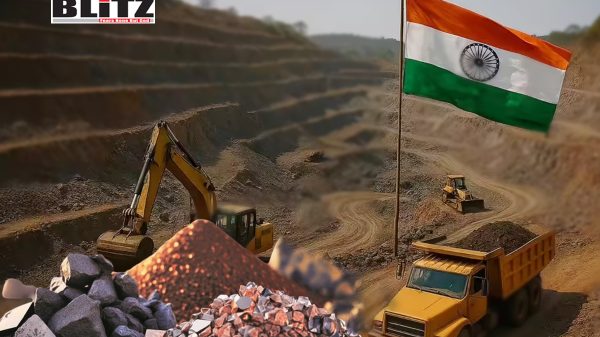
India moves to triple rare-earth magnet program in bid to challenge China’s grip
India is preparing a major expansion of its rare-earth magnet manufacturing program, signaling one of its most ambitious industrial strategies in decades to secure control over materials vital to the world’s clean-energy transition, defense systems, and advanced electronics. According to a Bloomberg report citing senior government officials, New Delhi is set to nearly triple the size of its incentive scheme for domestic production of rare-earth magnets – a move that could reshape global supply chains long dominated by China.
If approved, the expanded initiative would increase funding from roughly $290 million to about $788 million, underscoring India’s determination to establish itself as a serious player in the global market for rare-earth elements (REEs). The proposal remains pending final approval, but it reflects growing urgency among Indian policymakers to reduce dependence on Chinese imports and secure strategic resources for its expanding high-tech and defense sectors.
Rare-earth elements – a group of 17 metallic elements including neodymium, dysprosium, and terbium – are essential for manufacturing powerful permanent magnets used in electric vehicles (EVs), wind turbines, smartphones, and military systems. For decades, China has maintained overwhelming dominance, controlling more than 90% of the world’s refining capacity and approximately 98% of global magnet production, according to the International Energy Agency (IEA).
This concentration of power has long raised alarms in Washington, Brussels, and now New Delhi. In recent years, Beijing has demonstrated a readiness to weaponize its rare-earth dominance for geopolitical leverage. China introduced export restrictions on certain REEs earlier this year, citing national security concerns and the need to safeguard its strategic resources. The move disrupted global supply chains and intensified fears among industrialized nations that their technological and defense industries could be held hostage to Beijing’s policies.
China further tightened export licensing requirements in October, particularly targeting materials linked to US defense contractors and semiconductor manufacturers. The restrictions prompted a flurry of diplomatic negotiations, culminating in a temporary thaw after a high-profile meeting between Chinese President Xi Jinping and US President Donald Trump in South Korea. During that summit, Beijing agreed to suspend its latest export controls for one year in exchange for US concessions on tariffs and technology restrictions – a fragile truce that underscored how central rare-earths have become in the global economic rivalry.
India’s decision to boost incentives for domestic rare-earth magnet manufacturing reflects both opportunity and necessity. The South Asian nation possesses some of the world’s largest untapped reserves of monazite and bastnäsite – minerals rich in rare-earth elements – particularly along its coastal sands in Tamil Nadu, Kerala, and Odisha. Yet, India’s capacity to refine and process these minerals remains extremely limited. Most of its rare-earth output is still exported to China for processing and value addition before being re-imported in finished forms such as magnets and components.
New Delhi’s expanded program seeks to reverse this dependency by encouraging both domestic and foreign companies to invest in value-chain development, from mining and separation to magnet fabrication and recycling. Officials familiar with the proposal say that the incentives will target companies investing in advanced refining technologies, environmentally sustainable extraction methods, and high-efficiency magnet production facilities.
“This is about national security as much as it is about industrial competitiveness,” one Indian government source told Bloomberg. “We cannot allow critical sectors like defense, renewable energy, and electric mobility to depend on one external source for key materials.”
Recent reports suggest that several Indian and multinational firms are already positioning themselves to benefit from the expanded incentive plan. Continental India, Hitachi, and Jay Ushin are among at least three companies that have received licenses to import Chinese rare-earth magnets – a temporary measure to meet immediate industrial demand while domestic capacity ramps up. The import licenses, however, come with strict conditions: the magnets cannot be exported to the United States or used for defense-related applications.
These restrictions highlight India’s careful balancing act – maintaining pragmatic trade ties with China while simultaneously working to reduce strategic dependence. Industry insiders note that the government’s broader vision involves fostering joint ventures with non-Chinese partners, including Japanese, South Korean, and European firms, to transfer technology and establish a fully integrated domestic supply chain within the next decade.
The rare-earth initiative also fits within Prime Minister Narendra Modi’s broader “Make in India” and “Atmanirbhar Bharat” (self-reliant India) frameworks, which aim to position the country as a global manufacturing hub. Rare-earth magnets are indispensable in electric vehicle motors, renewable energy turbines, drones, radar systems, and precision-guided weapons – sectors that India views as vital for its future economy and defense modernization.
Moreover, as global demand for green technologies accelerates, control over rare-earth materials could determine which nations dominate the 21st-century energy economy. Analysts estimate that demand for neodymium-iron-boron (NdFeB) magnets – a key component in EV motors – will triple by 2035, driven by surging EV adoption and renewable energy expansion. By building domestic capacity, India could not only safeguard its own supply but also emerge as an alternative supplier for allied nations seeking to diversify away from China.
Despite the optimism, significant challenges remain. Rare-earth mining and refining are notoriously polluting, producing large volumes of radioactive waste if not managed carefully. India will need to invest heavily in green extraction technologies and environmental safeguards to prevent a repeat of the ecological damage seen in parts of China. Experts also warn that developing advanced magnet production capabilities requires sustained R&D investment and a skilled technical workforce, both of which India is still cultivating.
Nonetheless, the government’s decision to dramatically expand its incentive scheme sends a strong signal of commitment. If executed effectively, it could mark a turning point in the global rare-earth supply landscape.
India’s drive to triple its rare-earth magnet program is more than an economic policy – it is a strategic declaration of intent. As major powers increasingly weaponize trade and technology, securing access to critical minerals has become as vital as securing oil once was. By moving to assert control over its rare-earth resources and production, India aims not just to diversify global supply chains but to strengthen its sovereignty in an era of mounting geopolitical competition.
If successful, the initiative could help transform India from a peripheral participant in the rare-earth trade into a central actor shaping the next generation of clean energy and defense technologies – a shift that would reverberate far beyond its borders.
Sonjib Chandra Das is a Staff Correspondent of Blitz.
