
The international audience doesn’t understand the scale, brutality and complexity of Sri Lanka’s armed conflict – Gen. Shavendra Silva
I continue to engage actively across the Indo-Pacific, Indian Ocean region, Asia, Africa and multilateral platforms where practical discussions on resilience and security governance are taking place. My focus and speeches are increasingly directed towards how states build resilience against both traditional and emerging threats

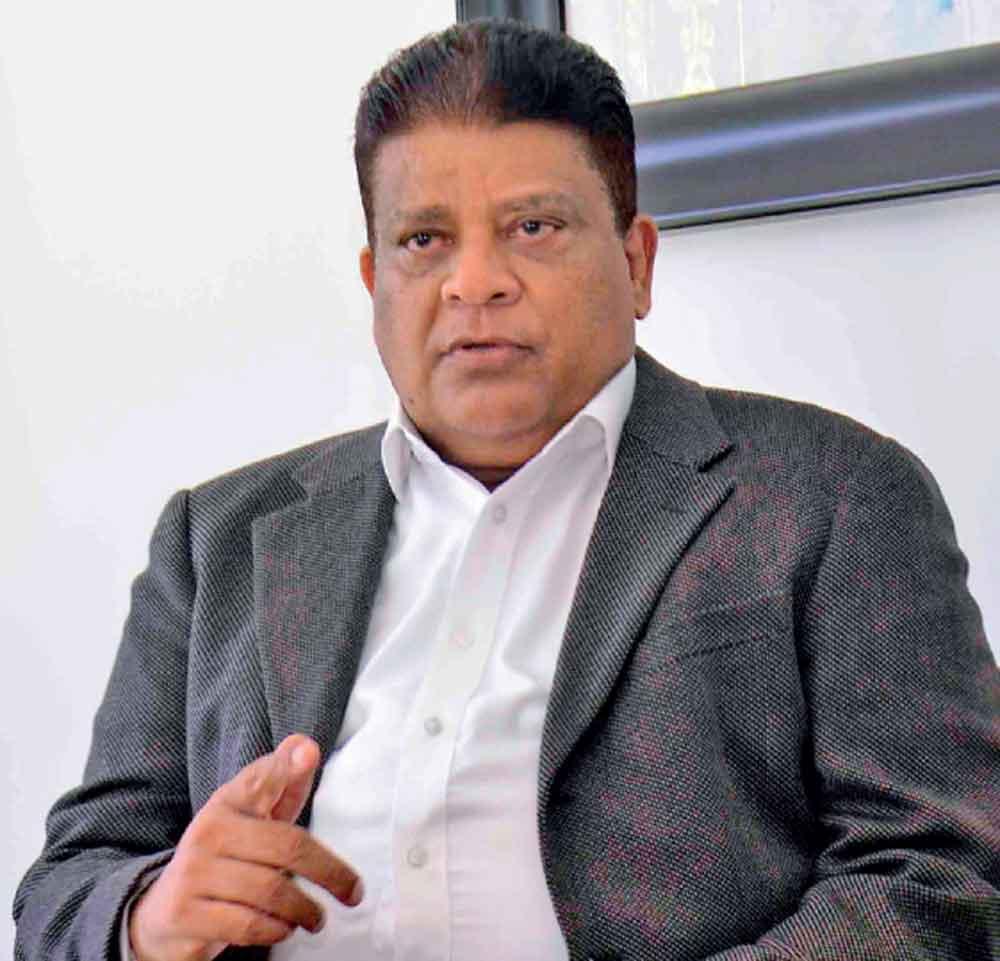
Former Commander of the Army and Chief of Defence Staff General (Retd.) Shavendra Silva is a battle-hardened military leader with an illustrious career spanning nearly 41 years. Having served under four Presidents and four Prime Ministers during his military career, he is also the only military officer to have been appointed as an Ambassador while in service. During the Vanni Humanitarian Operation, he commanded the victorious 58 Infantry Division, Commando and Air Mobile Brigades that fought relentlessly to eradicate terrorism from Sri Lankan. But according to General Silva, even though the war ended and Sri Lankans are enjoying the outcomes of achieving peace, people associated with the Liberation Tigers of Tamil Eelam (LTTE) are “still trying to achieve what they wanted to achieve.”
In an exclusive interview with the Daily Mirror, General Silva spoke about how the final humanitarian operation unfolded, false narratives created by LTTE sympathizers living overseas, pain endured by civilians affected by the conflict and challenges faced during COVID-19 pandemic recovery efforts.
Excerpts
QYou have had an illustrious career in the Army spanning 40 years. How does it feel like to retire from active service?
In January 2025 I shifted from regular service to regular reserve. Since then I have been invited by few countries to deliver speeches at academic sessions. The Global Security Dialogue is far broader than any single country. I continue to engage actively across the Indo-Pacific, Indian Ocean region, Asia, Africa and multilateral platforms where practical discussions on resilience and security governance are taking place. My focus and speeches are increasingly directed towards how states build resilience against both traditional and emerging threats. These include terrorism, economic instability, pandemics, cyber risks and social fragmentation. Nationally I have been invited to deliver various sessions on motivation. Having served for 41 years in the military, I believe I was lucky to face different types of situations during my service in the military. For almost three decades I was involved in the conflict. After I became Commander of the Army there was a pandemic no sooner I took over; then there was civil unrest in the country. Then there was a requirement for supporting economic stability, the agriculture sector and so on. With all these experiences I got over a period of four decades, today my focus is on helping nations understand how fragile systems can be stabilised through resilience, cooperation and responsible governance.
Q Could you explain how the final humanitarian operation unfolded ?
It’s important to understand the nature of the threat that the country and armed forces faced at that particular time. The LTTE was internationally regarded as one of the most ruthless terrorist organizations. They carried out over thousands of suicide attacks across the country. They were the pioneers of modern suicide terrorism. They assassinated many political leaders in Sri Lanka as well as overseas from Prime Minister Rajiv Gandhi to President Ranasinghe Premadasa and injured Mrs. Chandrika Bandaranaike Kumaratunga; who was injured following an attack. They also forcibly recruited child soldiers. They were doing ethnic cleansing and repeatedly attacked civilians. This is what the LTTE did prior to the commencement of the humanitarian operation in 2006.
Sri Lankan armed forces fought against terrorists who had armed forces fighting face to face with us. They had naval capabilities, came by air and bombed Colombo. They had enough financing systems, armed procurement systems, maritime smuggling operations in Sri Lanka and overseas. They targeted innocent civilians not only in southern part of Sri Lanka, but also in the north. They targeted buses, trains, aircraft, airports, naval ports, fuel facilities, religious places of worship, an economic centre such as Central Bank. By 2006 Sri Lankans lived in an environment of constant insecurity. So the government at that time, after having tried all means of negotiations, gave prior warning and commenced the Vanni Humanitarian Operation. This is where we finally managed to completely eradicate terrorism.
This operation wasn’t against civilians. The government’s responsibility and the task that we were assigned to do was to rescue civilians and to liberate the land from the clutches of the LTTE. We accomplished our task by rescuing civilians from LTTE-dominated areas, by liberating the land and achieving peace. Unfortunately the terrorist sympathizers are not happy.
QThere are numerous attempts by LTTE sympathizers and propagandists who highlight atrocities committed by armed forces during the final stages of the war. What do you have to say about these narratives?
Firstly we have to understand that the LTTE was fought here locally on ground. But a few people from Sri Lanka and a majority of people from overseas supported the LTTE to continue the fight. The Sri Lankan government at the time, with the support of the armed forces managed to eradicate terrorism from its soil. That is on ground. But internationally it hasn’t stopped. Internationally, the sympathizers, those who have been terrorists in Sri Lanka and have later gone abroad by various means are still trying to achieve what they wanted to achieve. It’s also important to understand the international audience that we are talking about. The international audience lacks the understanding of the scale, brutality and complexity of Sri Lanka’s conflict. This is why there are so many narratives being created against the armed forces. While serving as Ambassador and Deputy Permanent Representative of Sri Lanka to the United Nations, I tried to portray the right picture at the United Nations and overseas. I had an opportunity to meet and convince many people- in New York, Boston and New Jersey- who initially had a wrong impression due to third party information they had received.
QSome groups and individuals call the civil war a genocide. What are your comments about the use of the word genocide?
We feel sorry for those lives lost as a result of terrorism. The LTTE extensively used civilians as human shields and pioneered suicide terrorism long before many countries experienced similar threats. Sri Lanka’s position has consistently been that many allegations remain politically contested and haven’t been established through any judicial process or any international court of conviction. Sri Lanka had two or three mechanisms to investigate all types of allegations within the country according to the law of the land. Officers and soldiers who fought in the front lines including me were called and questioned about this. We have been questioned and clarified of our role and whatever the doubts were clarified then and there during the inquiry. However, I believe the more important question today is how societies prevent future cycles of terrorism, instability and state fragility. On May 21, 2009 while attending a ceremony near the abandoned Farah Ship at Vellamullivaikkal I told that no guns or bullets would be fired again on our soil due to terrorism. Still that statement is valid because terrorism in this country was eradicated. I’m happy today to see the peace enjoyed by all Sri Lankans because terrorism is over in our country. Since 2009 Sri Lanka has focused on rehabilitation, reconstruction, reintegration and national recovery.
QHow far have we come in terms of post-conflict stabilization?
After the conflict ended, Sri Lanka faced a massive national reconciliation challenge. The country had to rehabilitate former LTTE cadres, resettle displaced communities, restore law and order, rebuild infrastructure, restart local economies especially in the north and East and south, reopen schools, reconnect transport systems and normalise civilian life in conflict affected areas. Thousands of former LTTE cadres, combatants were rehabilitated and reintegrated into society. So far none of them have engaged in illegal activities as far as terrorism is concerned. After the conflict, people in the north and East restored electoral participation, they have greater freedom of movement, improved public services, expanded communication systems and more than anything, today you see the greater freedom of speech. Civilians didn’t have these freedoms while being under the clutches of the LTTE.
QEven though we talk about reconciliation there are people who are still suffering as a result of the armed conflict. What are your thoughts?
Whoever who suffered losses during the conflict carries pain regardless of ethnicity, background irrespective of which part of the country they lived in. That suffering I believe deserves acknowledgment and dignity. I respect the pain experienced by all communities affected by the conflict. Sri Lanka’s position has consistently been that the accountability process must respect due process, national sovereignty and the full context of confronting one of the world’s most ruthless terrorist organisations and the atrocities they committed. Sri Lanka has undertaken extensive efforts involving rehabilitation especially de-mining, infrastructure rebuilding, resettlement and reintegration over the years after 2009. True reconciliation depends not only on revisiting the past, but also on building a peaceful, stable and prosperous future together. Reconciliation cannot remain trapped permanently within contested narratives of the past alone. Lasting peace also depends on rebuilding institutions, restoring livelihoods, resettling communities and preventing future instabilities.
QDuring your tenure as Chief of Defence Staff and Army Commander you also headed the COVID-19 task force. How challenging was this operation?
With the appointment I held and with the service I put into the country, the pandemic fundamentally transformed global understanding of security. During the pandemic my responsibility extended far beyond military structures into nationwide humanitarian coordination. My roles involved contact-tracing, quarantine management, logistics coordination, vaccination support, supply chain continuity, public health coordination and national crisis management including the prevention of the spread of COVID-19. Most importantly it was implemented across the nation with all communities. As a military leader with my role we managed to demonstrate broader humanitarian and institutional advantage of why armed forces were used by the then President. It was always a challenge because as the military, other than dengue, we never handled pandemics. It has to be challenging for me because it was challenging for doctors and the health sector as well. They too couldn’t handle certain things such as quarantine system and contact tracing including vaccinations with the momentum required without the support of the armed forces. It was a huge task. Sri Lanka was the first country in the world where a military leader was appointed as head of the COVID-19 task force. We can be happy because we controlled the situation in a very short time when compared to other countries. We had to analyse everything before conveying it to the President; decisions and recommendations had to be prepared within no time for the government to make decisions, we also had to consult specialists both in service, retired, volunteers who came forward, we had to create things like the QR code. Because we humanely fought a war in the country we were able to carry out COVID-19 management operations in a humane manner.
QHowever, at one point the government was scrutinised for carrying out mandatory vaccinations for instance. What do you have to say?
When it came to vaccinations it was mainly based on the medical specialists’ advices. The President had to make decisions based on these advices given at that particular time. After 5-6 years someone might look back and wonder whether these could have been done in a better manner. But at that particular time, somebody will have to execute a decision made by the consultant committee. When they said that vaccinations was the best way to prevent spread of the virus and protect people, we had to execute it. Today people might be talking about the vaccine, but at that time almost everybody was keen on being vaccinated.
Q 17 years have elapsed since the war ended. Do you think Sri Lanka has achieved intended goals of recovery?
The most important goal was to achieve peace where people can live in peace without a conflict. Everybody will agree that people have freedom and there is peace prevailing in this country. If you think about the country’s situation by 2005, the national economy was at USD 25 billion, in 2009 it was USD 42 billion, by 2015 it had gone up to USD 85 billion and by 2025 it has become USD 108 billion. This is how one could measure the stability of Sri Lanka after the conflict. The outcome of achieving peace as of today is that tourism has expanded rapidly, infrastructure development has been accelerated, electricity and other services were provided to people living in conflict areas, accessibility has increased, the Jaffna Airport expanded, highways were being constructed and investor confidence has improved fairly. Therefore I believe that although we are trying to talk only from the conflict side one must also consider the outcomes of bringing peace to our country. These are not being spoken much.
Source: Daily Mirror

The post The international audience doesn’t understand the scale, brutality and complexity of Sri Lanka’s armed conflict – Gen. Shavendra Silva appeared first on LNW Lanka News Web.
