
The Price of Collusion: Why Sri Lanka Needs a New Approach to Debt Governance
Sri Lanka’s 2022 default was not merely a fiscal accident; it was the result of a crisis of governance. While the country is still grappling with the fallout of its debt crisis, a crucial question arises: How can the next cycle of unsustainable borrowing be prevented?
Standard “good governance” reforms – the kind often prescribed by the International Monetary Fund – assume that transparency and formal oversight (vertical enforcement) are enough. But these mechanisms are easily bypassed in developing economies where powerful networks of politicians, bureaucrats, and businesses collude to inflate project costs.
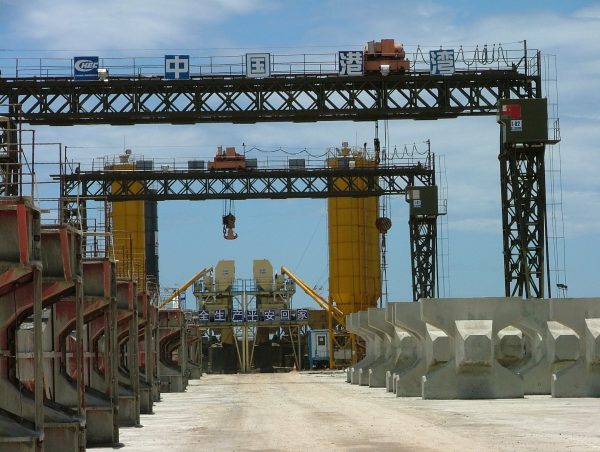
Sri Lanka’s infrastructure boom began in 2008 following the electoral victory of Mahinda Rajapaksa. Financing came from China, India, and international bond markets. Major projects included the Mattala Rajapaksa International Airport, Hambantota Port, highways, and power projects such as the Mannar Wind Power Project. The debt incurred to finance these large-scale projects contributed significantly to rising public debt. Around 65 percent of foreign debt accumulated in the decade prior to the crisis was linked to investments in transport, energy, water, and port and airport infrastructure. Many of these mega projects failed to deliver the expected economic returns and were among the factors contributing to Sri Lanka’s eventual default.
The case of the Mannar wind power project, linked to the Adani Group, is telling. Our analysis suggests the agreed price was around 2.7 U.S. cents per kWh higher than the actual market price. This means an overpricing of 48 percent — an overpayment of around $612 million. While a change in government and public outcry ultimately stalled the project, the fact that such a deal could be negotiated in flagrant contradiction of existing procedures proves that the current vertical oversight is a paper tiger.
Price discrepancies on this scale are sadly not uncommon, and rarely accidental. In most cases, they reflect deliberate governance failures involving carefully orchestrated corruption or political collusion that involves all the relevant insiders, making external monitoring and enforcement very difficult. Once we understand the sums involved and the small number of insiders who can collude in these projects, we can see why standard governance approaches have failed to address these massive challenges. Formal governance mechanisms that are top-down are unable to prevent these types of outcomes.
The reason why vertical oversight and enforcement work better in some countries, usually much more developed (high-income) countries, is that they have a deep distribution of productive capabilities, and many self-interested and powerful actors engage in horizontal checking of projects in their own interest. This horizontal pressure ensures that vertical checking works, and formal oversight bodies are forced to do their work properly. Developing countries do not have this horizontal checking ecosystem, and so a critical part of the governance architecture requires strategies for enhancing horizontal checking in the form of enhanced competition among productive firms and/or rival political actors built into the procurement process.
In a system where insiders can easily justify overpricing to external monitors, one cannot rely on formal audits alone. Instead, we must foster horizontal enforcement. This means designing procurement processes where actors have a self-interest in checking one another. In the energy sector, this translates to moving away from secretive mega-projects and toward a larger number of smaller-scale, competitive tenders. When more firms compete, the rents (excess profits) available for kickbacks shrink, and competitors naturally act as watchdogs over the process.
In Sri Lanka, the cost of wind and battery storage began to decline as the number of investors increased, driven by the emergence of smaller-scale technologies and enhanced competition among Chinese manufacturers. This not only reduced prices directly but also lowered opportunities for corruption by reducing the scale of rents in individual projects. Shifting toward a larger number of smaller projects can reduce aggregate corruption by strengthening horizontal checks on regulators and procurement agencies.
Sri Lanka has a choice. It can continue with the top-down transparency measures that have failed the country for decades, or it can begin building a bottom-up ecosystem of project selection and implementation. By empowering more local actors and fostering genuine competition, Sri Lanka can ensure that its debt serves the nation’s future, rather than the interests of a well-connected few.
