
Cross-Party MP Group Collaborates in Public Petitions Committee to Resolve Public Grievances
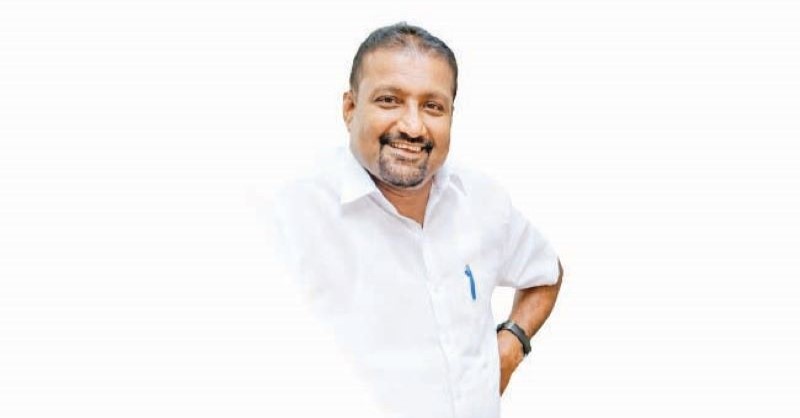
National People’s Power (NPP) Member of Parliament Gamini Rathnayake, Chairman of the Public Petitions Committee of the Parliament of Sri Lanka, stated that a cross-party group of MPs representing both the government and the opposition is collectively actively working to resolve grievances submitted by the public.
Highlighting the committee as a primary parliamentary mechanism, MP Rathnayake emphasized that citizens can directly submit their complaints and grievances to seek justice.
Below is an extract of an interview granted by the Committee Chairman to the Silumina newspaper, explaining the framework, legal powers, and ongoing activities of the Public Petitions Committee:
“Seek Justice Through the Public Petitions Committee If You Have Faced Injustice”
Tell us about the Parliamentary Public Petitions Committee and its scope.
Under the Standing Orders of our Parliament, five main Standing Committees operate, including COPE, the Committee on Privileges, and the Committee on High Posts. Among them, the Public Petitions Committee is specifically established for the general public. If anyone feels aggrieved by a state institution, a public officer, or a local government body, or if their fundamental rights have been violated, this committee serves as the principal forum to seek redress. Simply put, it is the parliamentary machinery designed to grant relief to citizens who have suffered prejudice. We have fully reactivated this mechanism, and a bipartisan group of MPs is working together towards this end.
What is the current composition and operational structure of the committee?
In the present 10th Parliament, this committee operates with enhanced institutional support, including a dedicated Committee Office within Parliament. The committee comprises 29 MPs representing both government and opposition benches. The legal process involves examining petitions submitted by citizens to the Speaker via a Member of Parliament and issuing formal recommendations on the relevant matters.
How does the committee address public criticism that elected representatives often ignore citizen needs?
That critique was historically understandable, as citizens felt representatives pursued personal interests after being elected. However, the mandate of the Public Petitions Committee is to directly resolve the issues of the country’s 22 million citizens. Notably, among all parliamentary committees, this is the only entity vested with quasi-judicial or legal powers.
Could you clarify what you mean by “judicial powers”?
While state power is divided among the legislature, executive, and judiciary, this committee exercises the judicial powers inherent in the legislature. The Public Petitions Committee holds the power to summon any public official, examine files or documents, and inspect relevant locations. While law enforcement usually requires a court order to inspect private property, this committee possesses statutory authority to inspect premises pertinent to a petition to uphold public interest.
Have there been notable changes in how the committee functions in the 10th Parliament?
Yes. Previously, the committee met briefly—once a week or twice a month—often between 10:30 AM and 1:30 PM. In the 10th Parliament, we convene every parliamentary week on Tuesdays and Wednesdays, amounting to 4 to 5 days a month. Working hours have been extended from 10:30 AM to 5:30 PM or 6:00 PM, and occasionally into the evening. It has become one of the most active committees in Parliament.
What prompted this extension of working hours?
The main reason was the heavy backlog of pending petitions. To offer swift relief, we prioritized clearing this backlog. Between 2025 and July, across 157 parliamentary sitting days, the Public Petitions Committee met on 60 days. During this period, we examined 392 petitions and finalized recommendations for all 392 cases across three comprehensive reports.
In the past, committee recommendations were often ignored. Has this changed?
Previously, certain officials or ministries failed to execute recommendations. Now, under Standing Order 125 (5), the Speaker is empowered to monitor compliance. Once a report is tabled, the Speaker directs the relevant Minister to report back within 6 to 8 weeks detailing the action taken. Failure to comply opens the path for re-summoning, reprimand, or further administrative and legal proceedings.
How can a citizen submit a petition to the committee?
Any citizen can draft a petition detailing state-sector injustice, fundamental rights violations, or victimisation, clearly stating the relief sought. The petition must be forwarded to the Speaker through any Member of Parliament. Upon approval, the MP formally presents it in the House under Item 6 of the Order Paper (“Presentation of Public Petitions”), after which it is officially referred to our committee.
What is the procedure once a petition is received?
We first call for a report from the Secretary of the relevant Ministry and share it with the petitioner for observations. Once both perspectives are received, we summon the Ministry Secretary, heads of institutions, and the petitioner. Witnesses are examined under oath, akin to court proceedings. We then deliver a tripartite finding involving the petitioner, the institution, and disciplinary authorities like the Public Service Commission to ensure binding, equitable recommendations.
What is your final message to the public?
If you have faced an injustice, do not remain silent. Utilize this mechanism created specifically for you in Parliament. If your grievance is legitimate, the Public Petitions Committee is bound to grant you relief. It is your right—make maximum use of it.
(Interview by Uditha Gunawardena)
0
